Thursday, March 26, 2009

SPRING BASEBALL BOOKS PART 3: THE BOOK REVIEW


“Bill James Gold Mine,” “Sweet Lou and the Cubs,” “The Fielding Bible,” “Graphical Player” “Tim McCarver’s Diamond Gems”

This spring has once again seen the pub of many different kinds of sports books – and especially baseball books with a statistical slant. For those into that kind of thing, this is especially good news.
“Bill James Gold Mine,” (Acta Sports, $23.95, 271 pages. paper) is the latest publication from the man who made his mark in the 1970s and 1980s and is still going strong asking the right questions, asking ways to measure players and aspects of the game. Stats, charts, tables, essays – if you are a Bill James fan – this is the book to grab hold of.
“Sweet Lou and the Cubs” by George Castle (The Lyons Press, $16.95, 283 pages, paper) is all about one of the nicest men in baseball – public image for some notwithstanding. Castle has been a coverer of the Cubs since 1980 and for the past two seasons has seen Piniella up close. This is a book filled with gossip, inside scoops, new awarenesses. Must read for fans of the Cubbies.
“The Fielding Bible, Volume II” by John Dewan ($23.95, 400 pages, paper) is a mother lode of all kinds of info on the area of fielding, an area that has been largely overlooked in most analytical treatments on the national pastime. There are defensive scouting reports, defensive runs saved, a couple of interesting essays by the one and only bill James. “The Fielding Bible, Volume II” is a keeper.
“Graphical Player” with a host of contributors featuring writers from “Heater” magazine (ActaSports, $21.95, paper) is highly recommended fir veteran fantasy players and all interested in new insights and ways to look at major and minor leaguers. This sixth edition of “Graphical Player” boasts dashboards revealing at a glance much info.
“Tim McCarver’s Diamond Gems” (McGraw-Hill, $24.95, 270 pages) edited by is an interesting kind of book showcasing as it does favorite baseball stories from the multitude of celebrities who have appeared on his show through the years. From managers thru catchers to the rest of the lineup, the book is a treasure chest of baseball legend, love, and lore.
Backlist item: “Shooting the Pistol” ( Louisiana State University Press, $23.00, 120 pages) is a picture book with images created by Danny Brown. It showcases one of basketball’s flashiest performers in his glory days at LSU.


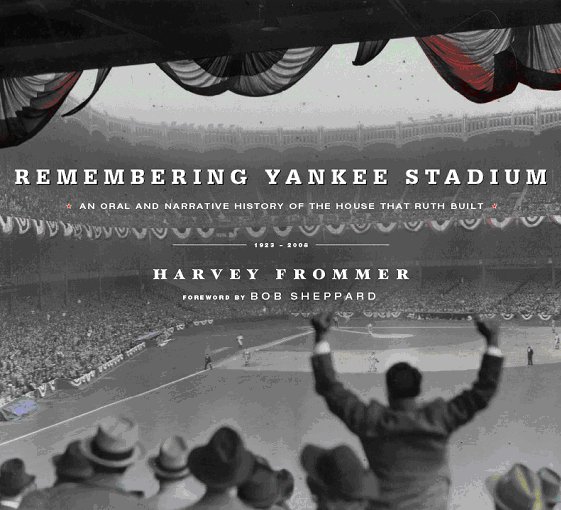
Harvey Frommer is his 33rd consecutive year of writing sports books. The author of 40 of them including “New York City Baseball,1947-1957″ and “Shoeless Joe and Ragtime Baseball”. His “Remembering Yankee Stadium: An Oral and Narrative History of the House that Ruth Built” (Abrams, Stewart, Tabori and Chang) was published in 2008 as well as a reprint version of his “Shoeless Joe and Ragtime

Frommer sports books are available direct from the author - discounted and autographed. FROMMER SPORTSNET (syndicated) reaches a readership in excess of one million and appears on Internet search engines for extended periods of time.

**Call for Fenway Memories - now working on "Remembering
*****Fenway Park" - will feature stories– first game attended, marker moments, odd events, tales of a special player at the Fens, architectural features... Please contact me by e-mail if you have something to contribute.

Tuesday, March 24, 2009

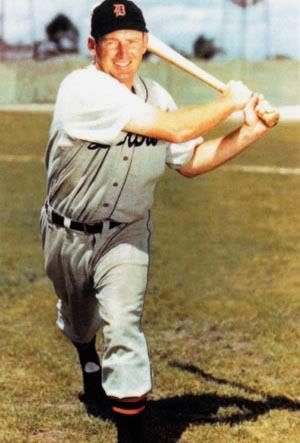
REMEMBERING GEORGE KELL


The sad news of passing of Hall of Famer George Kell at his home in Swifton, Arkansas in his sleep on March 24, 2009 has just come out.

The former star third baseman Kell grew up in Swifton and lived in the same house from his birth to the time it burned down in 2001. It was rebuilt on the same land.

I had the good fortune to interview this true southern gentlemen and twice over the past few years – for my REMEMBERING YANKEE STADIUM (2009) and for my REMEMBERING FENWAY PARK to be published in 2011. Both times he was forthcoming, anecdotal, interesting.

For the Yankee Stadium book he offered unique insights about what it was like to come in and perform there as an opposing player.

The multi-time All Star played for the Red Sox from 1952 to 1954 and really enjoyed the fans and the environment at Fenway Park.

Here, in draft form, is just some of the oral history subject matter he gave me: (FOR MORE - - BUY REMEMBERING FENWAY PARK in 2010)

GEORGE KELL: Fenway Park was sort of made for me. I didn’t have a lot of power. I’m a right-handed hitter and I could reach that left-field fence occasionally. And I just loved that ballpark. The people were great. The stands were full every day. It was just baseball, baseball. I couldn’t wait to get out there.


I was traded from Detroit to Boston on June 3, 1952: Hoot Evers, Johnny Lipon, and Dizzy Trout for Bill Wight, Walt Dropo, Fred Hatfield, Johnny Pesky, and Don Lenhardt. and the first day there I hit a home run over the left-field fence and I hit a double off of the left-field fence and I thought “my goodness, what could I do here? I’m liable to hit a lot of home runs and a lot of doubles.” But it wasn’t that way, it wasn’t that easy. They pitch you a little different. They’re not going to keep bringing the ball inside to where you can pull it all the time.

I began my career in 1943 with Philadelphia had played in Fenway as an opposing player for quite a few seasons coming in with the Athletic uniform and then the Tiger uniform.

There was something about Boston and it still is today. I was traded for an idol: Pesky. But I did get a wonderful reception. I broadcasted for the Tigers for 37 years. I came into Fenway all through the summers at various times. There is something about Fenway Park that is a little bit different.

I felt like I would never go into a slump at Fenway Park. I felt like I could always reach that wall out there one time everyday, but I didn’t. But it felt that way. And I felt like I could hit .300 there and I did the years I was there.

Everybody was trying to pull the ball. And I don’t think I ever had so many hot shots hit right at me by people just like myself who were trying to reach the left-field wall. Day after day after day that I was very busy at third base. That didn’t bother me. But I had to be more alert. There was not a lot of bunting, everybody was trying to reach the left-field fence and could. It was not an easy place to play third base.

Ted Williams came back from the Korean War and played at the end of my career there. Yes, I got to be close friends with Ted Williams. Maybe for one specific reason. When I won the batting title on the last day of the season in 1949, I won it because Ted went hitless that last day and I had a couple of hits. And I won it by two thousandths of point and boy I tell you to me it was tremendous for me but a tremendous loss for him because he was he was the all-time great hitter. And the next year at Fenway a man asked me if I would pose for a picture with Ted Williams. I left the dugout and I started over there.

Ted said, “No, no, no, we are going to make it in front of your dugout because you won the batting title from me fair and square.”

And I thought, “what a wonderful man he is.” We remained good friends from then on. . . .
Harvey Frommer is his 33rd consecutive year of writing sports books.


The author of 40 of them including the classics: "New York City Baseball,1947-1957" and "Shoeless Joe and Ragtime Baseball," his acclaimed REMEMBERING YANKEE STADIUM, an oral/narrative history (Abrams, Stewart, Tabori and Chang) was published in 2008 as well as a reprint version of his classic "Shoeless Joe and Ragtime Baseball." The prolific Frommer is at work on REMEMBERING FENWAY PARK (2010).

Frommer sports books are available direct from the author - discounted and autographed.
FROMMER SPORTSNET (syndicated) reaches a readership in the millions and is housed on Internet search engines for extended periods of time.

Saturday, March 21, 2009

What's in a Yankee Nickname? (I)

Yankee nick-names have run the gamut from complimentary to embarrassing, from hero worshipping to amusing from over-reaching to on target. Herewith, a sampler.

"The Babe" George Herman Ruth leads off the list and paces the list in most nick-names acquired. First called "Babe" by teammates on the Baltimore Orioles, his first professional team because of his youth, G.H.Ruth was also called "Jidge" by Yankee teammates, short for George. He called most players "Kid," because he couldn't remember names, even of his closest friends. Opponents called him "The Big Monk" and "Monkey."


Many of Babe Ruth's nick-names came from over-reaching sports writers who attempted to pay tribute to his slugging prowess:


"The Bambino", "the Wali of Wallop", "the Rajah of Rap", "the Caliph of Clout", "the Wazir of Wham", and "the Sultan of Swat", The Colossus of Clout, Maharajah of Mash, The Behemoth of Bust, "The King of Clout."


Other Yankee nick-names, expressions, bon mots of note for "Babe" and "Ruth" In spring training 1927, Babe Ruth bet pitcher Wilcy Moore $l00 that he would not get more than three hits all season. A notoriously weak hitter, Moore somehow managed to get six hits in 75 at bats. Ruth paid off his debt and Moore purchased two mules for his farm. He named them "Babe" and "Ruth."


"Babe Ruth's Legs" - Sammy Byrd, used as a pinch runner for Ruth "Bam-Bam" - Hensley Meulens could speak about five languages and had a difficult name to pronounce.


"Banty rooster" - Casey Stengel nickname for Whitey Ford because of his style and attitude.


"Battle of the Biltmore" 1947 Series celebration in Manhattan's Biltmore Hotel was a time and place where Larry MacPhail drunkenly fought with everyone and ended his Yankee ownership time.
"Biscuit Pants" - A reference to the well filled out trousers of Lou Gehrig.


"Billyball" - the aggressive style of play utilized by Billy Martin


"Blind Ryne" - Ryne Duren because of his very poor vision, uncorrected -20/70 and 20/200.


"Bob the Gob" - Bob Shawkey spent most of 1918 in the Navy as a yeoman petty officer aboard the battleship Arkansas.


"The Boss" - A a formerly apt description of Yankee owner, George Steinbrenner


"Boomer" - David Wells, for his in your face personality.


"The Boston Massacre" - described the way the Red Sox collapsed in 1978 and the seep of a four game series by the Yankees that September.


"Broadway" - Shortstop Lyn Lary was married to Broadway star Mary Lawler.


"Bronx Bombers" For the borough and home run power.


"Bronx Zoo" a derogatory reference to off color behavior on and off the playing field through the years and especially in the 1970s.


"Brooklyn Schoolboy" was what they called Waite Hoyt for his time as a star pitcher at Erasmus High School.


"Bulldog" - Jim Bouton, for his tenacity.


"Bullet Bob" - Bob Turley, for the pop on his fastball.


"Bye-Bye"- Steve Balboni, the primary DH of the 1990 Yankees had 17 homers but hit just .192.


''Carnesville Plowboy'' - Spud Chandler for his hometown of Carnesville


"Deacon" - Everett Scott, for his not too friendly look.


"Georgia Catfish" - Jim Hunter, name given to him by Oakland owner Charles Finley
""the CAT-a-lyst," name given to Mickey Rivers by Howard Cosell for his ability to trigger Yankee team offense.


"Chairman of the Board" - Elston Howard came up with the phrase in tribute to Whitey Ford and his commanding and take charge manner on the mound.


"Clutch versus Clutch" - qualitative commentary about Yankee-Red Sox competition.


"Columbia Lou" - Lou Gehrig because of his collegiate roots.


"Commerce Comet" - Mickey Mantle


"The Count" - Sparky Lyle, handlebar mustache and lordy ways


"The Crow" - Frank Crosetti loud voice and chirpy ways


"Danish Viking" - George Pipgras, for his size and roots.


"Daddy Longlegs. - Dave Winfield, for his size and long legs.


"Death Valley" - the old deep centerfield in Yankee Stadium - a
home run here was a mighty poke.


"Dial-a-Deal - Gabe Paul earned this one for his telephone trading habits.


"Donnie Baseball" - Don Mattingly was the only player in any sport to have a nickname with the actual name of his or her sport in it. Some say it was coined by Yankee broadcaster Michael Kay; others say it came from Kirby Pucket. Kay takes the credit; Mattingly gives the credit to Puckett.

"El Duque" - Orlando Hernandez


"El Duquecito" -ADRIAN HERNANDEZ because of a pitching style similar to Orlando "El Duque" Hernandez, the younger Cuban is of no relation to his elder countryman.


"Ellie" - affectionate abbreviation of Elston Howard's first name


"Father of the Emory Ball" Rookie right-hander Russ Ford posted a 26-6 record with 8 shutouts, 1910


Fireman" - The first to have this nick-name was Johnny Murphy, the first great relief pitcher who put out fires. Joe Page picked up this nick-name for his top relief work later on.


"Five O'clock Lightning" - At five o'clock the blowing of a whistle at a factory near Yankee Stadium signaled the end of the work day in the 1930s and also what the Yankees were doing to the opposition on the field.


Flash" - Joe Gordon earned this nick-name because of his fast, slick fielding and hot line drives.


Four hour manager" - Bucky Harris, who put his time in at the game and was finished.


"Fordham Johnny" - for the college Johnny Murphy attended.


"Friday Night Massacre" - April 26, 1974, Yankees Fritz Patterson, Steve Kline, Fred Beene, Tom Buskey, and half the pitching staff were traded to Cleveland for Chris Chambliss, Dick Tidrow, and Ceil Upshaw.


"Gator" - Ron Guidry, who came from Louisiana alligator country.


"Gay Caballero" - Lefty Gomez for his Mexican roots and fun loving ways.


"Gay Reliever" - Joe Page for his night owl activity.


" Gehrigville." Bleachers in right-center at Yankee Stadium.


"The Godfather" - Joe Torre, for his Italian roots and his leadership skills on the baseball field.


"Gooneybird" - Don Larsen's teammates called him that for his late-night behavior.


"Goofy" or "El Goofo" - earned by Lefty Gomez for his wild antics


"Goose" Gossage


"The Great Agitator" -for Billy Martin, self explanatory.


"Grandma" - it was not a nick-name Johnny Murphy liked, but he was called that for his pitching motion, rocking chair style. Another story is that fellow Yankee Pat Malone gave him the name because of his complaining nature especially as regards food and lodgings.


"Happy Jack" Jack Chesbro's time as an attendant at the state mental hospital in Middletown, New York where he pitched for the hospital team and showed off a very pleasant disposition won him the nickname.


"Holy Cow" - one of Phil Rizzuto's ways of expressing awe


"Horse Nose" - a nick-name given catcher Pat Collins by Babe Ruth, a reference to a facial feature.
"Horsewhips Sam" - Sam Jones earned this because of his sharp-breaking curve ball.


"House That Ruth Built" - Ruth's immense popularity that propelled the Yankees into their new home, Yankee Stadium


"Home Run" - Frank Baker, for the two game winning homers he hit in the 1911 World Series.


"Home run twins" Mickey Mantle and Roger Maris, phrase coined in 1961.


"Iron Horse" - Lou Gehrig


"Joltin' Joe" - Joe DiMaggio, for the jolting shots he hit.


"Jumping Joe" Joe Dugan earned his nickname for being AWOL from his first big league club as a youngster


"Junk Man" - Eddie Lopat frustrated hitters off stride with an assortment of slow breaking pitches thrown with cunning and accuracy.


"Kentucky Colonel" - Earl Combs came from Kentucky


"The King and the Crown Prince" - Babe Ruth and Lou Gehrig


King Kong" Charlie Keller earned this nick-name because of his muscular body type and black, bushy brows.


"Knight of Kennett Square" - Herb Pennock because he raised thoroughbreds and hosted fox hunts in his home town of Kennett Square, Pennsylvania.

Knucksie" - Phil Niekro because of his knuckleball


Harvey Frommer is his 33rd consecutive year of writing sports books. The author of 40 of them including the classics: "New York City Baseball,1947-1957" and "Shoeless Joe and Ragtime Baseball," his acclaimed REMEMBERING YANKEE STADIUM, an oral/narrative history (Abrams, Stewart, Tabori and Chang) was published in 2008 as well as a reprint version of his classic "Shoeless Joe and Ragtime Baseball." The prolific Frommer is at work on REMEMBERING FENWAY PARK (2010).
Frommer sports books are available direct from the author - discounted and autographed.

FROMMER SPORTSNET (syndicated) reaches a readership in the millions and is housed on Internet search engines for extended periods of time.

Thursday, March 12, 2009

BASEBALL NAMES AND HOW THEY GOT THAT WAY (Part 9)


Another spring. Another baseball season. Another time for baseball lingo to be spoken, The words and phrases are used and written day after day, year after year - generally without any wonderment as to how they became part of the language. All have a history, a story.


For those of you who liked Parts I – VIlI. and wanted more, here is more.

As always, reactions and suggestions always welcome "Wabash George" ("Big George")moniker for George Mullin because he played semi-pro ball in Wabash, Indiana. He hurled for the Detroit Tigers from 1902-1913 among other teams.

"Walk-off home run" game ending home team home run in the bottom of the ninth inning or in an extra inning game.

"Wall-scraper" home run when ball hits the outfield fence above the home-run line.

"Wahoo Sam" Sam Crawford, Detroit Tiger star and Hall of Famer, hailed from Wahoo, Nebraska.

"Whale" Former Brooklyn Dodger hurler Don Newcombe was called this for his size and some would say slow manner. ("Newk") was used too, a shortening of his surname.

"White Rat" Former manager Whitey Herzog earned the name for his blonde hair and scheming ways.

"The Whiz Kids" Back in the 1950's the Phillies had a really young team that was surprisingly good.

"The Wheeze Kids" The Philadelphia Phillies had some good teams in the 1980s that featured old timers like Steve Carlton Pete Rose, etc.

"The Wild Hoss of the Osage" Oklahoma bred Johnny Leonard Roosevelt Martin of the St. Louis Cardinals in the 1930s ("pepper") Martin, an aggressive player, was said to play baseball like a "wild mustang" and was given his nickname in the minor leagues.

"The Wild Thing" Mitch Williams, pitcher, would hit and walk a lot of batters, as well as throw a lot of wild pitches. He also had wild hair and a wild pitching motion. This nickname was also used in the movie "Major League."

"Willie the Wonder" Hyperbolic name pinned on Willie Horton who played for several American League teams in 1960s and 1970s and impressed people with his talent.

"Walking Man” Eddie Yost played nearly two decades in the major leagues. His lifetime batting average was only .254, but that didn't keep him off the bases. Yost coaxed pitchers into yielding I,614 walks to him--almost a walk a game through his long career--which places him fifth on the all-time bases- on-balls list.

"The Weatherman" Mickey Rivers had a knack for predicting weather.

"The Warrior" Paul O'Neill had this name pinned on him by George Steinbrenner as a nod to the Yankee outfielder's fiery ways.

“Wee Willie” He was born March 3, 1872, in Brooklyn, New York. He died on January 1, 1923, in Brooklyn, New York. William Henry Keeler made his debut at the Polo Grounds as a member of the New York Giants on September 30, 1892. He singled off the Phillies' Tim Keefe for the first of his 2,926 career hits. The son of a Brooklyn trolley switchman, Keeler Two years later became a member of the famed Baltimore Orioles. A lefty all the way, he weighed only 140 pounds and was a shade over 5'4". His tiny physical stature earned him his nickname, but pound for pound he was one of the greatest hitters baseball ever produced. Keeler played for 19 years and recorded a lifetime batting average of .345, fifth on the all-time list. He collected 2,962 hits in 2,124 games, spraying the ball to all fields. Wee Willie's greatest year was 1897, a season in which he batted .432, recorded 243 hits and 64 stolen bases, and scored 145 runs. He swung a bat that weighed only 30 ounces, but as he said, he "hit 'em where they ain't" --and that was more than good enough to gain Keeler entry into baseball's Hall of Fame in 1939.

Keeler opened the 1897 season with two hits in five at bats against Boston. Then for two months the slight southpaw swinger slapped hit after hit, game after game - from April 22 to June 18 - for 44 straight games. His record stood for 44 years until Joe DiMaggio came along and snapped it in 1941.

The Sporting News offered this mangled prose about Keeler as a fielder. "He swears by the teeth of his mask-carved horse chestnut, that he always carries with him as a talisman that he inevitably dreams of it in the night before when he is going to boot one - muff an easy fly ball, that is to say, in the meadow on the morrow. 'All of us fellows in the outworks have got just so many of them in a season to drop and there's no use trying to buck against fate'."

In 1898, a year after Keeler batted that astonishing .432, he set a mark for hitting that will probably never be topped, notching 202 singles in just 128 games. He truly was hitting them where the fielders weren't. It was a season in which the left-handed bat magician recorded 214 hits. His batting average was .379, but the incredible amount of singles amassed saw him register a puny .410 slugging percentage. That 1898 season Keeler came to bat 564 times in 128 games and walked only 28 times and did not strike out.

A slugger he was not. But, oh what a hitter!

William Henry Keeler played 19 years in the major leagues and finished his career with a .345 lifetime batting average. Quite justifiably the little man was one of the first to be enshrined in the National Baseball Hal of Fame in 1939.

“The Whip” A 6'6" right-hander, Ewell Blackwell had a sidearm motion and a crackling fastball that terrorized National League batters in the 1940's and 1950's. The former Cincinnati star's right arm seemed to "whip" the ball in at the batter, and that's how his nickname came to be. Winner of sixteen straight games in 1947, he struck out almost a batter an inning during his ten year career.

“Wild Horse of the Osage” Johnny Leonard Roosevelt Martin, better known as Pepper Martin, starred for 13 seasons with the National League's St. Louis Cardinals. He could hit, he could run, he could field, he could throw, he could win--and he did all of these things with wild abandon, with an élan and a verve that earned him his nickname. If he couldn't stop a hard smash down to his third-base position with his glove, he would stop the ball with his chest. If he could not get into a base feet-first, he would leap into the air and belly-flop his way there. Martin took the extra base, risked the daring chance, played with fire and fury. Three times in the mid-1930's he led the league in stolen bases, and throughout that decade he functioned as the horse that led the Cardinal "Gashouse Gang" (see GASHOUSE GANG).

"Wizard of Oz" An abbreviation of his first name and tip of the cap to Ozzie Smith for his peerless fielding skills. No other shortstop could get to the ball as fast as, and utilize the fielders around him like Ozzie.

"Yo-Yo" - for small size and hyper activity, Luis Arroyo

"You Could Look It Up" Casey Stengel began his major league playing career in 1912, his managing career in 1934. He played for 14 years, managed for 25 years. His baseball career ended in 1965 after stints with the Brooklyn Dodgers, Boston Braves, Pittsburgh Pirates, Philadelphia Phillies, New York Giants, New York Yankees, New York Mets. Casey could talk for hours about baseball and life. And sometimes in the midst of animated conversation about a utility outfielder on the old Boston Braves, or a balk by a forgotten pitcher on the Pittsburgh Pirates--to emphasize that he was not relating fiction he would exclaim: "You could look it up!"


Harvey Frommer is his 33rd consecutive year of writing sports books. The author of 40 of them including the classics: "New York City Baseball,1947-1957" and "Shoeless Joe and Ragtime Baseball," his acclaimed REMEMBERING YANKEE STADIUM, an oral/narrative history (Abrams, Stewart, Tabori and Chang) was published in 2008 as well as a reprint version of his classic "Shoeless Joe and Ragtime Baseball." The prolific Frommer is at work on REMEMBERING FENWAY PARK (2010).

Frommer sports books are available direct from the author - discounted and autographed.
FROMMER SPORTSNET (syndicated) reaches a readership in the millions and is housed on Internet search engines for extended periods of time.


Monday, March 02, 2009

Spring Baseball Books Part II: “Under The March Sun,” “Becoming Manny,” “As They See ‘Em,” “Hardball Times Season Preview 2009”


All sizes, all shapes and for all tastes and budgets the spring 2009 parade of books about different aspects of the national pastime keep coming. Some are from famous authors and major publishers with some advertising and marketing muscle behind them. Others are by first time of little known authors from mid-level or small houses. All have something to offer – especially if you are a baseball fan.


“Definitive, fascinating, a groundbreaking cultural and sports history of spring training from humble origins to mega-million status today. A winner.” Those are the words I used to blurb “Under The March Sun” by Charles Fountain (Oxford University Press ($24.95, 336 pages) when I first came into contact with the work before it was an actual book. I feel the same way about it now. Fountain has created a fountainhead of work from the phenomenon’s origins in the 19th century to the present – this is a home run of a book filled with anecdotes, facts, facets bound to illuminate and entertain.

“Becoming Manny” is the effort of Dr. Jean Rhodes, the world’s leading expert on youth mentoring and a professor at the University of Massachusetts in Boston and Shawn Boburg, a reporter at the Record in New Jersey. Published by Scribner, priced at $25.00, 304 pages – this carefully crafted work - - the result of unlimited access to Manny Ramirez and his family, friends, teammates and handlers is fascinating stuff about the man many view as the Greta Garbo of baseball. What you see is often not what you get. In the crass and common world of gee whiz biographies, this combo bio and autobiography reveals much about a gifted and sensitive athlete and the world he lives in. Its sub-title proclaims: “Inside the Life of Baseball’s Most Enigmatic Slugger” and that it is. NOTABLE!

“As They See ‘Em,” Scribner, $26.00, 352 pages) is an inside book compiled by author Bruce Weber after talking with about one third of the umpires who plied their tough trade 2006-2008 - - and that is only part of this effort.

Weber, who has been with The New York Times in various roles since the mid 1980s, reveals a journalist’s curiosity and a fan’s zeal as he ranges far and wide over issues, icons, irritations and insights. If the wide world of umpires is your dish – this is the book for you.

“Hardball Times Season Preview 2009” (Acta Sports, $19.95, 296 pages) is a bargain for all it has to offer. A think tank of analyses, graphs, stats, essays, projection and commentaries for over a thousand players and all 30 MLB teams – this is a mother and father lode of all stuff baseball for the new season.


Harvey Frommer is his 33rd consecutive year of writing sports books. The author of 40 of them including the classics: "New York City Baseball,1947-1957" and "Shoeless Joe and Ragtime Baseball," his acclaimed REMEMBERING YANKEE STADIUM, an oral/narrative history (Abrams, Stewart, Tabori and Chang) was published in 2008 as well as a reprint version of his classic "Shoeless Joe and Ragtime Baseball." The prolific Frommer is at work on REMEMBERING FENWAY PARK (2010) Frommer sports books are available direct from the author - discounted and autographed.

FROMMER SPORTSNET (syndicated) reaches a readership in excess of one million and appears on Internet search engines for extended periods of time.

Sunday, February 22, 2009

THE BOOK REVIEW: Spring Baseball Books Part I: Baseball Prospectus 2009, Diamond Gems, Baseball Dictionary, The Big Field


With spring training underway another sure sign that the 2009 baseball season will soon be with us is the deluge of new books focused on all manner of different facets of the national pastime. There is something out there for every taste, every budget.

"Baseball Prospectus 2009" is a mother and father lode of information for even the most crazed of stat guys. Now in its 14th season, this oversized paperback (Plume Original, $21.95, 628 pages) presents a Hall of Fame group of analysts analyzing all kinds of things connected to the summer game. Sagacious, smart, this book belongs on the top of your baseball buy list.

"Diamond Gems" edited by Tim McCarver with Jim Moskovitz and Danny Peary (McGraw Hill, $24.95, 270 pages is essentially a book that was more than decade in the making and includes a vault of material from "The Tim McCarver Show." There is Willie Mays on "the Catch," Yogi Berra on war and baseball, Sandy Koufax on his quest to add a third pitch. It is neatly organized by position - the "lefties" for example - contains Warren Spahn, Whitey Ford, Sandy Koufax, Jim Kaat, Tom Glavine and Al Leiter - thinkers all. "Diamond Gems" is a gem of a baseball book.

"Baseball Dictionary" in a new life - revised and expanded by Paul Dickson weighs in at 974 pages and a hefty fifty dollar price tag from WW Norton. One quibble I do have is that two of my books "Sports Lingo" and "Sports Roots" are in the annotated bibliography. But Dickson sadly missed out on my terrific tome - THE SPORTS JUNKIES BOOK OF TRIVIA, TERMS, AND LINGO" --What They Are, Where They Came From, and How They Are Used. Otherwise, this is deep, definitive, daunting - a thesaurus of all things baseball.

Now in paperback reprint is Mike Lupica's "The Big Field" (Plume, 272 pages, $7.99) recommended for ages 10 and up - the story of Keith "Hutch" Hutchinson and his relationship with father, a former boy phenomenon.

HIGHLY NOTABLE: "High and Inside: My Life in the Front offices of Baseball" by Lou Gorman (McFarland, 226 pages) is to be up close and personal with a man who has spent almost a half century in pro baseball and who is now an executive consultant for the Boston Red Sox. This is a man who drafted Roger Clemens, signed George Brett , developed Jim Palmer. This is a man who knows his way around a story and can tell it in detail, with humor and insight. "High and Inside" is a work that belongs on the bookshelf of every baseball fan - there's a lot to learn from an expert on the national pastime.


Harvey Frommer is his 33rd consecutive year of writing sports books. The author of 40 of them including the classics: "New York City Baseball,1947-1957" and "Shoeless Joe and Ragtime Baseball," his highly acclaimed REMEMBERING YANKEE STADIUM, an oral/narrative history (Abrams, Stewart, Tabori and Chang) was published in 2008 as well as a reprint version of his classic "Shoeless Joe and Ragtime Baseball."


Frommer sports books are available direct from the author - discounted and autographed.
FROMMER SPORTSNET (syndicated) reaches a readership in excess of one million and appears on Internet search engines for extended periods of time.


Sunday, February 08, 2009

February 1927 Part II


(Excerpt from Five O'Clock Lighting: Babe Ruth, Lou Gehrig, and the 1927 New York Yankees, The Greatest Baseball Team Ever)

This 1927 spring was a different spring, a different Babe Ruth, one more circumspect and more caring about taking care of his body. Actually, after the 1925 season, during which he weighed more than 250 pounds and played abysmally, the Sultan of Swat for the first time started to watch (somewhat) what he ate and drank.

His first appearance in spring training 1927 was filled with hype, hullabaloo and hoopla as befitted the King of clout. Reporters swarmed about, crowded around him. They looked him over. All the stories about the terrific shape he was in seemed true. The great Ruth announced in that deep voice of his that had just a hint of a Southern accent: "I never felt better in my life. I weigh 223 pounds and will lose only 3 pounds while here."

Showing off his expanded 47 inch chest, he bragged about the hardened belly. "Hit me," he smiled. Hit me as hard as you can." One of the more intrepid scribes, James R. Harrison of The Times, went for the suggestion. Ruth took the poke, feigned some pain, kept on smiling.

“Twenty four gaping rookies stood at attention as he sauntered through the lobby of the hotel,” Ford C. Frick, wrote in the New York Evening Journal, “and flocks of femininity dogged his footsteps to the very portals of the elevator where a flunkey in uniform barred the way.. . .The Babe was friendly to all, smiling, bowing, yelling in a hoarse voice to teammates.”

That morning he played golf, a round of 92, violating the training rule set by Miller Huggins that banned participation in the sport by players except on Sundays. “Special permission,” Huggins explained to reporters was given to Ruth.

“The Big Bam,” the New York Evening World’s Arthur Mann wrote: “shags flies to begin the day's work, fields bunts, and then warms up with a catcher. By this time he is ready to go into the box, and there he remains, pitching for about 25 minutes. His batting practice consists of about 12 good wallops."

Billy Sunday made a visit to the Yankee training camp. Ex-major leaguer, ex-drunk, celebrated revivalist, umpire and scribe, he hit some balls – one was a shot he got good wood on that according to one scribe "was still smoking."

Smoking, characterized the way many Yankees reacted to a Billy Sunday comment: “Of all the ball clubs I have looked at this spring the Athletics are by far the most impressive. The club doesn't appear to have a single weakness."

But Sunday was not the only one with the pro-Philly point of view. The New York Betting Commission had installed the Philadelphia Athletics favorites to win the pennant because of their addition of veterans like Ty Cobb, Eddie Collins and Zach Wheat. Only 9 of 42 writers polled gave the Yanks any chance to repeat as pennant winners. American League President Ban Johnson predicted a historic-five team pennant race. An AP poll of 100 players and "baseball experts" tabbed the Athletics to win it all.

Grantland Rice writing in the New York Herald-Tribune said: "From present indications, the American League race figures as follows: Philadelphia, New York, Washington, Cleveland, Detroit, Chicago, St. Louis, Boston." Professional odds makers set the Athletics at 2-1, the Yankees at 3-1, the Senators at 7-2.


Harvey Frommer is his 34th consecutive year of writing sports books. The author of 40 of them including the classics: "New York City Baseball,1947-1957" and "Shoeless Joe and Ragtime Baseball," his REMEMBERING YANKEE STADIUM, an oral/narrative history (Abrams, Stewart, Tabori and Chang) was published in 2008 as well as a reprint version of his "Shoeless Joe and Ragtime Baseball.".


Frommer sports books are available direct from the author - discounted and autographed. FROMMER SPORTSNET (syndicated) reaches a readership in excess of one million and appears on Internet search engines for extended periods of time.


You can reach Harvey Frommer at:
Email:
harvey.frommer@Dartmouth.EDU

About the Author:
Harvey Frommer is his 33rd consecutive year of writing sports books. The author of 40 of them including the classics: "New York City Baseball,1947-1957" and "Shoeless Joe and Ragtime Baseball," his REMEMBERING YANKEE STADIUM, an oral/narrative history (Abrams, Stewart, Tabori and Chang) was published September 1, 2008 as well as a reprint version of his "Shoeless Joe and Ragtime Baseball.". Frommer sports books are available direct from the author - discounted and autographed. FROMMER SPORTSNET (syndicated) reaches a readership in excess of one million and appears on Internet search engines for extended periods of time.
http://www.dartmouth.edu/~frommer
http://discuss.washingtonpost.com/wp-srv/zforum/02/sports_frommer083002.htm
http://www.redsoxnation.net/forums/index.php?showtopic=15388&s=93d3ba714519f785d290b4305f62c42d

Harvey Frommer along with his wife, Myrna Katz Frommer are the authors of five critically acclaimed oral/cultural histories, professors at Dartmouth College, and travel writers who specialize in cultural history, food, wine, and Jewish history and heritage in the United States, Europe, and the Caribbean.

This Article is Copyright © 1995 - 2008 by Harvey Frommer. All rights reserved worldwide.


Monday, February 02, 2009

February 1927:(Excerpt from Five O'Clock Lighting: Babe Ruth, Lou Gehrig, and the 1927 New York Yankees, The Greatest Baseball Team Ever)

The pieces were falling into place for the 1927 Yankees. But the biggest piece, Babe Ruth, had not yet signed a new contract and seemed not likely to do so anytime soon. Hands down, he had rejected the $52,000 salary he earned in 1926. That was out of the question. In early February, Jake Ruppert sent another in what would be a series of contract offers to Ruth. This one was for $55,000. The offer annoyed the hell out of the competitive Babe who said he had it on good authority that Ty Cobb, now with the Philadelphia Athletics, was slated to get $75,000. The peripatetic Yankee outfielder moved on to "Hooray for Hollywood" time. He was now a star on the East Coast and the West Coast, now making his first movie, "The Babe Comes Home" for First National pictures. In a break during shooting he said: "Reading, like picture shows is almost taboo, I've got to watch the old optics closer than anything else." Under strict orders from his trainer Artie McGovern, the Bambino, also got his beauty sleep. He was early to bed by 9 P.M. (it wasn't clear whether he was there alone or had company), and early to rise he was on there on the movie set no later than six A.M.

On Hollywood Boulevard, running three to five miles a day, George Herman winked and smiled at folks all along the way, truly a sight for all kinds of eyes. After the up and downing on the streets, Ruth was rewarded back at his Hollywood Plaza Hotel with a comforting and stimulating rub down by McGovern who had taken leave of his New York City gymnasium on 42nd Street and Madison Avenue to press the flesh of his most illustrious client still unsigned to a Yankee contract for the 1927 season. McGovern, in a comment praising himself and the wondrous work he was accomplishing remarked about his beginnings with Ruth: "He was as near to being a total loss as anyone I ever had under my care."

On February 22, six days before the first Yankees were scheduled to arrive in St. Petersburg for spring training, Babe Ruth mailed to Colonel Ruppert from Hollywood an outline of what he thought he should be paid for 1927, just another salvo in their continuing out in the public eye contract wrangling. The Babe was adamant as he spoke to reporters. He pressed the point that he would retire from baseball and organize a string of gymnasiums with Artie McGovern if his salary needs were not met. On February 25, the day before the big man left California for New York, his salary demands were published in the New York Daily News.

Two days later a letter he wrote to Colonel Ruppert appeared in The New York Times. The letter's tone was conciliatory. It was also forceful. "You will find enclosed contract for 1927 which I am returning unsigned because of the $52,000 salary figure. I am leaving Los Angeles February 26 to see you in New York and will be prepared to report at St. Petersburg but only on the basis of $100,000 a year for two years, plus $7,700 held out of my salary in the past.. . .

"In fine physical condition today I hope to play as good as last year or better. I have exercised all winter and for the past twelve weeks have been working out of doors. At my own expense I have brought Arthur McGovern from New York to condition me. "The New York club has profited from five of the best years of my baseball life. During that period my earning power to the club has greatly increased while my salary has remained unchanged. . ..

"During the winter season I booked my own exhibition games and without support from other players I have received more in three weeks than the New York club pays me in three months....

"I have refused to discuss my new contract or salary during the Winter but now that I have returned my contract unsigned an explanation will be expected, and I wish you would show this letter to any newspaper writer who wishes to see it"With best personal wishes, I amYours truly, BABE RUTH"After the long trip from California, Babe Ruth arrived on the second day of March at Grand Central Station in Manhattan at 9:40 A.M. on the first section of the Twentieth Century Limited. Half a dozen gate tenders, a squad of private police and railroad security were powerless to hold back more than a hundred of the more ardent and adoring fans who had broken through and gained access to the train platform. They roared at their idol, easy to spot in his brown cap and tan overcoat, as he got off the train. Outside the entrance to the train, more than two thousand more fans waited, excited, cheering as their hero came through, a wide smile on his big face.

Harvey Frommer is his 34th consecutive year of writing sports books.

The author of 40 of them including the classics: "New York City Baseball,1947-1957" and "Shoeless Joe and Ragtime Baseball," his REMEMBERING YANKEE STADIUM, an oral/narrative history (Abrams, Stewart, Tabori and Chang) was published in 2008 as well as a reprint version of his "Shoeless Joe and Ragtime Baseball.".

Frommer sports books are available direct from the author - discounted and autographed. FROMMER SPORTSNET (syndicated) reaches a readership in excess of one million and appears on Internet search engines for extended periods of time.

Monday, January 19, 2009

THE BEST OF TIMES

(For your reading pleasure adapted from FIVE O'CLOCK LIGHTNING: BABE RUTH, LOU GEHRIG AND THE GREATEST TEAM IN BASEBALL HISTORY, THE 1927 NEW YORK YANKEES)


Charles Lindbergh was given a grand ticker tape parade on his return from Paris and his solo, nonstop transatlantic flight that began in New York. In Harlem, dancer Shorty Snowden, during a dance marathon, named his dance step the Lindy Hop inspired by the headline: "Lindy Hops the Atlantic."

The twenty-two newspapers of William Randolph Hearst, published in fifteen cities, had a daily circulation of 3,500,000 and reached 4,000,000 on Sundays. New York City had 18 daily newspapers in the 1920s. The New York Daily Mirror was a morning tabloid first published in 1924 in New York City by the William Randolph Hearst organization to compete with the New York Daily News, the most widely circulated newspaper in the United States. The News had begun in 1919 as the first picture newspaper, one that sports fans loved. In 1923, the year Yankee Stadium opened, the circulation of the News moved past 600,000 making it the best selling newspaper in the United States. That year of 1923 the percentage of newsprint devoted to sports rose from the four per cent it had been in 1890 to 17 per cent. Widespread coverage of baseball was already in place in specialized publications like the Sporting News and Baseball Magazine.

By 1927, newspapers in New York had 10 columns of sports. The news tabloids often led their front pages with sports news and pictures. Even the New York Times and New York Herald-Tribune were giving over more and more column space to sports

It was a time when most people received virtually all of their current information from newspapers. Afternoon newspapers cost three cents; morning papers were two cents. The half a dozen or so afternoon papers, like the Sun, Telegram, and Journal featured baseball results on page one. Papers were positioned face up on newsstands, and fans could see the score without buying the paper.

Arguably, the most talented bunch of newspaper sports journalists in action at one time worked back then. They called themselves "the Gee-Whizzers," and their zeal and love for sports and games at times surpassed that of the people they wrote about and for. They told the stories, provided the game accounts, wrote the poems. There was no television, little radio, some excellent but somewhat limited photography. What images, views, information on sports there was, came in the main from these sportswriters.

The sports pages had facts, but they were also sources of entertainment, soft news. Educated and eloquent, dedicated and opinionated, lyrical and knowledgeable, the sports writers of that time plied their trade in an era when players were drinking buddies, not antagonists. Yet the writers competed with themselves and among themselves to tell the stories, to break the scoops, to come up with new angles.

Those who plied their trade on the New York City newspapers were a who's who of sports writers. The New York Times boasted sports editor and columnist John Kiernan, Yankee writers Richards Vidmer and James Harrison. W.B. Hanna, Rud Rennie and sports editor W.O. McGeehan worked for the Herald Tribune. New York Daily News writers included Paul Galico, Marshall Hunt and Roscoe McGowen. Ford C. Frick wrote for the Evening Journal. Frank Graham, Joe Villa and Will Wedge did their stuff for the New York Sun. The New York Telegram featured Fred Lieb, Dan Daniel and Joe Williams. Lieb later wrote for The New York Post .The Monitor had George Bailey. Dan Parker and Charles Segar were on the New York Mirror, Edward Luster and Bill Slocum wrote for the New York American, and Arthur Mann was on the New York Evening World. Still doing their thing on the newspaper scene were icons Ring Lardner and Damon Runyan.

Jack Dempsey held the heavyweight-boxing title from 1919 through 1926. Then in 1927 in an epic grudge match seen by more than 150,000 who had paid two and a half million dollars at Soldier Field in Chicago, Gene Tunney won a controversial decision over Dempsey for the heavyweight boxing title. Big Bill Tilden dominated a lot of the tennis news in a sport that was the most rapidly growing one in America in 1927. Golf was also expanding big time. The great golfers Bobby Jones, Walter Hagen and Gene Sarazen dominated not only American courses but the venerable British greens as well. Red Grange at Illinois was a three time football All-American. At Notre Dame, Knute Rockne coached the "Fighting Irish" to three national championships. In 1927, the Harlem Globetrotters played their first basketball game. The New York Giants won the National Football League title game, and Johnny Weissmuller set several swimming records. Henry G. Steinbrenner, the father of George, won the 1927 NCAA low-hurdles championship.

In that golden age of sports there were those who towered above the rest: Red Grange in football, Jack Dempsey in boxing, Bobby Jones in golf, "Big Bill" Tilden in tennis, and the poster boy for excess . . .for more, George Herman "Babe" Ruth in baseball,

The 1920s, the age of Ruth, witnessed the largest increase in a decade for recreation and entertainment. In the previous decade those who attended baseball games were mainly affluent, white collar workers. In the 20s a better standard of living and the introduction of Sunday baseball widened the audience - attracting all classes including immigrants and the children of immigrants - working-class Italians, Poles and Jews. Like the cities baseball was played in, urban stadia were now becoming a meeting and melting ground for Americans of all classes and backgrounds.

Major league baseball, played in the daytime concluding before darkness fell, saw its average attendance rise 50% in the roaring 1920s, reach 93 million, nearly three thousand a game more than it had been in the previous ten years.

In New York City all sports were pretenders to the throne that baseball sat on. At least one Big Apple baseball team played in the World Series in eight of the years of the 1920s. In 1921, 1922 and 1923, the Yankees and Giants played in Subway Series.

Contrary to what many might believe, according to one 1927 estimate, 107 men from 79 colleges made up nearly one-third of big league regulars. The farm system belonged to the future.

Players spent a lot of time on long train trips. It was bonding time, a restful time, a time to eat and sleep, to play cards, read books and newspaper sports pages. Liquor and beer were the liquid refreshment of choice, both available in abundance. The game was the national pastime. All the best athletes gravitated to baseball. So many with a very strong work ethic and competitive fires were drawn to being part of the game.

The game was very different from baseball in the 21st century. Pitchers didn't throw nearly as hard. Strikeouts were way down because batters focused more on putting the ball in play and making contact. Pitchers threw far fewer pitches. Conserving strength and going the distance was the goal.

In 1927 batted balls bouncing into the grandstand were counted as home runs instead of ground-rule doubles, as they do today. But each of Babe Ruth's home runs hit that year were examined by historians who are convinced that none of them bounced into the seats. But there were four baggers smacked by others that got where they got on the bounce.

The time it took for games to be played was much less than today. There was no need to build advertising into the structure of the contests. A batter rarely got in and out of the batter's box. And if one did the home plate umpire would call for a pitch. And if it was anywhere near the plate it was deemed a strike.

Babe Ruth totally dominated all. In that glorious decade Babe Ruth finished number one in home runs (467), RBIs (1,328), walks (1240), strikeouts (795), slugging percentage (.740). Babe Ruth, a self made man, the American dream come true, a free swinger in a free swinging time.

"Once my swing starts," he said, "I can't change it or pull up on it. It's all or nothing."

Babe Ruth was the king. The 1927 New York Yankees were the royalty of baseball.

Historian A. D. Suehsdorf said: "If you didn't like the Yankees, it was a tough time to be alive."

But if you loved the Yanks, it was the best of times.


Harvey Frommer is in his 34th consecutive year of writing sports books. The author of 40 of them including the classics: "New York City Baseball,1947-1957" and "Shoeless Joe and Ragtime Baseball." His latests are REMEMBERING YANKEE STADIUM, an oral/narrative history (Abrams, Stewart, Tabori and Chang) as well as a reprint version of his "Shoeless Joe and Ragtime Baseball."

Thursday, December 18, 2008

Remembering Yankee Stadium: 21ST CENTURY!

(For your reading pleasure adapted from REMEMBERING YANKEE STADIUM: AN ORAL AND NARRATIVE HISTORY OF THE HOUSE THAT RUTH BUILT, on sale everywhere, buy it now)

21ST CENTURY!

“I believe we have some ghosts
in this stadium that have helped us out."
- - - DEREK JETER

The greatest baseball team of the 20th century began the 21st century and their 77th season at Yankee Stadium with a tip of the cap to tradition and to history.
BOB SHEPPARD: The Yankees called me to give me the news that they were going to hold a “Bob Sheppard Day.” And frankly I was speechless. That rare honor, started in 1932, had been reserved for Ruth, Gehrig, DiMaggio, Mantle, Berra and a select few others, not for the public address announcer.
The day arrived: May 7, 2000. The Stadium was packed. My family, including my wife Mary, was there. I delivered the lineups from out of doors for the first time since September 30, 1973.
That I should have a plaque out in Monument Park in centerfield . . . It was an incredible, memorable moment in my life.
My saddest moments have been the eulogies that I had to write for those who died and had been Yankees in their time.
They’ll say: “We lost Thurman Munson. Write something about it before the anthem is played.” And I'll sit down and write something briefly and I hope touchingly. And deliver it sincerely.
I go to Yankee Stadium two hours before game time and check the lineups. At one o'clock or seven o’clock, I get a signal from the sound man and he says: “Mr. Sheppard, the lineups.” And that starts it.
I know every name and uniform number and work diligently to pronounce each name correctly. My favorite name to pronounce? Mickey Mantle. For many reasons. It is a great name for a baseball player and for a speech professor to say. “Mickey Mantle” -- it has alliteration. It has the good quality of “M” and “N” and “T” and “L” It runs very nicely.
BROOKS ROBINSON: Doing Baltimore’s games on television from ‘78 to ‘93, I made a lot of trips to Yankee Stadium and got to know Bob Sheppard. “Bro oks Rob in son” is how he said my name.
PAUL DOHERTY: Bob would pronounce it, "Brooks RobINson." However, if Frank Robinson was also in the lineup with Brooks (which he usually was from 1966 to71) Sheppard may have pronounced it, "BROOKS RobINson" to differentiate it from "Frank RobINson." That's the sort of careful attention Bob paid so the fans could differentiate between the players who shared the same last names.
ROLLIE FINGERS: He pronounced my name "RAW-lee Fin-gers." It was a great to hear your name on the loudspeaker there – that’s for sure.
BOB SHEPPARD: For years and years, nobody knew my face and I could walk around the stadium with 50,000 people and never be recognized. But after a few television shows and movies, such as Billy Crystal’s ‘61*,’ wherein my voice was heard, I became better known.
On July 8, 2000 , the Yankees and Mets met in an unusual day and night doubleheader. Game one was at Shea Stadium, and the second game was scheduled for Yankee Stadium.
In the second inning, Rogers Clemens beaned Mets’ catcher Mike Piazza in the head, sending him to the ground with a concussion and onto the disabled list. That turned up the heat in an already heated New York-New York baseball rivalry.
Clemens-Piazza was topic “A” for fans of both teams as the Yankees and Mets met for the first time ever in the World Series. It was the first Subway Series in New York City since 1956. Billy Joel sang the national anthem before Game One on October 21st at Shea Stadium, and Don Larsen threw out the first pitch. The Yankees won in 12 innings, 4-3. The next day, Robert Merrill sang the national anthem, and Phil Rizzuto and Whitey Ford threw out the first pitches.
Roger Clemens started Game two. With what happened earlier in the season between him and Piazza, the media buildup made the mood at Yankee Stadium electric with anticipation as to what would happen when they faced each other.
Clemens versus Piazza. Two quick inside strikes on the Mets’ catcher. The next pitch was also inside – backing Piazza off the plate. The noise level rose throughout the Stadium.
Clemens threw again and Piazza fouled off the ball, shattering his bat. The ball skipped into the Yankee dugout. Piazza, unaware of where the ball had gone, began to run down the first base line. Clemens picked up a piece of the shattered bat and threw it, it seemed, at Piazza. The wood almost made contact with an angered Piazza, who headed slowly toward Clemens.
--GARY COHEN(WFAN)
Broken bat, foul ball off to the right side. And the barrel of the bat, came out to Clemens and he picked it up and threw it back at Piazza! I don't know what Clemens had in mind!!
RUSS COHEN: Met fans screamed that Clemens threw at Piazza. Yankee fans screamed that he didn’t. People were pretty charged up. There was a moment when I looked at my wife and thought I hope nothing happens here. Tempers were going in the bleachers. But nothing did happen.
The Yankee and Met benches cleared. There was some cursing, some milling about, some posturing. No fighting. Later, Piazza said he approached Clemens. “I kept asking him, ‘What’s your problem; what is your problem?' I didn’t get a response. I didn’t know what to think.”
Clemens later said he was "fielding" the broken bat, that he had mistaken for the baseball.
The umpires ruled that there was no intent on the part of Clemens to hit Piazza and the game continued. Piazza grounded out.
Clemens and the Yankees ruled that night. “The Rocket” wound up hurling eight scoreless innings. The Mets did rally for five runs in the ninth inning against the Yankee bullpen, but came up just short. The home team were 6-5 winners and moved on to win the Series in five. The Yankees joined the 1972-1974 Oakland Athletics as the first team to be World Series victors three straight years.
The burly Clemens would be one of the big Yankee stories throughout 2001. He was salaried at $10,300,000.00, the third highest on a Yankee payroll for the season of $109,791,893. On August 15th he became the first hurler in 32 years to post a 16-1 record. Then on September 5th the “Rocket” won his fifth straight, setting a Yankee record and becoming baseball's first 19-1 pitcher in 89 years.
New Baseball Hall of Famer Dave Winfield, who had enjoyed his time in the spotlight, was honored at the Stadium on August 18, 2001; however, his number was not retired.
In one of those ironies of baseball, Mike Mussina took the mound on September 2nd against David Cone who had pitched a perfect game for the Yankees and now toiled for their hated rivals, the Red Sox. Through eight innings, the “Moose” was doing what Cone had done two years before -- pitch a perfect game. No hits, no walks. Just a lot of tension.
Top of the ninth, Mussina and the Yanks clung to a 1-0 lead. Troy O'Leary, hitting for Shea Hillenbrand, smacked a liner that Clay Bellinger, playing first base, dove for. The toss to Mussina. One out.
Later Mussina said, "I thought maybe this time it was going to happen considering that I thought that ball was through for sure."
Mussina then fanned Merloni. Carl Everett pinch hit for Joe Oliver. He was all that stood in the way of the perfect game. The moody vet fouled off the first serve. He swung and missed the second pitch. The third pitch was a ball. Everett lifted the fourth pitch, a high fastball, to left-center. Running at full speed Chuck Knoblauch and Bernie Williams did their best to try and catch it. But the ball dropped in – base hit.
Trot Nixon grounded out to end the game. And Mussina, with the one-hitter and the win, pumped his fist less than forcefully. His teammates ran out onto the field celebrating what he had done.
“I've never been part of a no-hitter before as an opponent,” Everett said. “It was very satisfying to get the hit. It was very satisfying to hit the high fastball.”
“It was just a phenomenal game,” said Mussina. “I was disappointed, I'm still disappointed. But the perfect game just wasn't meant to be.”


Harvey Frommer is his 33rd consecutive year of writing sports books. The author of 40 of them including the classics: "New York City Baseball,1947-1957" and "Shoeless Joe and Ragtime Baseball," his REMEMBERING YANKEE STADIUM, an oral/narrative history (Abrams, Stewart, Tabori and Chang) was published September 1, 2008 as well as a reprint version of his "Shoeless Joe and Ragtime Baseball.". Frommer sports books are available direct from the author - discounted and autographed. FROMMER SPORTSNET (syndicated) reaches a readership in excess of one million and appears on Internet search engines for extended periods of time.


Harvey Frommer "Dartmouth's own Mr. Baseball" Dartmouth Alumni Magazine HarveyFrommerSports.com/ Remembering Yankee Stadium http://www.hnabooks.com/images/sites/9/redirects/yankees/

"Outstanding"ROGER KAHN/"Spectacular"FOX SPORTS.COM/
"Essential keepsake"TIMEOUT NY/
"Stunning"NY ONE/
"A must.Grandslammer"ESPN/
"Frommer delivers."NY DAILY NEWS/
"One of the finest."BRONX BANTER/
"Glorious"WFAN/
"Best one."XM RADIO/
"Nostalgic"BOOKPAGE/
"Must Have"PINSTRIPE PRESS/
"Masterpiece."BOY OF SUMMER/
"Classic,Bible of Yanke Stadium books"CBS RADIO/
"Beats any Yankee Book hands down." "BEHIND BOMBERS.com/
"Brilliantly,beautifully documents."BLOG RADIO/
"Amazing"SPORTSOLOGY/
"Marvelous"NJ JEWISH NEWS/
"Definitive"ST.PAUL PIONEER PRESS/
"Rewarding prose"SPORTS ILLUSTRATED/
"Photopanorama" HISTORYWIRE/"
Best book by best writer."SARS.FM
"Spectacular."MSN/
"Frommer has outdone himself" BLEACHER REPORT/
"Most notable." OKLAHOMAN/
"Great gift Book"/RIVER AVE.BLUES/
"Definitive"DUGOUT CENTRAL/
"A holiday gift book of year"USA TODAY/

Friday, December 05, 2008

The Hardball Times Baseball Annual 2009 and other sports reads


Its sub-title proclaims: “Timeless commentary. Innovative stats. Great Baseball writing.”
And as they say it ain’t bragging if you can back it up. And “The Hardball Times Baseball Annual 2009” (Acta Sports, $21.95, 380 pages, paper) backs it up page after page with new articles (40 new essays), team by team stats and graphs, reports on some of the hottest issues in baseball, number crunching and more number crunching, and lots of attention paid to the Tampa Rays and rightfully so.

“The Hardball Times” started life as a website focused on baseball writing and lucky for everyone then evolved into this book format. For the long winter and into the spring, this a book to keep by your side, for reading, browsing, finding.

“Life Is More Than 9 Innings” by Frank Sullivan (Editions Limited,$18.00, 197 pages, paper) is a real winner focused as it is with honesty on the eight year career the 6’7” right-hander had with the Red Sox in the 50s. A two time All Star, a member of the Boston Red Sox Hall of Fame, “Sully” can spin a tale very well. We are there with him on and off the playing field along with such as Ted Williams, Johnny Pesky, Jackie Jensen Mickey Mantle, Frank Malzone and a host of others. A signed book is $23.00 including postage. Checks to Frank Sullivan P.O. Box 1873 , Lihue, HI 96766.

Gridiron tomes abound at this time of year and a quartette of especially interesting ones include: “Passing Game” by Murray Greenberg, about how Benny Friedman helped to transform the game of football (Public Affairs, $26.95, 358 pages), “Giants Among Men” by Jack Cavanaugh (Random House,$26.00, 315 pages) and two on the 1958 championship game between the Giants and Colts – “The Best Game Ever” by Mark Bowden (Atllantic Monthly Press, $23.00, 272 pages) and “The Glory Game” by Frank Gifford with Peter Richmond (HarperCollins, $25, 95, 285 pages).

Taken together these four football books contribute insights, appreciations and new awarenesses of just a small part of the large and entertaining universe of the game of football.


Harvey Frommer is his 33rd consecutive year of writing sports books. The author of 40 of them including the classics: "New York City Baseball,1947-1957" and "Shoeless Joe and Ragtime Baseball," his REMEMBERING YANKEE STADIUM, an oral/narrative history (Abrams, Stewart, Tabori and Chang) was published in September as well as a reprint version of his "Shoeless Joe and Ragtime Baseball.".

Frommer sports books are available direct from the author - discounted and autographed. FROMMER SPORTSNET (syndicated) reaches a readership in excess of one million and appears on Internet search engines for extended periods of time.

Friday, November 21, 2008

Remembering Yankee Stadium: THE TWENTIES


(For your reading pleasure adapted from REMEMBERING YANKEE STADIUM: AN ORAL AND NARRATIVE HISTORY OF THE HOUSE THAT RUTH BUILT, on sale everywhere, buy it now)
BOB SHEPPARD: I went a bit in my early teens to Yankee Stadium with a group of fellows from my neighborhood in Queens. And believe it or not the one player who played first base for the St. Louis Browns caught my eye – his name was George Sisler. Left-handed, graceful and a phenomenal hitter. And since I was a first baseman myself, I thought 'That’s my idol: George Sisler.'
The man who would become the idol of Japanese baseball fans, Babe Ruth gave some of their navy officers a thrill in the spring of 1927. Their ships were docked in New York harbor and some of the officers were invited up to the Bronx as guests of the Yankees. Babe Ruth popped two homers, one a bases-loaded job. The officers were much taken with the huge slugger; they had never seen anyone before hit a baseball the way the Babe did.

Seven years later when in 1934, the Sultan of Swat tooled about in Japan, he was a super hero. Some called him “Father of Japanese baseball." Others called him “Baby Roos!” And it all started at Yankee Stadium.

It all started for Bill Werber at Yankee Stadium, too.

BILL WERBER: The great Yankee scout Paul Krichell gave me a good deal to become a member of the Yankees after my freshman year at Duke in 1927. I had a uniform and a locker by myself. I stayed downtown at the Colonial Hotel with a coach by the name of O'Leary. I took the train uptown and got off across from the Stadium at the 161st Street stop. It was maybe a half an hour ride.
Yankee Stadium was enormous. It was immaculate. I was somewhat awed. I was told by Paul Krichell to stay as close to the manager Miller Huggins as I could. Sometimes I was very close . He was really hands on. He didn’t miss a trick.

The clubhouse didn't have any food, and there wasn't anything to drink other than water. The secretary Mark Roth used to come in and place an envelope on the seat in front of every player's locker. One of the players would usually get Ruth's envelope, slit it open, and paste the check which was for about $7500 on the mirror where the fellows combed their hair. The Babe was usually the last player to arrive for a game, and he would take the check off the mirror and put it in his pocket and take it out onto the field with him.

I was a stranger in their territory. They were rough, a hard-nosed, tobacco-chewing crew. If I got in at shortstop to field a ball in batting practice they would run me out. Some player would say: "Get out of here kid." When I would go to the outfield, some player would yell: "Get out of here kid." And I never had a chance to get into the batting cage.

The whole experience in 1927 was not that much of a thrill for me. After I was there for about a month, I told Mr. Barrow, the general manager, that I had made a bad decision and I was leaving the Yankees. One that I felt bad about leaving was Pete Sheehy; he was a good fellow, not much older than me, maybe younger.

RON SWOBODA: Pete Sheehy had started in the clubhouse as a boy working with the 1927 Yankees. He told me how Babe Ruth would come in and say: “Petey, give me a bi (bicarbonate of soda)."

A Yankee culture created by manager Miller Huggins was always in place. The little pilot was like a school teacher, training each member of the team. Players had to report for games at 10:00 at the Stadium - - to sign in, not to practice, a move designed to reduce late night ribaldry. Blackslapping was frowned upon as were flamboyant displays, noisemaking, razzing of opponents.

The 1927 Yankees were a symbol of their time – power and dash. But a rival to their throne was Charles Lindbergh, the daring aviator who had flown solo round-trip across the Atlantic.
On June 16th he was scheduled to be an honored guest at Yankee Stadium. Three field boxes were painted and primed for him and other dignitaries. Extra police patrolled the aisles all over the park. But game time approached, and there was no “Lucky Lindy.”

Fifteen thousand fans who'd come to see the game with St. Louis were antsy. Umpire George Hildebrand held up the first pitch for almost a half hour. Finally, at 3:55 P.M., he decided he could and would wait no more and yelled out: “Play ball!”

"I feel a homer coming on,” Babe Ruth said. “My left ear itches. That’s a sure sign. I had been saving that homer for Lindbergh and then he doesn't show up. I guess he thinks this is a twilight league."

First at bat of the game, the Babe hit his 22nd homer, half way up in the bleachers in left centerfield. It came off 31-year-old southpaw Tom Zachary. The Bambino would hit a much more significant shot late in the season off that same Zachary.

The Yankees romped, 8-1, over the sad sack Browns
The next day’s headlines in The Times declared :

“LINDBERGH GOT TO PARIS ON TIME BUT WAS MORE THAN AN HOUR LATE TO SEE BABE RUTH HIT A HOME RUN YESTERDAY” ….


Harvey Frommer is his 33rd consecutive year of writing sports books. The author of 40 of them including the classics: "New York City Baseball,1947-1957" and "Shoeless Joe and Ragtime Baseball," his REMEMBERING YANKEE STADIUM, an oral/narrative history (Abrams, Stewart, Tabori and Chang) was published in September as well as a reprint version of his "Shoeless Joe and Ragtime Baseball.". Frommer sports books are available direct from the author - discounted and autographed. FROMMER SPORTSNET (syndicated) reaches a readership in excess of one million and appears on Internet search engines for extended periods of time.

Tuesday, November 18, 2008

For this holiday season, give and get - - the best baseball gift book of the year:


For this holiday season, give and get - - the best baseball gift book of the year:

*Remembering Yankee Stadium(Definitive Book)
on Amazon, Barnes and Noble or autographed direct from the author

The book has received raves from all over and from us:
http://www.hnabooks.com/images/sites/9/redirects/yankees/

"New & Notable" Amazon.com/
"Outstanding performance"ROGER KAHN/
"Spectacular"FOX SPORTS.COM/
"Essential keepsake"TIMEOUT NY/
"Stunning"NY ONE/
"A must.Grand slammer."ESPN/
"Frommer delivers."NY DAILY NEWS/
"One of the finest." BRONX BANTER/
"Glorious oral history."WFAN/
"Best one.Great book"XM RADIO/
"Absolute classic"CBS RADIO/
"Beats any Yankee Book hands down."BEHIND BOMBERS.COM/ "Brilliantly,beautifully documents."BLOG RADIO/
"Amazing"SPORTSOLOGY/
"Mother of all look backs."TBS SPORTS/
"Marvelous"NJ JEWISH NEWS/
"Definitive"ST.PAUL PIONEER PRESS/
"Must Have"PINSTRIPE PRESS/
"Rewarding prose." Sports Illustrated/
"Photopanorama"HISTORYWIRE.COM/
"Best book on best ball park by best writer." SARS-FM/
"Spectacular." MSN/
"Amazing,mesmerizing" MLB HOME PLATE XM

Tuesday, November 11, 2008

BOOK REVIEW"YANKEE FOR LIFE" & other reads


As we round third base in 2008 and head for home and 2009, there are all kinds of sports books out there vying for one's attention. Some are by big name authors and publishers; others are more modest entries. All have something of value."Yankee For Life" by the late Bobby Murcer with Glen Waggoner (HarperCollins, $24.95, 322 pages) is the bittersweet tale of a 17-year-major leaguer who was looked upon by many as the next Mickey Mantle.Murcer never met that promise but he was a fan favorite, especially Yankee fans. His post-career life was spent in the broadcasting booth where his sense of humor and Oklahoma drawl and knowledge of the game earned him three Emmys as one of the voices of the Yankees. Tragically, on Christmas Eve 2006, the affable Murcer was diagnosed with a malignant brain tumor. His recent passing saddened millions. "Yankee For Life" is his story told honestly, humorously and unflinchingly. Josh Hamilton's "Beyond Belief" with Tim Keown (Faith Words, $23.95, 257 pages) is the uplifting story of one of the most talented players n the big leagues today who came back from four years of struggle with drug addiction, suspensions, very down times. The book's sub-title is "finding the strength to come back" and that is what Hamilton is all about. Bill James is at it again and those into his kind of work will be elated. From Acta Sports, priced at $23.95, 506 pages, paper), the "Bill James Handbook" is a mother and father lode of relevant and up to date stats on every major league team, player and manager through 2008.From Triumph comes two books focused on similar approaches with different subject matter. "Then Bud Said to Barry Who Told Bob..." by Jeff Snook (Triumph Books, $22.95, 284 pages, includes CD) is a collection of Oklahoma Sooner gridiron tales. "Then Osborne Said to Rozier..." by Steve Richardson (Triumph, $22.95, 200 pages, includes CD) is a slimmer collection of stories - these about Nebraska Cornhusker football. For fans of these teams - the books are a must.

HIGHLY NOTABLE: For fans of basketball comes new film "The First Basket" that carefully evokes the history of Jews and basketball at the beginning of the 20th century. Ossie Schectman, a Jewish kid from Brooklyn , made the first basket for the New York Knickerbockers back in 1946 in a league that preceded the NBA. The film showcases this and all kinds of other little known facts and events showing the unusual connection between Jews and basketball. Director David Vyorst has done a brilliant job. There are screenings in New York City at: http://www.villageeastcinema.com/angelika_index.asp?hiD=166> EAST CINEMAIn Los Angeles: <http://www.laemmle.com/> Laemmle's Town Center,Encino <http://www.laemmle.com/viewtheatre.php?thid=8> LAEMMLE'S Fallbrook 7 in West Hills ======================================================================
Harvey Frommer is his 33rd consecutive year of writing sports books. The author of 40 of them including the classics: "New York City Baseball,1947-1957" and "Shoeless Joe and Ragtime Baseball," his REMEMBERING YANKEE STADIUM, an oral/narrative history (Abrams, Stewart, Tabori and Chang) was published in 2008 as well as a reprint version of his "Shoeless Joe and Ragtime Baseball." Frommer sports books are available direct from the author - discounted and autographed. FROMMER SPORTSNET (syndicated) reaches a readership in excess of one million and appears on Internet search engines for extended periods of time.

Harvey Frommer "Dartmouth's own Mr. Baseball" Dartmouth Alumni Magazine/ HARVEYFROMMERSPORTS.COMREMEMBERING YANKEE STADIUM (Definitive Book) "New & Notable" Amazon.com http://www.hnabooks.com/images/sites/9/redirects/yankees/

"Outstanding performance" ROGER KAHN/"Spectacular"FOX SPORTS.COM/"Essential keepsake"TIMEOUT NY/"Stunning oral history"NY ONE/"A must. Grand slammer."ESPN/"Frommer delivers."NY DAILY NEWS/"One of the finest."BRONXBANTER/"Glorious oral history."WFAN/"Best one.Great book"XM RADIO/"Absolute classic"CBS RADIO/"Beats any Yankee Book hands down"BEHIND.BOMBERS.COM/"Brilliantly, beautifully documments."BLOGRADIO "Dead solid perfect"/"Amazing details "SPORTSOLOGY/"Mother of all look backs."TBS SPORTS/"Marvelous"NJ JEWISHNEWS/"Definitive"ST.PAUL PIONEER PRESS/"Masterpiece."BOY OF SUMMER/"Must Have"PINSTRIPE PRESS/"Rewarding,grounded prose "SPORTS ILLUSTRATED"Photopanorama"HISTORYWIRE.COM/"Most excellent."EYE ON SPORTSMEDIA/"Spectacular"MSN/

Monday, November 10, 2008

YANKEE STADIUM FIRSTS (a very partial list)

As the days draw closer to a precious few for Yankee Stadium, herewith some “firsts” on the big ballpark in the Bronx that has been with us since 1923.
First regular season game at Yankee Stadium, April 18, 1923, a 4-1 win over Boston.
First pitch thrown in Yankee Stadium, Bob Shawkey, Yankees, April 18, 1923.
First batter at Yankee Stadium, Chick Fewster, Red Sox April 18, 1923.
First hit at Yankee Stadium, George Burns, Red Sox April 18, 1923, second inning single.
First Yankee hit at Yankee Stadium, Aaron Ward April 18, 3rd-inning single.
First error, Babe Ruth, April 18, dropped fly ball in 5th inning.
First home run in Yankee Stadium, Babe Ruth hits a two-run shot in third inning off Boston's Howard Ehmke in a 4-1 Yankee victory, April 18, 1923.
First Yankee winning pitcher in World Series, Joe Bush, October 14, 1923.
First loss at Yankee Stadium, 4-3 to Washington , April 22, 1923.
First World Series game in Yankee Stadium, first one heard on a nationwide radio network, October 10, 1923.
First World Series home run at Yankee Stadium, Casey Stengel of the New York Giants hit an inside-the-park shot in Game 1 of the 1923 World Series.
First player to have his number retired, Lou Gehrig, #4, on Lou Gehrig Appreciation Day, July 4, 1939.
First night game at Yankee Stadium, May 28, 1946, a 2-1 loss to Washington.
First World Series pinch-hit home run, Yogi Berra against the Brooklyn Dodgers, Game 3 of the 1947 World Series.
First rookie to get two hits in one inning, Billy Martin, in a nine-run, eighth-inning rally at Fenway Park, April 18, 1950.
First Yankee Stadium day game completed with lights, August 29, 1950.
First Yankees game behind the microphone for Bob Sheppard, April 17, 1951, New York Yankees vs. Boston Red Sox.
First home game outside of Yankee Stadium since 1922, April 6, 1974, as the Yanks begin playing the first of two seasons at Shea Stadium.
First home run at refurbished Yankee Stadium, Dan Ford of Minnesota, April 15, 1976.
First Yankee winning pitcher at refurbished Yankee Stadium, Dick Tidrow, April 15, 1976.
First home run by a Yankee at refurbished stadium, Thurman Munson, April 17, 1976.
First championship series game at Yankee Stadium, October 12, 1976, a 5-3 win over Kansas City.
First World Series game played by Yankees at night, October 17, 1976, at Cincinnati, a 4-3 loss to Reds.
First night World Series game at Yankee Stadium, October 19, 1976, a 6-2 loss to Cincinnati.
First team to host both the All Star Game and World Series in the same season, 1977.
First pitcher to throw a regular-season perfect game at Yankee Stadium, David Wells May 17, 1998.
First time a U.S. President visits Yankee Stadium during the World Series, George W. Bush, who threw out the first ball, Game 3, October 30, 2001
First November World Series Game, November 1, 2001, Yankees beat Arizona Diamondbacks, 3-2, at the Stadium.
First team in postseason history to win two straight games when trailing after eight innings, 2001 World Series, games four and five.

*Adapted from the just published REMEMBERING YANKE STADIUUM: AN ORAL AND NARRATIVE HISTORY OF THE HOUSE THAT RUTH BUILT


Harvey Frommer is his 33rd consecutive year of writing sports books. The author of 40 of them including the classics: "New York City Baseball,1947-1957" and "Shoeless Joe and Ragtime Baseball," his REMEMBERING YANKEE STADIUM, an oral/narrative history (Abrams, Stewart, Tabori and Chang) was published September 1, 2008 as well as a reprint version of his "Shoeless Joe and Ragtime Baseball.".
Frommer sports books are available direct from the author - discounted and autographed.


FROMMER SPORTSNET (syndicated) reaches a readership in excess of one million and appears on Internet search engines for extended periods of time.


Harvey Frommer "Dartmouth's own Mr. Baseball" Dartmouth Alumni Magazine/ HARVEYFROMMERSPORTS.COMREMEMBERING YANKEE STADIUM (Definitive Book) "New & Notable" Amazon.com http://www.hnabooks.com/images/sites/9/redirects/yankees/
"Outstanding performance" ROGER KAHN/"Spectacular"FOX SPORTS.COM/"Essential keepsake"TIMEOUT NY/"Stunning oral history"NY ONE/"A must. Grand slammer."ESPN/"Frommer delivers."NY DAILY NEWS/"One of the finest."BRONXBANTER/"Glorious oral history."WFAN/"Best one.Great book"XM RADIO/"Absolute classic"CBS RADIO/"Beats any Yankee Book hands down"BEHIND.BOMBERS.COM/"Brilliantly, beautifully documments."BLOGRADIO "Dead solid perfect"/"Amazing details "SPORTSOLOGY/"Mother of all look backs."TBS SPORTS/"Marvelous"NJ JEWISHNEWS/"Definitive"ST.PAUL PIONEER PRESS/"Masterpiece."BOY OF SUMMER/"Must Have"PINSTRIPE PRESS/"Rewarding,grounded prose "SPORTS ILLUSTRATED"Photopanorama"HISTORYWIRE.COM/"Most excellent."EYE ON SPORTSMEDIA/"Spectacular"MSN/

Friday, November 07, 2008

Remembering Yankee Stadium: THE THIRTIES


(For your reading pleasure adapted from REMEMBERING YANKEE STADIUM: AN ORAL AND NARRATIVE HISTORY OF THE HOUSE THAT RUTH BUILT, on sale everywhere, buy it now)

The tradition of honoring their legends at Yankee Stadium started on Memorial Day of 1932 when a monument for Miller Huggins, the little manager who had passed away at age of 51 on September 25, 1929, was placed in deep center field, Its inscription reads "A splendid character who made priceless contributions to baseball.” Monuments would later be erected for Lou Gehrig and Babe Ruth. Others would follow.

Located in straightaway centerfield, they were part of the playing field, standing near the flagpole about ten feet before the wall. There were times when long drives rolled behind the monuments, and retrieving the ball became an odd and “ghoulish” task for an outfielder jockeying around the “gravestones.”

On June 23, 1932 Gehrig had played in his 1,103rd straight game. Less than a year later the streak was at 1,249 straight when he and manager Joe McCarthy were tossed out of out of the game for arguing with the umpire. The Yankee manager was given a three game suspension. Gehrig played on. On August 17, 1933 Gehrig broke the record of playing in 1,308 straight games set by Everett Scott.

October 1, 1933 was the final game of the season. Attempting to draw fans for a meaningless contest in the depths of the Great Depression, the Yankees gave Ruth a pitching start. Babe’s appearance attracted 20,000 fans, more than doubling the attendance of the day before. The thirty-eight-year-old pitched a complete game, nipping his old Boston team, 6-5. He also batted cleanup, went 1-for-3 with a home run. It was the last game he pitched, his fifth since he joined the Yankees 13 years earlier.

During the 1934 season, Lou Gehrig’s failing health became evident to all. The problem was diagnosed as lumbago. On July 13, 1934, his pain became so severe in the first inning of a game against Detroit, he had to be assisted off the field. The next day, listed first in the Yankee batting order and penciled in to play shortstop, the "Iron Horse" singled in his first at bat but was then replaced by a pinch runner.

September 24, 1934 was the Babe’s last game as a player in “the “House That Ruth Built,“ a sad and poignant day for him and his many fans. Twenty-four thousand were there, including many youngsters in “Ruthville.” In three at bats, he went hitless. Disappointed and dejected that his fabulous career in pinstripes was over, he could never imagine how his name and legend would gain more and more luster as the years passed. Today a Google search for "Babe Ruth" results in millions of hits. A Sotheby's auction of his 1919 contract netted $996,000. . . .

Harvey Frommer is his 33rd consecutive year of writing sports books. The author of 40 of them including the classics: "New York City Baseball,1947-1957" and "Shoeless Joe and Ragtime Baseball," his REMEMBERING YANKEE STADIUM, an oral/narrative history (Abrams, Stewart, Tabori and Chang) was published in September 2008 as well as a reprint version of his "Shoeless Joe and Ragtime Baseball.". Frommer sports books are available direct from the author - discounted and autographed. FROMMER SPORTSNET (syndicated) reaches a readership in excess of one million and appears on Internet search engines for extended periods of time.


Harvey Frommer "Dartmouth's own Mr. Baseball" Dartmouth Alumni Magazine/ HARVEYFROMMERSPORTS.COMREMEMBERING YANKEE STADIUM (Definitive Book) "New & Notable" Amazon.com http://www.hnabooks.com/images/sites/9/redirects/yankees/
"Outstanding performance" ROGER KAHN/"Spectacular"FOX SPORTS.COM/"Essential keepsake"TIMEOUT NY/"Stunning oral history"NY ONE/"A must. Grand slammer."ESPN/"Frommer delivers."NY DAILY NEWS/"One of the finest."BRONXBANTER/"Glorious oral history."WFAN/"Best one.Great book"XM RADIO/"Absolute classic"CBS RADIO/"Beats any Yankee Book hands down"BEHIND.BOMBERS.COM/"Brilliantly, beautifully documments."BLOGRADIO "Dead solid perfect"/"Amazing details "SPORTSOLOGY/"Mother of all look backs."TBS SPORTS/"Marvelous"NJ JEWISHNEWS/"Definitive"ST.PAUL PIONEER PRESS/"Masterpiece."BOY OF SUMMER/"Must Have"PINSTRIPE PRESS/"Rewarding,grounded prose "SPORTS ILLUSTRATED"Photopanorama"HISTORYWIRE.COM/"Most excellent."EYE ON SPORTSMEDIA/"Spectacular"MSN/