All matter of sports books keep on coming out with all kinds of subject matters for all kinds of tastes. On the market now are quite a few of interest for even the most informed of readers.
"West by West" by Jerry West and Jonathan Coleman (Little Brown, $27.99, 352 pages) is a moving autobiography of one of the greatest basketball players of all time. The NBA logo has long featured his silhouette. West came out of a little West Virginia mining town, was an All American at West Virginia University, co-captained the 1960 USA Gold Medal winning basketball team and moved on to the Los Angeles Lakers and a Hall of Fame NBA career as player, coach and general manager.
All was not a rags to riches story as West recounts in moving detail. The sub-title of the book refers to "my charmed, tormented life." That it has has been. From the heights of great success to the downers of depressions, self doubt and abusive childhood. Unflinching, eye opening, riveting--the man (warts and all) behind the legend emerges page after page. Highly recommended.
"100 Yards of Glory" by Joe Garner with a DVD narration from Bob Costas (HMH, $35.00, 320 pages) is a coffee table slice of pigskin heaven for the fans of the National Football League. The best of the Super Bowls, runs, catches, quarterbacks, coaches. etc. forms the subject matter of this worthy piece. We are there for a survey of such moments as Roger Staubach's Hail Mary, the '67 Green Bay Ice Bowl, David Tyree and his immaculate reception in Super Bowl XLII. Archival images adorn these pages and add to the total package.
"The Art of Fielding" by Chad Harbach (Little Brown, $25.99, 512 pages) is the kind of novel you will return to again and again.This first novel reminds me a lot of "Bang the Drum Slowly," one of my favorite sporting reads ever. It is baseball fiction but much more than that. It is also the kind of book about a bunch of young players, their insular college world and the national pastime and why it has the hold on so many of us. Grand slam.
From STC publishers comes "The Mets" by Andy Martino and Anthony McCarron ($40.00, 320 pages). Pegged to the franchise's 50th anniversary, the tome is a blend of words and 250 images. All the usual suspects are here as well as the oft told tales.
Rich Marazzi, a writer for USA Today Sports Weekly and Baseball Digest, is writing a first person oral history book on the subject of Yale Football to help commemorate the 100th anniversary of the Yale Bowl in 2014. He is looking for amusing anecdotes and interesting stories (on and off the field) surrounding Yale Football and the Bowl. His e-mail address is: rtmarazzi@aol.com and his mailing address is: 105 Pulaski Highway, Ansonia, CT 06401
Saturday, November 12, 2011


Friday, November 04, 2011
Shoeless Joe Jackson Belongs in the Hall of Fame!
With one of the most exciting World Series ever played now truly “one for the books,” the memory of another long ago Fall Classic surfaces. It was the 1919 contest between the Chicago White Sox and the Cincinnati Reds. It was the one that saw eight players ultimately and unjustly banned from baseball for life. It was the one that made “Shoeless Joe Jackson” into a scapegoat, victim and story that just won’t go away.
On July 16, 1889, Joseph Jefferson Wofford Jackson was born into a poor family in Greenville, South Carolina. He never learned to read or write. By the time he was six years old, he worked as a cleanup boy in the cotton mills.
By age 13, he labored amidst the din and dust a dozen hours a day along with his father and brother. It was hard and back-breaking employment. Playing baseball on grassy field was his way of escape. It was there where Joe’s natural ability stood out. Baseball was his game, and he loved it. The youth had such passion and skill that he was recruited to play for the mill team organized by the company.
One humid and hot summer day, Jackson was playing the outfield. His shoes pinched. He removed them and played in his stocking feet. An enterprising sportswriter gave him the nick-name: "Shoeless Joe." Even though it was reported that was the only time Jackson ever played that way in a game - the “Shoeless” moniker stuck. He hated the name, feeling it cruelly referenced the fact that he could not or write.
From the mill team, Jackson moved on to play with the Greenville, South Carolina Spinners. It was there in 1908 that a scout recommended him to Philadelphia Athletics owner/manager Connie Mack who purchased his contract for $325.
The youngster made his Major League Baseball debut on August 25, 1908. The more he played the more his potential impressed everyone. An article in the The Evening Times noted: “He has justified early predictions of his abilities. With experience and the coaching of Manager Mack, he should turn out to be…the find of the season.”
Sadly, Jackson was unable to read what the Philadelphia newspaper wrote about him. He could not even read menus. In restaurants he usually ordered what another player did. Sadly, he did not fit in with his teammates or the big city. Homesick, he jumped the team and took a train back home.
Mack sent Jackson down to a minor league team in Georgia in 1909 where he won the batting title. In 1910, Mack called him up to the big league team but decided that Jackson lacked the disposition to play in a big city like Philly. In one of the worst trades in baseball history, the six foot one, 190 pound Jackson was shipped to Cleveland for a player named Bris Lord (Bristol Robotham Lord , nick-named the (The Human Eyeball) and $6,000.
Shoeless Joe fit in quite nicely in Cleveland where he batted .408 in 1911. In mid-season of 1915, after compiling a .375 career batting average with the Ohio team, Jackson was traded after mid season for three players and $15,000 to the White Sox.
It was in Chicago that Jackson made a point of wearing alligator and patent-leather shoes -- the more expensive the better. It was as if he were announcing to the world, "I am not a Shoeless Joe. I do wear shoes. And they cost a lot of money!"
With the White Sox, Jackson became one of baseball’s storied stars. His defensive play was at such a remarkable level that his glove was called "the place where triples go to die."
On offense, he was one of the most feared hitters of his time. Babe Ruth copied his swing claiming Jackson was the greatest hitter he ever saw.
Then Along came 1919!
The 1919 Chicago White Sox were one of the greatest teams of their era. Paced by Jackson who batted .351, they won the American League pennant. They were 3-1 favorites to win the World Series as they prepared to face off against the Cincinnati Reds.
Prior to the series betting odds started to shift to even money. The word on the street was that New York gambler Arnold Rothstein was behind the swing, that the series was fixed.
Hearing the rumor, the 31-year-old Jackson asked Chicago manager Kid Gleason and owner Charles Comiskey to bench him. But they insisted he play. They would have been crazy to put down their best player.
During the series, Jackson hit the only home run. He posted the highest batting average. He committed no errors. He established a new World Series record with 12 hits. Nevertheless, the Reds won the Fall Classic.
Edd Rousch, who played for the Reds, insisted that charges that the series was fixed was nonsense. "We were just the better team," he said.
"Maybe I'm a dope but everything seemed okay to me," said umpire Billy Evans who worked the series.
But the rumor of a fix persisted as the 1920 season got underway. The White Sox were driving hard to their second straight pennant when a petty gambler in Philadelphia broke the news that a Cubs-Phillies game had been fixed in 1919.
That led to a gambling investigation - its focus the 1919 World Series. With only a couple of days left in the 1920 season, a Grand Jury was called to determine whether eight White Sox players should stand trial for allegedly throwing the 1919 World Series. Jackson was one of the eight players.
It took the jury a single ballot to acquit all eight accused players. Incredibly, the very next day, baseball's first commissioner - Judge Kenesaw Mountain Landis, who came to power in the fall of 1920 with a lifetime contract and a mandate to clean up the game using whatever methods he saw fit - banned all eight players from baseball for life. The bigoted Landis was brought into organized baseball with a reputation of being a vindictive judge, a hanging judge. He was all of that.
Was there a plan to throw the World Series in 1919?
Was a plan carried out?
If so, which games were dumped?
What role did each banned player have?
Why was there a total banning of the players?
Buck Weaver was banned not for dumping but for allegedly having guilty knowledge that there was a plot.
Fred McMullen was banned though he came to bat twice and got one hit.
And Joe Jackson was banned although his performance exceeded his own standards.
Most importantly, the eight players were found not guilty in a court of law.
Yet, they were found guilty by a brand new Baseball Commissioner.
At the trial, Joe Jackson was asked under oath:
"Did you do anything to throw those games?"
"No sir," was his response.
"Any game in the series?"
"Not a one," was Jackson’s response. "I didn't have an error or make no misplay."
With the banning from baseball for life of "Shoeless Joe" Jackson and the seven other White Sox players, it seemed the sport was saying - now we are clean. Now we have purged ourselves of the dishonest ways of the past in the national pastime. And if Jackson in the prime of his baseball career and the others were sacrificed, that was the way it had to be.
Shoeless Joe Jackson maintained that he had played all out in that World Series of 1919. Nevertheless, Major League Baseball was done with Jackson and his seven teammates. It was a miscarriage of justice, a field day for slander on parade. Powerless players were punished, scapegoated.
For a couple of decades Jackson attempted to play the game that he loved, the game that he had learned so well back in the days of his youth. He made an effort to play with outlaw barnstormers, mill teams, semi-pro outfits. Aliases and disguises did him not much good; his unmistakable talent brought the spotlight to be bear on him. Relentless, unforgiving, prejudiced Judge Landis, to keep Jackson from playing, threatened baseball team owners and league officials.
In 1932, Jackson applied for permission to manage a minor league team in his home town of Greenville, South Carolina. Landis denied the application.
In 1951, Joseph Jefferson Jackson died of a massive heart attack a week before he was to appear on the Ed Sullivan television show. He was scheduled to receive a trophy honoring him for being inducted into the Cleveland Indians Baseball Hall of Fame.
It is an old story
The roster of hall of Famers includes personalities with much shabbier credentials and far more soiled reputations. Attempts to get Joe Jackson into the Baseball Hall of Fame failed during and after his lifetime. Yet, Jackson's shoes are at Cooperstown. Yet, his life-sized photograph is there. So is a baseball bat he used, along with the jersey he wore in the 1919 World Series. So is the last Major League Baseball contract he signed.
Prominent attorneys like Alan Dershowitz and F. Lee Bailey have argued that Jackson should go into the Hall. There have been petitions, Congressional motions, letters sent to baseball Commissioners through the years - all to no avail.
Commissioner Bart Giammatti said:"I do not wish to play God with history. The Jackson case is best left to historical debate and analysis. I am not for reinstatement."
Commissioner Faye Vincent said, "I can't uncipher or decipher what took place back then. I have no intention of taking formal action."
Commissioner Bud Selig has not stood up for Joe Jackson even though he met with Ted Williams who pushed for Jackson's admission to the Hall of Fame.
Four times Jackson batted over .370. His lifetime batting average was .356, topped only by Ty Cobb and Rogers Hornsby. Ruth, Cobb, and Casey Stengel all placed him on their all-time, all star team.
Vilified through the decades by many who never knew or didn’t care to know the full story—his is a story that just will not go away.
Thursday, October 20, 2011
CASEY STENGEL REMEMBERED

The rambling, shifting, stream-of-consciousness syntax of Casey Stengel has filled thousands of newspaper and magazine pages with anecdotes amusing and wise, droll and banal, sometimes vulgar.
More than a million references to Number 37 exist on Google and Yahoo. He was on the cover of Time Magazine twice. And there are quite a books about him and his New York Yankees of the mid 20th century.
Like former president Harry S. Truman, Stengel hailed from Missouri and wandered in the wilderness before finally hitting his peak. Born July 30, 1890, he got a nickname a well earned nickname early on - - "King of the Grumblers."
In 1946, Stengel managed the Pacific Coast League Oakland Oaks to a second-place finish. In 1948, Casey and his "Nine Old Men" won the pennant. Del Webb, one of the three New York Yankee owners, offered the manager job to him on the recommendation of dour and businesslike General Manager George Weiss. Their friendship went back decades.
Stengel had a rap sheet going back to times with the Dodgers, Pirates, Phillies, Braves and Giants. It seemed he had been around baseball forever.
On October 12, 1948, six days after Yankee manager Bucky Harris was fired, the man whose g reatest ambition once had been to be a left-handed dentist, was introduced as the new skipper of the Yankees. He presided over a crowded press conference and lavish luncheon at the posh 21 Club in Manhattan.
"Because I can make people laugh, some of you think I'm a damn fool," Casey told the assembled crowd. "But as player, coach and manager I have been around baseball for some thirty-five years. (He'd played in or managed over 5,000 games). I've watched some successful managers as John McGraw and Uncle Robbie work. I've learned a lot and picked up a few ideas of my own.
"I didn't get the job through friendship. The Yankees represent an investment of millions of dollars. They don't hand out jobs like this just because they like your company. I got the job because the people here think I can produce for them."
Heading back to California on the train after settling all his Yankee business, Casey told famed sports writer Grantland Rice: "I wonder how things will be next season, where I'll be a year from now."
"Casey Stengel," Hall of Fame broadcaster Curt Gowdy said, "was one of the funniest guys I ever met. Funny without trying to be funny. My first year broadcasting the Yankees was his first year as manager. I'll never forget, we went to a bar after a night game in Cleveland. He ordered a draft beer and knocked it down in one gulp. I said, 'Jeezus, Casey, why do you drink your beer so fast?' And Stengel said, 'I drink it like that ever since the accident.' I said, 'You were in an accident?' He said, 'Yeah, somebody knocked over my beer.'"
In spring training of 1949 Stengel told his Yankees: "I know nothing about the American League. You guys are big league ball players, and this year you will be on your own. I'm not even going to give you signs. You just play. This is my year to observe and find out what the American League is all about."
"It was a shock," Yankee star hurler Eddie Lopat said. "We thought we got us a clown. He never said too much of anything to anyone. It was a treat for him to be with us after all the donkey clubs he had. He didn't need notes. He knew what every hitter or pinch hitter could do against certain pitchers. He could make the moves."
"There was the Casey Stengel of the huge ego," Tony Kubek, who played for him, said. "There was the Casey Stengel of the public relations image. There was the Casey Stengel who could talk for hours on the long thirty six hours of train trips to Kansas City. There was the sensitive Casey Stengel. There was the Casey Stengel of the Yankee pride."
That rookie season for Stengel saw the Yankees devastated by injuries. The famous Charlie Keller-Joe DiMaggio-Tommy Henrich outfield was never in place. Keller missed the whole season. DiMaggio had a banged up heel and did not play until June 28. Little star shortstop Phil Rizzuto was out a lot.
Stengel coped. Stengel planned. Relying on players like Cliff Mapes, Dick Kryhoski, and Fenton Mole and other non-prime time performers, juggling, mixing and matching, patching game by game, Casey managed to manage it all.
The Yankees of Casey Stengel marched to the first of five straight world championships in 1949. Savoring the moment and the 5-3 pennant- clinching triumph, Casey screamed out in the locker room: "Fellas, I want to thank you all for going to all the trouble to do this for me. I want to thank all for giving me the greatest thrill of my life, And to think they pay me for managing so great a bunch of guys."
That first season Casey Stengel put his stamp on everything Yankees. There had been a Yankee culture before. Now it was a Casey Stengel Yankee culture. It would be part of the franchise in 1949 and through Casey's tenure as manager. It would also be part of the Yankee tradition for decades to come.
The "Ol' Perfessor" with the gravelly voice became a Yankee institution. He was as famous, perhaps more famous than any of his stars. He became a national figure, a mixture of Santa Claus and Jimmy Durante and Groucho Marx, duck-walking his way on the baseball stage of his era. "When we won the World Series in 1949 and came to spring training the next year," Eddie Lopat recalled, "Stengel told us: 'Last year is past history. We never look back. We gotta go back and beat 'em again this year.'"
Stengel inherited a Yankee team many thought of as a powerhouse. Within three years he had re-tooled it creating a totally different type of club. Instead of featuring superstars at most positions, Casey structured his team around the trio of Mickey Mantle, Yogi Berra, and Whitey Ford. The rest of the team was mainly role-players. Stengel pitted them against each other for playing time. "The fella I got on third is hitting pretty good," Stengel explained, " and I know he can make that throw, and if he don't make it that other fella I got coming up has shown me a lot, and if he can't, I have my guy and I know what he can do."
"We had guys on the bench who could play as good as the starters," said Eddie Lopat. "They hated to get on the bench because they knew they might not get back for three or four weeks or ever. "When we played the other teams," Lopat continued,"we never under-estimated them or ourselves. We played the Giants in the 1951 World Series. We were told by the newspapermen that the Giants would run us off the field, that they were hot and they had won all those games down the stretch. Casey's attitude was our attitude. They would have to run us off the field, but not in the newspapers.
"In 1949," Lopat continued, "we played the Dodgers in the Series. We knew they were young fellows without that much experience and we could beat them. In 1952, however, we knew they were now a tough club, but we were prepared."
"Case," former slugger Bill Skowron mused, "would leave us alone to get in shape in spring training. But when those last ten days of spring training came around you knew you had to be better ready to play."
Stengelisms abounded: "I was the best manager I ever saw, but I tell people that to shut them up quickly and because I also believe it. But John McGraw was an enjoyable man, too."
"Make 'em pay. Make 'em pay you a thousand dollars. Don't go help those people with their shows for coffee-and-cake money. You're the Yankees--the best. Make 'em pay you high." -Casey Stengel In the dozen years he managed the Yanks when the team was home, Stengel lived with his wife Edna at the swanky Essex House in Manhattan. The love of his life, Edna was a former silent screen star, a high-fashion dresser who picked out her husband's clothes. The tips Stengel gave at the Essex House were over the top because as Casey said:"I got so much money I don't know what to do with it."
Off season, the big house in Glendale, California was the site of happening times for Edna's nieces and nephews and -- since Casey and Edna had no children of their own -- for Yankee players and their wives and children. At times there were 50 to 75 children "It was real Yankee family back then," Yogi Berra said. "Casey and Edna were like a father and mother to us all."
The talent just gushed to the Yankees in those Stengel years from the farm system or through trades: Jerry Coleman and Gene Woodling in 1949, Whitey Ford and Billy Martin in 1950, Tom Morgan, Gil McDougald, Bob Cerv and Mickey Mantle in 1951, Andy Carey and Ewell Blackwell in 1952, Bill Skowron, Enos Slaughter and Bob Grim in 1954, Johnny Kucks, Elston Howard. Don Larsen, Bob Turley, Bobby Richardson, Elston Howard and Tom Sturdivant in 1955. Ralph Terry came in 1956 and Tony Kubek came along in 1957. In 1958, Ryne Duren, Clete Boyer in 1959 and Roger Maris in 1960.
"I was astonished at the atmosphere on the team when I joined the Yankees in 1957 along with Bobby Richardson," Tony Kubek said. "Jerry Coleman and Gil McDougald went out of their way to help us and we were to ultimately take their jobs. It was typical of everyone helping the helping the team, the atmosphere that Casey Stengel put in place."
Stengel stoked the fierce competition for jobs. Players were trained not to be complacent, to do whatever Casey asked for the good of the team. Loyalty to the organization, pride in being a New York Yankee were part of the package. The almost annual certainty of a postseason check was also something very nice to count on - -a sort of bonus for being one of Casey Stengel's Yankees. Left-handed hitting Gene Woodling and right-handed hitting Hank Bauer shared outfield duties. "We didn't like it," Bauer said. "But you couldn't complain too much - - we walked into the bank every October."
When Elston Howard became a Yankee in 1955, Casey joked: "When I finally get me a nigger, I got one who can't run." It was a reference to Howard's slow foot speed and how long it took the team to have a black player eight years after Jackie Robinson had broken the color line. Casey and Robinson got into quite a few verbal altercations over the Yankee tardiness in integrating their roster. The two did not like each other. But the old man had a genuine affection for the stolid, reserved, and talented Howard.
In vintage Stengelese the skipper paid tribute to Howard: "He deserves credit and where would I be without him? Phew! He can give me a job in the outfield and he can catch, too. Good kid, too. He's good."
For most big league teams, the rhythm of the rotation was sacred. For Stengel, it was his call. The Big Four: Whitey Ford, Vic Raschi, Allie Reynolds, and Ed Lopat, were all used in relief if there was a need or if Casey felt it was the right thing to do.
"Sure he wasn't that young," Skowron said. "But he knew and we knew what we had to do. He'd leave us alone when we were winning. He'd holler 'butcher boy' and 'don't swing too hard at ground balls' and 'don't beat yourselves.' But when he saw us making mistakes, he'd get excited and do some yelling."
The Yankees took the 1958 pennant by ten games. The l959 Yankees finished in third place - their low point in Stengel's time as manager. There were some who thought it was the beginning of the end. Nearing 70, impatient, Casey made moves in games that seemed highly unorthodox even for him.
But in l960 in a tough pennant race, the Ol'' Professor rallied the Yankees to another flag. But Bill Mazeroski's walk off homer gave the world championship to Pittsburgh.
Yankee owners Dan Topping and Del Webb, who had wanted to get rid of Stengel for several years, used the loss to the Pirates as an excuse. Casey was fired. Actually, he was forced out as manager by a mandatory retirement age of 65 - -just for him.
"I'm just sorry Casey isn't fifty years old .... It's best for the future to make a change," Topping said. "Casey's writers," members of the New York Baseball Writers Association passed around a petition exhorting him not to retire.
"It was wonderful of them," the outgoing manager said," but I've been here twelve years and when a feller stays too long in one place he gets a lot of people mad at him and gets mad at a lot of people when they blame him for blowing tight games."
Later, in a sarcastic and stinging voice, he told dozens of reporters: "I commenced winning pennants when I got here. But I didn't commence getting any younger. They told me that my services were no longer desired because they wanted to put in a youth movement as an advance way of keeping the club going. The trick is growing up without growing old. Most guys are dead at the present time anyway and you could look it up. I'll never make the mistake of being seventy years old again."
Between the many hirings (as most know he surfaced again as pilot of the hapless Mets) and the firings, there is the amazing, amusing, arresting story of Charles Dillon Stengel, a man never at a loss for words.
"I was too old when I began," the crazy as a fox Stengel said, "I began playing in 1910 in some league that didn't even last out the season. I told Mickey Mantle one time how I used to do something. He looked at me like I was crazy and asked me if I played. What the hell do you think, I said, that I was born here on this bench as an old manager?
I started managing in 1925 and quit in 1965. I guess I know about managers and managing. What the hell is it but telling the umpire who is gonna play and then watching them play. The best thing to do is to have players who can hit right-handed and left-handed and hit farther one way and father sometimes the other way and run like the wind.
The dozen years Casey ran the Yankees saw the team cop 10 pennants and seven World Series. It was the greatest run by any manager in the history of the national pastime. Only once in his dozen seasons did his teams win fewer than 90 games; his Yankee career managing record was 1,149-696, a winning percentage of .623.
"There comes a time in every man's life," Casey said," and I've had plenty of them." He died on September 29, 1975 in Glendale, California.
More than a million references to Number 37 exist on Google and Yahoo. He was on the cover of Time Magazine twice. And there are quite a books about him and his New York Yankees of the mid 20th century.
Like former president Harry S. Truman, Stengel hailed from Missouri and wandered in the wilderness before finally hitting his peak. Born July 30, 1890, he got a nickname a well earned nickname early on - - "King of the Grumblers."
In 1946, Stengel managed the Pacific Coast League Oakland Oaks to a second-place finish. In 1948, Casey and his "Nine Old Men" won the pennant. Del Webb, one of the three New York Yankee owners, offered the manager job to him on the recommendation of dour and businesslike General Manager George Weiss. Their friendship went back decades.
Stengel had a rap sheet going back to times with the Dodgers, Pirates, Phillies, Braves and Giants. It seemed he had been around baseball forever.
On October 12, 1948, six days after Yankee manager Bucky Harris was fired, the man whose g
 reatest ambition once had been to be a left-handed dentist, was introduced as the new skipper of the Yankees. He presided over a crowded press conference and lavish luncheon at the posh 21 Club in Manhattan.
 "Because I can make people laugh, some of you think I'm a damn fool," Casey told the assembled crowd. "But as player, coach and manager I have been around baseball for some thirty-five years. (He'd played in or managed over 5,000 games). I've watched some successful managers as John McGraw and Uncle Robbie work. I've learned a lot and picked up a few ideas of my own.
"I didn't get the job through friendship. The Yankees represent an investment of millions of dollars. They don't hand out jobs like this just because they like your company. I got the job because the people here think I can produce for them."
Heading back to California on the train after settling all his Yankee business, Casey told famed sports writer Grantland Rice: "I wonder how things will be next season, where I'll be a year from now."
"Casey Stengel," Hall of Fame broadcaster Curt Gowdy said, "was one of the funniest guys I ever met. Funny without trying to be funny. My first year broadcasting the Yankees was his first year as manager. I'll never forget, we went to a bar after a night game in Cleveland. He ordered a draft beer and knocked it down in one gulp. I said, 'Jeezus, Casey, why do you drink your beer so fast?' And Stengel said, 'I drink it like that ever since the accident.' I said, 'You were in an accident?' He said, 'Yeah, somebody knocked over my beer.'"
In spring training of 1949 Stengel told his Yankees: "I know nothing about the American League. You guys are big league ball players, and this year you will be on your own. I'm not even going to give you signs. You just play. This is my year to observe and find out what the American League is all about."
"It was a shock," Yankee star hurler Eddie Lopat said. "We thought we got us a clown. He never said too much of anything to anyone. It was a treat for him to be with us after all the donkey clubs he had. He didn't need notes. He knew what every hitter or pinch hitter could do against certain pitchers. He could make the moves."
"There was the Casey Stengel of the huge ego," Tony Kubek, who played for him, said. "There was the Casey Stengel of the public relations image. There was the Casey Stengel who could talk for hours on the long thirty six hours of train trips to Kansas City. There was the sensitive Casey Stengel. There was the Casey Stengel of the Yankee pride."
That rookie season for Stengel saw the Yankees devastated by injuries. The famous Charlie Keller-Joe DiMaggio-Tommy Henrich outfield was never in place. Keller missed the whole season. DiMaggio had a banged up heel and did not play until June 28. Little star shortstop Phil Rizzuto was out a lot.
Stengel coped. Stengel planned. Relying on players like Cliff Mapes, Dick Kryhoski, and Fenton Mole and other non-prime time performers, juggling, mixing and matching, patching game by game, Casey managed to manage it all.
The Yankees of Casey Stengel marched to the first of five straight world championships in 1949. Savoring the moment and the 5-3 pennant- clinching triumph, Casey screamed out in the locker room: "Fellas, I want to thank you all for going to all the trouble to do this for me. I want to thank all for giving me the greatest thrill of my life, And to think they pay me for managing so great a bunch of guys."
That first season Casey Stengel put his stamp on everything Yankees. There had been a Yankee culture before. Now it was a Casey Stengel Yankee culture. It would be part of the franchise in 1949 and through Casey's tenure as manager. It would also be part of the Yankee tradition for decades to come.
The "Ol' Perfessor" with the gravelly voice became a Yankee institution. He was as famous, perhaps more famous than any of his stars. He became a national figure, a mixture of Santa Claus and Jimmy Durante and Groucho Marx, duck-walking his way on the baseball stage of his era. "When we won the World Series in 1949 and came to spring training the next year," Eddie Lopat recalled, "Stengel told us: 'Last year is past history. We never look back. We gotta go back and beat 'em again this year.'"
Stengel inherited a Yankee team many thought of as a powerhouse. Within three years he had re-tooled it creating a totally different type of club. Instead of featuring superstars at most positions, Casey structured his team around the trio of Mickey Mantle, Yogi Berra, and Whitey Ford. The rest of the team was mainly role-players. Stengel pitted them against each other for playing time. "The fella I got on third is hitting pretty good," Stengel explained, " and I know he can make that throw, and if he don't make it that other fella I got coming up has shown me a lot, and if he can't, I have my guy and I know what he can do."
"We had guys on the bench who could play as good as the starters," said Eddie Lopat. "They hated to get on the bench because they knew they might not get back for three or four weeks or ever. "When we played the other teams," Lopat continued,"we never under-estimated them or ourselves. We played the Giants in the 1951 World Series. We were told by the newspapermen that the Giants would run us off the field, that they were hot and they had won all those games down the stretch. Casey's attitude was our attitude. They would have to run us off the field, but not in the newspapers.
"In 1949," Lopat continued, "we played the Dodgers in the Series. We knew they were young fellows without that much experience and we could beat them. In 1952, however, we knew they were now a tough club, but we were prepared."
"Case," former slugger Bill Skowron mused, "would leave us alone to get in shape in spring training. But when those last ten days of spring training came around you knew you had to be better ready to play."
Stengelisms abounded: "I was the best manager I ever saw, but I tell people that to shut them up quickly and because I also believe it. But John McGraw was an enjoyable man, too."
"Make 'em pay. Make 'em pay you a thousand dollars. Don't go help those people with their shows for coffee-and-cake money. You're the Yankees--the best. Make 'em pay you high." -Casey Stengel In the dozen years he managed the Yanks when the team was home, Stengel lived with his wife Edna at the swanky Essex House in Manhattan. The love of his life, Edna was a former silent screen star, a high-fashion dresser who picked out her husband's clothes. The tips Stengel gave at the Essex House were over the top because as Casey said:"I got so much money I don't know what to do with it."
Off season, the big house in Glendale, California was the site of happening times for Edna's nieces and nephews and -- since Casey and Edna had no children of their own -- for Yankee players and their wives and children. At times there were 50 to 75 children "It was real Yankee family back then," Yogi Berra said. "Casey and Edna were like a father and mother to us all."
The talent just gushed to the Yankees in those Stengel years from the farm system or through trades: Jerry Coleman and Gene Woodling in 1949, Whitey Ford and Billy Martin in 1950, Tom Morgan, Gil McDougald, Bob Cerv and Mickey Mantle in 1951, Andy Carey and Ewell Blackwell in 1952, Bill Skowron, Enos Slaughter and Bob Grim in 1954, Johnny Kucks, Elston Howard. Don Larsen, Bob Turley, Bobby Richardson, Elston Howard and Tom Sturdivant in 1955. Ralph Terry came in 1956 and Tony Kubek came along in 1957. In 1958, Ryne Duren, Clete Boyer in 1959 and Roger Maris in 1960.
"I was astonished at the atmosphere on the team when I joined the Yankees in 1957 along with Bobby Richardson," Tony Kubek said. "Jerry Coleman and Gil McDougald went out of their way to help us and we were to ultimately take their jobs. It was typical of everyone helping the helping the team, the atmosphere that Casey Stengel put in place."
Stengel stoked the fierce competition for jobs. Players were trained not to be complacent, to do whatever Casey asked for the good of the team. Loyalty to the organization, pride in being a New York Yankee were part of the package. The almost annual certainty of a postseason check was also something very nice to count on - -a sort of bonus for being one of Casey Stengel's Yankees. Left-handed hitting Gene Woodling and right-handed hitting Hank Bauer shared outfield duties. "We didn't like it," Bauer said. "But you couldn't complain too much - - we walked into the bank every October."
When Elston Howard became a Yankee in 1955, Casey joked: "When I finally get me a nigger, I got one who can't run." It was a reference to Howard's slow foot speed and how long it took the team to have a black player eight years after Jackie Robinson had broken the color line. Casey and Robinson got into quite a few verbal altercations over the Yankee tardiness in integrating their roster. The two did not like each other. But the old man had a genuine affection for the stolid, reserved, and talented Howard.
In vintage Stengelese the skipper paid tribute to Howard: "He deserves credit and where would I be without him? Phew! He can give me a job in the outfield and he can catch, too. Good kid, too. He's good."
For most big league teams, the rhythm of the rotation was sacred. For Stengel, it was his call. The Big Four: Whitey Ford, Vic Raschi, Allie Reynolds, and Ed Lopat, were all used in relief if there was a need or if Casey felt it was the right thing to do.
"Sure he wasn't that young," Skowron said. "But he knew and we knew what we had to do. He'd leave us alone when we were winning. He'd holler 'butcher boy' and 'don't swing too hard at ground balls' and 'don't beat yourselves.' But when he saw us making mistakes, he'd get excited and do some yelling."
The Yankees took the 1958 pennant by ten games. The l959 Yankees finished in third place - their low point in Stengel's time as manager. There were some who thought it was the beginning of the end. Nearing 70, impatient, Casey made moves in games that seemed highly unorthodox even for him.
But in l960 in a tough pennant race, the Ol'' Professor rallied the Yankees to another flag. But Bill Mazeroski's walk off homer gave the world championship to Pittsburgh.
Yankee owners Dan Topping and Del Webb, who had wanted to get rid of Stengel for several years, used the loss to the Pirates as an excuse. Casey was fired. Actually, he was forced out as manager by a mandatory retirement age of 65 - -just for him.
"I'm just sorry Casey isn't fifty years old .... It's best for the future to make a change," Topping said. "Casey's writers," members of the New York Baseball Writers Association passed around a petition exhorting him not to retire.
"It was wonderful of them," the outgoing manager said," but I've been here twelve years and when a feller stays too long in one place he gets a lot of people mad at him and gets mad at a lot of people when they blame him for blowing tight games."
Later, in a sarcastic and stinging voice, he told dozens of reporters: "I commenced winning pennants when I got here. But I didn't commence getting any younger. They told me that my services were no longer desired because they wanted to put in a youth movement as an advance way of keeping the club going. The trick is growing up without growing old. Most guys are dead at the present time anyway and you could look it up. I'll never make the mistake of being seventy years old again."
Between the many hirings (as most know he surfaced again as pilot of the hapless Mets) and the firings, there is the amazing, amusing, arresting story of Charles Dillon Stengel, a man never at a loss for words.
"I was too old when I began," the crazy as a fox Stengel said, "I began playing in 1910 in some league that didn't even last out the season. I told Mickey Mantle one time how I used to do something. He looked at me like I was crazy and asked me if I played. What the hell do you think, I said, that I was born here on this bench as an old manager?
I started managing in 1925 and quit in 1965. I guess I know about managers and managing. What the hell is it but telling the umpire who is gonna play and then watching them play. The best thing to do is to have players who can hit right-handed and left-handed and hit farther one way and father sometimes the other way and run like the wind.
The dozen years Casey ran the Yankees saw the team cop 10 pennants and seven World Series. It was the greatest run by any manager in the history of the national pastime. Only once in his dozen seasons did his teams win fewer than 90 games; his Yankee career managing record was 1,149-696, a winning percentage of .623.
"There comes a time in every man's life," Casey said," and I've had plenty of them." He died on September 29, 1975 in Glendale, California.
Wednesday, October 12, 2011
Remembering Joe DiMaggio's 56-Game Hitting Streak, 1941

By Dr Harvey Frommer
The 1941 Yankees were a loaded team. They would win 101 games, the American League pennant and the world championship. It was a team of stars--solid outfielders Charlie Keller and Tommy Henrich, rookie shortstop Phil Rizzuto, top second baseman Joe Gordon, rounded out by talented pitchers like Rud Ruffing and Lefty Gomez. But the star of stars was the man they called "the Yankee Clipper," age 26, in his sixth season with the Bronx Bombers.
Joseph Paul DiMaggio was one of nine children of a fisherman father who had emigrated from Sicily. It was all planned for Joe to become a fisherman like his father, but Joe could not abide the smell of fish and he often got seasick.
His real passion was playing baseball. He played the game with an almost poetical grace. He played when he was fatigued, when he was hurt, when it mattered a great deal and when it didn't matter at all.
He played in the "house that Ruth built," but it was his park now. Yankee Stadium was the first triple-decked structure of its kind--oval-shaped, a dull green, cathedral-like edifice where autumn's afternoon sun created strange mosaic designs on the center field grass where Joe DiMaggio held forth.
It was a park of pigeons, vast numbers of them, fat from the popcorn and peanuts. They lodged in the beams and rafters and fluttered about when the huge crowd rose to its feet cheering a big hit or a spectacular play. They had cheered countless times for Joseph Paul DiMaggio, their favorite.
That 1941 season, however, the Yankee did not get off to a quick start. Some even claimed he was slumping.
On May 15, a day when the United States was on the brink 
The hit was little noticed. What was noticed was the 13-1 pounding the White Sox gave the Yankees. The mighty Bronx bombers had now lost eight of their last 10 games and were six-and-a-half games behind league-leaders Cleveland.
Then on May 24 in his final at-bat against the Red Sox at Yankee Stadium, DiMaggio singled in two runs. By then he had a modest 10-game hitting streak.
On May 30 DiMaggio made three errors in the second game of a double header. That was bad news for the sure-handed center fielder. The good news was his fifth inning fly ball to right field was lost in the sun by Boston outfielder Pete Fox. The streak reached 16. DiMag was credited with a hit.
Singles in both games of a road doubleheader on June 1 against Al Milnar and then Mel Harder of the Indians moved the streak to 18. It was at 19 the next day, the day Lou Gehrig died. It was a sad day for the New York Yankees.
The American League record set by George Sisler of the St. Louis Browns of 41 straight seemed unreachable. But there were beginnings of speculation in the newspapers and on the radio. "That's when I became conscious of the streak," he later told friends, "although I didn't think too much about it."
Newspaper and radio coverage began to dramatize what Joe was doing. Most games back then were played in the afternoon, and radio announcers would routinely interrupt programs with the news of the Yankee Clipper's progress. "The streak is alive! The streak is alive!" announcers shouted.
Day and night radio disc jockeys played the Les Brown and his Band of Renown's recording of "Joltin' Joe DiMaggio."
"Who started baseball's famous streak...that's got us all aglow...he's just a man and not a freak...Jolting Joe DiMaggio...Joe, Joe, DiMaggio...we want you on our side...from coast to coast, that's all you hear...of Joe the one-man show...he's glorified the horsehide sphere...we want you on our side...he'll live in baseball's Hall of Fame...he got there blow-by-blow...our kids will tell their kids his name..."
He would step into the batter's box and stub his right toe into the dirt in back of his left heel. It was almost a dance step. His feet were spaced approximately four feet apart, with the weight of his frame on his left leg. Erect, almost in a military position, Joe Dee would hold his bat at the end and poise it on his right shoulder--a rifle at the ready. He would look at the pitcher from deep in the batter's box and assume a stance that almost crowded the plate. He was ready.
On June 17 at Yankee Stadium official scorer Dan Daniel of the New York World-Telegram, a buddy of the Yankee Clipper, credited DiMaggio with a hit when his grounder bounced up and hit Chicago shortstop Luke Appling on the shoulder. There were those who claimed the White Sox infielder could have been charged with an error. Several times during the streak there were questioned of rulings of official scorers. But the streak continued. With DiMaggio having hit in 30 straight games, the George Sisler American League record of 41 now seemed tantalizingly within reach. And so did the "Wee Willie" Keeler major league mark of 44.
The 1941 season moved on. War news was everywhere. So was the drama of Joe DiMaggio's relentless march to the record. At Yankee Stadium, at Comiskey Park, at Briggs Stadium, at all the ballparks in the eight team American League circuit that Joe knew so well, the Yankee Clipper kept it going.
Dom DiMaggio: "Despite their own personal rivalry Ted Williams rooted for my brother Joe. They had great admiration for each other. As a great hitter Ted could appreciate what Joe was doing. It was Ted, playing left field for our team at Fenway Park, who would receive info from the scoreboard operator about the streak. And we would yell out to me in center "Joe's got another hit."
It was Yankees vs. Senators on the 29th of June. A DiMaggio single off Washington knuckle-baller Dutch Leonard in the first game of a doubleheader moved the streak to 41. A seventh-inning single off Walt Masterson in the second game set a new record: 42.
Armed with the new record, the taciturn DiMaggio had become America's most famous athlete. Fame's relentless glare was solidly focused on him. Pestered by the media, ogled by fans, respected even more by teammates and opponents, he tried to take it all in stride, although at times it was painful for the reserved star.
The Boston Red Sox and New York Yankees, ancient rivals, were at it again on a cloudy July 1 doubleheader at the Stadium before 52,832. DiMag paced a Yankee doubleheader sweep. In the first game he stroked two hits off Mike Ryba.
The first hit was questionable--a grounder in the fourth to Jim Tabor. The third baseman feeling the pressure of the consecutive game hitting streak on the line, rushed his throw to first base and DiMaggio wound up on second base. A hit? An error? Dan Daniel in the crowded stadium press box raised his right arm, signaling "hit." The huge and partisan crowd roared and applauded.
The second game was called because of rain after five innings, but DiMaggio got on the board again stroking a first-inning single, tying Keeler's 43-year-old major league mark of 44.
There were 8,682 in attendance at the Stadium the next day sweltering in the 95 degree heat and horrible humidity. They were there to see their beloved DiMag set the major league record of hitting in the most consecutive games. The starting pitcher for the Red Sox was supposed to have been veteran star Lefty Grove. He was on record as determined to end the streak. The oppressive heat, however, made Boston decide to start talented rookie Heber (Dick) Newsome.
Before the game started the head of American League umpires Tom Connolly met with DiMaggio near the Yankee clubhouse. The lively Irishman had known "Wee Willie" Keeler. "Boy, Joe, I hope you do it," he said. "If you do you will be breaking the record of the finest fellow who ever walked and who never said a mean thing about anyone in his life. Good luck to you."
The smell of cigarette smoke, the sounds of pigeons fluttering their wings scurrying for leftover food, and the hawking cries of vendors were backdrop for DiMaggio's quest that New York summer day at the Stadium.
DiMaggio's first at-bat resulted in a long drive that was run down by outfielder Stan Spence who made a leaping catch. The crowd groaned.
In his second at bat, DiMag got all of the ball, slugging it to deep center field. Off with the crack of his brother's bat, bespectacled Dom DiMaggio racing at top speed snared the ball and robbed his brother of an extra base hit.
"It was a great catch, "Joe recalled after the game. "It was one of the best Dom ever made, but at that moment the only thing on my mind was the temptation to withdraw the dinner invitation I had extended to my brother."
Knowing he could take no chances, Joe stepped into the batter's box for his third at bat. Two Yankee runners were on base. The count 2-1. The pitch. Home run--the 15th of the streak, into the seats in lower left field. Yankee Stadium rocked. Screaming fans yelled his name. Even guys in the press box applauded. Joe savored the moment and the record--hitting in 45 straight baseball games.
It seemed that he took even longer, loping strides longer than usual as he ran out the home run, tipping his cap to cheering fans. He touched home plate and bounded into the dugout where he was swallowed up by swarming teammates, happy for him, realizing they, too, were part of baseball history.
The Yankees won the game, 8-4; Lefty Gomez moved his record to 6-3 and recorded his fifth save. The man of the hour, some would say of the season, sat in front of his locker, sipping a beer, smoking a cigarette. He was sometimes moody, sometimes testy. Now he was relaxed as reporters gathered around.
"I don't know how far I can go," DiMaggio said, "but I'm not going to worry about it now. I'm glad it's over. It got to be quite a strain over the last 10 days. Now I can go back to swinging at good balls. I was swinging at some bad pitches so I wouldn't be walked. The pressure has been tough off the field as on it."
"It was a great tribute to me, and I appreciated it but it had its drawbacks, too. I got so much fan mail. There was some kind of good luck charm in every letter that I had to turn it over to the Yankee front office."
That night the brothers DiMaggio dined on steak and spaghetti.
Dom DiMaggio: "I told him, you know Joe, I could not have gone another inch for the ball you hit that I caught. But I am glad you have the record"
The streak continued when DiMag singled on July 5, making it 46 straight. The next day the honed in Yank racked up six hits in a doubleheader. Forty-eight!
A week later on July 8th, the All-Star Game was played at Detroit's Briggs Stadium. DiMag batted third in the powerful American League lineup ahead of Ted Williams. The Yankee Clipper's bat still had magic in it. "I doubled," he smiled remembering the time, "and (brother) Dom drove me in with a single."
The streak moved to mid-July. Many baseball fans stayed up past their regular bed times to learn if the elegant Yankee was still streaking. Radio announcers described to a sometimes unbelieving audience how Hitler's armies moved deeper and deeper into Russia. They also described the drama of how the great DiMaggio managed to keep the consecutive game hits moving forward.
The 16th of July saw the Yankees in Cleveland for the start of a series with the Indians at League Park II that seated 30,000. This day only 15,000 fans were on hand. Stroking a first-inning single off Al Milnar and two more hits later in the game, Joe Di moved the streak to 56. The sparse partisan Cleveland crowd gave him a thunderous ovation.
The management of the Indians had decided to schedule the next game at night at Municipal Stadium, a mammoth facility that could seat accommodate more than 78,000.
That Thursday July 17, 1941, DiMag and his buddy Lefty Gomez, scheduled to start for the Yankees, headed in a cab to the vast park for the night game. They stopped at a traffic light. The cabby had recognized DiMaggio and turned around: "I've got a feeling that if you don't get a hit your first time up tonight, they're going to stop you," he said.
"Who the hell are you?" an enraged Gomez snapped at the cabby. "What are you trying to do, jinx him?" DiMaggio said nothing.
In the streets outside the Stadium there was a carnival-like atmosphere, a lot of hustle and bustle, hawking of souvenirs. Sidewalks were clogged with Cleveland and Yankees fans anxious for the game to start. A large part of the gigantic crowd of 67,463, the largest night game attendance to that point in time, began filing in to the 10-year-old Stadium. Forty thousand had purchased their tickets long in advance. The bleacher seats were occupied very early. They majority of the huge throng had come see if "Joltin' Joe" could work his magic again.
It had rained earlier in the day. At game time a mist rolled in from Lake Erie. Walking the field, the Yankee star knew that with the ground still wet it might be a tougher run down the first base line. Mud stuck to his spikes.
Wearing his baggy road grays, DiMag stepped into the batter's box for his first at bat against veteran southpaw Al Smith. One man out. The Yankees led 10. Tommy Henrich was on second base. The first pitch was a fastball, high and away. The Yankee slugger slashed the next pitch hard past the third base bag. Playing deep, protecting the line, backhanding the ball, Ken Keltner fired to first. Out on a close play. DiMaggio showed no emotion.
In the fourth inning Smith walked DiMaggio with a curveball that broke inside. The huge crowd booed, displeased.
Honed in, the Yankee star came to bat in the seventh, lusting to extend his streak. Almost deafening was the continuous roar in the huge ballpark. Yet, the shouts of "C'mon, Joe!" and "You can do it!" could be heard over the bedlam. DiMaggio, perhaps over-anxious, lashed out at the first pitch curveball. Another shot to Keltner at third. Another backhanded play. Another close play at first base. Again, Joe showed no emotion.
With one out and the Yankees leading, 4-1, a spent Smith walked Tommy Henrich to load the bases. DiMaggio was next. Smith was done. Right-hander Jim Bagby Jr. took over. He ran the count to two balls, one strike. Some said DiMag swung at ball three, a low fastball. A grounder to shortstop Lou Boudreau that seemed to hit something in the grass and jumped up. Boudreau did not panic. Gloving the ball, he shuffled it to second baseman Ray Mack. The step on second, the throw to first. Double play.
The graceful DiMaggio passed first base and continued his run into shallow center field. In full stride, he bent down, lifted his glove off the grass. Then he calmly assumed his fielding position for the top of the eighth inning. The game still had to be played out.
Joe DiMaggio had faced types of pitchers during the streak. All hungered to be the one to stop him. He faced many top-draw hurlers including four future Hall of Famers: Bob Feller of Cleveland, Hal Newhouser of Detroit, Ted Lyons of the White Sox and Lefty Grove of the Red Sox.
"You'll start another one tomorrow," said Yankee Manager Joe McCarthy, his arm around the center fielder in the visitors' clubhouse.
At game's end Ken Keltner was escorted by police out of the ballpark for his own safety. Joe Di and Phil Rizzuto waited for the crowd to thin out before they walked through the mist back to the Cleveland Hotel. The Yankee shortstop headed to his room. The Yankee Clipper wound up in the bar.
It was remarkable--a hit every game for two months, from May 15 through July 16, 1941 in Yankee wins and defeats, in games played in the daytime and at night. Single games, doubleheaders, unimportant games and ones that counted--Joe DiMaggio was locked in for 56 straight.
Then incredibly, with the streak over, DiMaggio began a new one.
He hit in 16 consecutive games--giving him the distinction of having hit safely in 72 of 73 games that 1941 season.
Joseph Paul DiMaggio would play on until 1951, his 13th seasons as a proud Yankee. He never came close to the record streak again.
There are many who say it is the one baseball record that will never be broken.
Saturday, October 01, 2011
Sports Bookshelf – Five for the fall -- “The Big Show,” “Fenway 1912,” and More . . .
The variety and quality of books on sports keeps on coming. Some are sac flies, others are bunt singles, and still others could be considered double, triples or home runs. You pay your money and make your choice as to how you might classify the following lineup of books for fall 2011.
With the 100th anniversary of Fenway Park looming in 2012, all manner of books will be on the market to commemorate the occasion. (Full disclosure) Mine is already out there, Remembering Fenway Park: An Oral and Narrative History of the Home of Red Sox Nation. Now on the shelves is Glen Stout’s Fenway 1912 (HMH, $26.00, 391 pages). Stout’s work traces as its sub-title proclaims: “the Birth of a Ballpark, a Championship Season, and Fenway’s Remarkable First Year.” For Sox fans, for baseball fans and also history buffs - - this terrific tome is a keeper. We are there amidst the construction, in the dugout, in the dog days of a long ago Boston summer, in the chill of autumn and the glory of brand new Fenway experiencing its first world championship.
Another work that celebrates baseball’s storied past is “The Big Show” by Charles M. Conlon and Constance McCabe, (Abrams, $35.00, 198 pages). The book contains the stunning photography of the famed Charles M. Conlon who was behind the camera from 1904 to 1942. Prolific, driven, a baseball aficionado, he concentrated his remarkable talents in the main creating revealing photographic portraits of figures from that time. We are there with Walter Johnson, Babe Ruth, Connie Mack, Joe DiMaggio and so many others, the famous and the not well known. The book is graced by an
eloquent and insightful foreword from the great Roger Kahn.
For those of a certain age “the shot heard round the world” still stays. It certainly stays with Ralph Branca who in his eighth big league seasons as a Dodger pitcher on October 3, 1951 served up the pitch that Bobby Thomson hammered. It resulted in doom and gloom in Brooklyn. It gave the Giants the National League pennant. For fans of the team that played at the old Polo Grounds, that was one of their most memorable baseball moments. It is an oft told story, one with many angles. A Moment in Time by Branca with David Ritz (Scribner, $25.00, 233 pages) possesses no new baseball revelations, but it is told in a sincere manner replaying what Brooklyn Dodgers fans called: “Dat Day.” Branca does reveal that his mother (who had 17 children) was born Jewish. She converted to Catholicism. Now 85, Branca claims he only recently learned this. “She never mentioned this to us,” he writes, “but it may explain my extraordinarily deep love of Jewish people.”
The busy Stout also is the Series Editor of “The Best American Sports Stories” (HMH, $14.95, 350 pages, paper). Selected by Jane Leavy, the book features fiction and nonfiction pieces from a variety of sources. This issue includes Selena Roberts, David Dobbs, Sally Jenkins and others.
The Orvis Guide to Small Stream Fishing by Tom Rosenbauer (Universe, Rizzoli, $35.00, 208 pages) is a work aimed at a large but select readership audience. Nevertheless, it also will appeal to the general public for the wealth of information imparted by the author on fly fishing in small streams. At once a guide, a beautiful picture book, a primer on the art and science of small stream fishing, this is the kind of book to savor. Categories like “Reading the Water,” “Care and Ethics,” “A Philosophy of Small-Stream Casting” and others are instructional as well as aesthetic.
So there you have it – “Five for the fall.”
Friday, September 23, 2011
"Sandman" Mariano Rivera & the "Save Rule"
By Harvey Frommer
"Enter Sandman" blared again over the Yankee Stadium speakers. Mariano Rivera of the New York Yankees tipped his cap to the crowd and beamed. The Yankee "stopper" had set a new major league record - 602 career saves. Needing just 13 pitches, the storied hurler notched a shutdown ninth inning on September 19th, locking up the Yankee 6-4 win over Minnesota. He got Trevor Plouffe, Michael Cuddyer and Chris Parmelee in order.
On May 23, 1995, the slender 25-year-old rookie Mariano Rivera, in his major league debut, lasted but 3 1/3 innings, yielding 8 hits and 5 runs. The Yankees lost, 10-0, to the Angels at Anaheim Stadium. That season the son of a Panamanian fisherman started ten games, allowed eight homers and 35 runs in 50 innings and was demoted to the bullpen,
On May 17, 1996 at the old Yankee Stadium against the Angels, Rivera recorded his first career save, the first of five that season. He was primarily John Wetteland's setup man then. In 1997, he became the closer for the Yanks. His money pitch, a sizzling cut fastball, was and is his mighty, some would say, his only weapon. Year after year opposing players have known it was coming, but they have done very little against it.
Throughout the baseball season of 2011 especially in New York City there was much hype and hoopla over the 12-time All Star's quest to set the all- time saves record. And there has been much celebration, exaltation and lauding of the feat now accomplished.
Stats galore have been trotted out in tribute to the magnificence of the gentlemanly Rivera's career achievements. Mo has a record 15 straight seasons of 25 or more saves, a stunning record 89% save percentage and the lowest career ERA (2.22) since the 1920s. In his 17-season Yankee career, Rivera has gone 75-57 with 602 saves recorded in 674 opportunities.
And many have labeled the gentlemanly Yankee the greatest pitcher of his era. Others have gone further calling him one of the greatest pitchers of all time. There are those who refer to Rivera as the greatest closer in baseball history. On the other hand, however, there are some who claim that he ranks as the most overrated player in baseball history.
Bill Plaschke of the, LA Times notes: Rivera has recorded an average of barely more than three outs, with 1,209 innings pitched in 1,039 games. How can he be considered among the game's greatest pitchers if he works one-sixth of the time? How can he be considered among the game's greatest players if he plays one-ninth of a full game?"
And legendary sports expert Len Berman adds: " For someone to amass so many saves he not only needs longevity, he needs to play on winning teams for a great number of years. That's why all saves aren't created equal. You can hit homers, or have a high batting average against
anyone. But to get saves, you really do need a 'little help from your
friends' (The Yankees)."
These insightful comments notwithstanding, it is not Mariano Rivera under fire in the "saves" controversy. It is really the "save stat" and the whole culture connected to it.
The "save rule" was created by respected Chicago baseball scribe Jerome Holtzman in 1960. "At that time,"as Holzman explained, "there were only two stats to measure the effectiveness of a reliever: earned run average and the win-loss record." What Holzman had concocted was baseball's first new major statistic since the RBI in 1920. "The save" was officially adopted by Major League Baseball in 1969.
Rule 10.20 in the Official Rule Book states:
Credit a pitcher with a save when he meets all three of the following conditions:
(1) He is the finishing pitcher in a game won by his club; and
(2) He is not the winning pitcher; and
(3) He qualifies under one of the following conditions:
- (a) He enters the game with a lead of no more than three runs and pitches for at least one inning; or
- (b) He enters the game, regardless of the count, with the potential tying run either on base, or at bat, or on deck (that is, the potential tying run is either already on base or is one of the first two batsmen he faces; or
- (c) He pitches effectively for at least three innings. No more than one save may be credited in each game.
What Holzman had wrought became an over-blown, over-hyped, over-used stat that revolutionized the game. "Firemen" back in the day generally toiled multiple innings in a game. They also generally returned to pitch again the next day. From the time the save rule became an official stat through 1985, one inning saves composed only 21% of all saves. Then things began to change.
Today's stoppers have a much reduced workload, mostly one inning of work and generally no work the next day. Many hurlers would not have had the success they had had they been starters. Suddenly they became superstar stoppers and wealthy men as a result of the "save rule." Pitchers today make millions a season working almost solely ninth innings of games when their team is ahead.
This is the culture of the "save" and one that for better or worse Mariano Rivera has been part of that culture.
Red Sox broadcaster and Hall of Famer Dennis Eckersley, beneficiary of all the "save" had to offer is, quite frank: "The save is overrated."
All of this, however, has nothing to do with Mariano Rivera. His grace under pressure, his machine-like efficiency, his piling up all these saves is a one of a kind, top of the hill accomplishment. The rules were not made by the great Rivera. He simply did his job year after year in the time of the one-inning closer. His greatness is not to be questioned.
However, the rules governing the "save" deserve some thorough questioning and perhaps some tinkering.
Harvey Frommer is in his 36th year of writing books. A noted oral historian and sports journalist, the author of 41 sports books including the classics: "New York City Baseball,1947-1957" and "Shoeless Joe and Ragtime Baseball," his acclaimed REMEMBERING YANKEE STADIUM was published in 2008 and his REMEMBERING FENWAY PARK: AN ORAL AND NARRATIVE HISTORY OF THE HOME OF RED SOX NATION was published to acclaim in 2011.
His work has appeared in the New York Times, Los Angeles Times, Washington Post, New York Daily News, Newsday, USA Today, Men's Heath, The Sporting News, among other publications.
FROMMER SPORTSNET (syndicated) reaches a readership in the millions and is housed on Internet search engines for extended periods of time.
on Twitter: http://twitter.com/south2nd
on Linked In: http://www.linkedin.com/profile/edit?locale=en_US
on the Web: http://www.dartmouth.edu/~frommer
Dr. Frommer is the Official Book Reviewer of Behind the Bombers Online
*Autographed copies of Frommer books are available .
"Enter Sandman" blared again over the Yankee Stadium speakers. Mariano Rivera of the New York Yankees tipped his cap to the crowd and beamed. The Yankee "stopper" had set a new major league record - 602 career saves. Needing just 13 pitches, the storied hurler notched a shutdown ninth inning on September 19th, locking up the Yankee 6-4 win over Minnesota. He got Trevor Plouffe, Michael Cuddyer and Chris Parmelee in order.
On May 23, 1995, the slender 25-year-old rookie Mariano Rivera, in his major league debut, lasted but 3 1/3 innings, yielding 8 hits and 5 runs. The Yankees lost, 10-0, to the Angels at Anaheim Stadium. That season the son of a Panamanian fisherman started ten games, allowed eight homers and 35 runs in 50 innings and was demoted to the bullpen,
On May 17, 1996 at the old Yankee Stadium against the Angels, Rivera recorded his first career save, the first of five that season. He was primarily John Wetteland's setup man then. In 1997, he became the closer for the Yanks. His money pitch, a sizzling cut fastball, was and is his mighty, some would say, his only weapon. Year after year opposing players have known it was coming, but they have done very little against it.
Throughout the baseball season of 2011 especially in New York City there was much hype and hoopla over the 12-time All Star's quest to set the all- time saves record. And there has been much celebration, exaltation and lauding of the feat now accomplished.
Stats galore have been trotted out in tribute to the magnificence of the gentlemanly Rivera's career achievements. Mo has a record 15 straight seasons of 25 or more saves, a stunning record 89% save percentage and the lowest career ERA (2.22) since the 1920s. In his 17-season Yankee career, Rivera has gone 75-57 with 602 saves recorded in 674 opportunities.
And many have labeled the gentlemanly Yankee the greatest pitcher of his era. Others have gone further calling him one of the greatest pitchers of all time. There are those who refer to Rivera as the greatest closer in baseball history. On the other hand, however, there are some who claim that he ranks as the most overrated player in baseball history.
Bill Plaschke of the, LA Times notes: Rivera has recorded an average of barely more than three outs, with 1,209 innings pitched in 1,039 games. How can he be considered among the game's greatest pitchers if he works one-sixth of the time? How can he be considered among the game's greatest players if he plays one-ninth of a full game?"
And legendary sports expert Len Berman adds: " For someone to amass so many saves he not only needs longevity, he needs to play on winning teams for a great number of years. That's why all saves aren't created equal. You can hit homers, or have a high batting average against
anyone. But to get saves, you really do need a 'little help from your
friends' (The Yankees)."
These insightful comments notwithstanding, it is not Mariano Rivera under fire in the "saves" controversy. It is really the "save stat" and the whole culture connected to it.
The "save rule" was created by respected Chicago baseball scribe Jerome Holtzman in 1960. "At that time,"as Holzman explained, "there were only two stats to measure the effectiveness of a reliever: earned run average and the win-loss record." What Holzman had concocted was baseball's first new major statistic since the RBI in 1920. "The save" was officially adopted by Major League Baseball in 1969.
Rule 10.20 in the Official Rule Book states:
Credit a pitcher with a save when he meets all three of the following conditions:
(1) He is the finishing pitcher in a game won by his club; and
(2) He is not the winning pitcher; and
(3) He qualifies under one of the following conditions:
- (a) He enters the game with a lead of no more than three runs and pitches for at least one inning; or
- (b) He enters the game, regardless of the count, with the potential tying run either on base, or at bat, or on deck (that is, the potential tying run is either already on base or is one of the first two batsmen he faces; or
- (c) He pitches effectively for at least three innings. No more than one save may be credited in each game.
What Holzman had wrought became an over-blown, over-hyped, over-used stat that revolutionized the game. "Firemen" back in the day generally toiled multiple innings in a game. They also generally returned to pitch again the next day. From the time the save rule became an official stat through 1985, one inning saves composed only 21% of all saves. Then things began to change.
Today's stoppers have a much reduced workload, mostly one inning of work and generally no work the next day. Many hurlers would not have had the success they had had they been starters. Suddenly they became superstar stoppers and wealthy men as a result of the "save rule." Pitchers today make millions a season working almost solely ninth innings of games when their team is ahead.
This is the culture of the "save" and one that for better or worse Mariano Rivera has been part of that culture.
Red Sox broadcaster and Hall of Famer Dennis Eckersley, beneficiary of all the "save" had to offer is, quite frank: "The save is overrated."
All of this, however, has nothing to do with Mariano Rivera. His grace under pressure, his machine-like efficiency, his piling up all these saves is a one of a kind, top of the hill accomplishment. The rules were not made by the great Rivera. He simply did his job year after year in the time of the one-inning closer. His greatness is not to be questioned.
However, the rules governing the "save" deserve some thorough questioning and perhaps some tinkering.
Harvey Frommer is in his 36th year of writing books. A noted oral historian and sports journalist, the author of 41 sports books including the classics: "New York City Baseball,1947-1957" and "Shoeless Joe and Ragtime Baseball," his acclaimed REMEMBERING YANKEE STADIUM was published in 2008 and his REMEMBERING FENWAY PARK: AN ORAL AND NARRATIVE HISTORY OF THE HOME OF RED SOX NATION was published to acclaim in 2011.
His work has appeared in the New York Times, Los Angeles Times, Washington Post, New York Daily News, Newsday, USA Today, Men's Heath, The Sporting News, among other publications.
FROMMER SPORTSNET (syndicated) reaches a readership in the millions and is housed on Internet search engines for extended periods of time.
on Twitter: http://twitter.com/south2nd
on Linked In: http://www.linkedin.com/profile/edit?locale=en_US
on the Web: http://www.dartmouth.edu/~frommer
Dr. Frommer is the Official Book Reviewer of Behind the Bombers Online
*Autographed copies of Frommer books are available .
Monday, September 19, 2011
Sad Days at Fenway Park in the 1960s
(Excerpt from Remembering Fenway Park: An Oral and Narrative History of the Home of the Boston Red Sox/Abrams 2011 - - now available in stores, on-line and direct from the author)
By Harvey Frommer
The joy and passion and full houses (breaking the 700 straight sellout mark and counting) and winning ways now on parade at Fenway Park all are a sharp contrast to the way things once were at the little ballpark in most of the 1960s.
There are still those around who recall that time, some with mixed emotions.
SAM MELE: I came into Fenway a lot when I managed Minnesota from 1961 to 1967. My home was still in Quincy, Mass. So I slept in my own bed. It was funny. I was managing against the team that I loved.
In 1965, we beat Boston 17 out of 18 times, 8 out of the 9 at Fenway. It actually hurt me, to beat them. I felt sorry because in my heart I was a Red Sox fan. I had played for them, I had scouted for them. Tom Yawkey would come in my office. And we would talk a lot. Oh yeah, geez, he had me in his will.
The losing, the miserable attendance, the doom and gloom that pervaded Fenway was on parade big time on the 16th of September. The tiniest crowd of the season made its way into Fenway Park - - just 1,247 paid and 1,123 in on passes. Dave Morehead opposed Luis Tiant of the Cleveland Indians.
Fenway was a ghost town of a ball park in 1965 when the team drew but 652,201, an average of 8,052 a game . The worst came late in the season. On September 28th against California only 461 showed to watch the sad Sox. The next day was even worse against the same team just 409 in the house. Finishing 9th in the ten-team American League, the Sox lost 100 games and won 62. The nadir had been breached.
Managers kept coming and going. Top prospects somehow never made it for one reason or another. Billy Herman was in place as the 1966 season started. Early on Dave Morehead, just 24, regarded as a brilliant future star, suffered an injury to his arm and was never the same. Posting a 1-2 record in a dozen appearances, he symbolized the Red Sox of that era - promise but pathos.
In 1966, the Sox lost 90 games and finished ninth. Attendance at Fenway Park was 811,172, an average attendance per game of 10, 095. It was pitiful.
JIM LONBORG: The 1967 season started off as a typical Red Sox season. There were 8,324 fans on a cold and dreary April 12th, Opening Day. We beat the White Sox 5-4. Petrocelli hit a three-run homer. And I got the win.
The next day there were only 3,607 at the ballpark. And then we went on a road trip. We came back having won 10 straight games. And when our plane landed there were thousands of fans waiting at the airport. That moment was the start of the great relationship between the fans and the players.
BOB SULLIVAN: I went to Dartmouth, and we used to road trip down to Fenway and get standing room without any trouble. It was eight dollars for grandstand seats. But so many seats were empty. You would flip an usher a quarter and you could move down into the seats. Then it changed. What happened was '67.
A noted oral historian and sports journalist, cited in the Congressional Record and the New York State Legislature, Harvey Frommer has written forty one sports books. His work has appeared in the New York Times, Los Angeles Times, Washington Post, New York Daily News, Newsday, USA Today, Men's Heath, The Sporting News, among other publications.
Dr. Frommer, dubbed "Dartmouth's own Mr. Baseball" by the Dartmouth Alumni Magazine, received his Ph.D. from New York University. Professor Emeritus, City University of New York, he has been a professor in the MALS program at Dartmouth College since 1992, where he has taught courses in oral history and culture and sports journalism.
By Harvey Frommer
The joy and passion and full houses (breaking the 700 straight sellout mark and counting) and winning ways now on parade at Fenway Park all are a sharp contrast to the way things once were at the little ballpark in most of the 1960s.
There are still those around who recall that time, some with mixed emotions.
SAM MELE: I came into Fenway a lot when I managed Minnesota from 1961 to 1967. My home was still in Quincy, Mass. So I slept in my own bed. It was funny. I was managing against the team that I loved.
In 1965, we beat Boston 17 out of 18 times, 8 out of the 9 at Fenway. It actually hurt me, to beat them. I felt sorry because in my heart I was a Red Sox fan. I had played for them, I had scouted for them. Tom Yawkey would come in my office. And we would talk a lot. Oh yeah, geez, he had me in his will.
The losing, the miserable attendance, the doom and gloom that pervaded Fenway was on parade big time on the 16th of September. The tiniest crowd of the season made its way into Fenway Park - - just 1,247 paid and 1,123 in on passes. Dave Morehead opposed Luis Tiant of the Cleveland Indians.
Fenway was a ghost town of a ball park in 1965 when the team drew but 652,201, an average of 8,052 a game . The worst came late in the season. On September 28th against California only 461 showed to watch the sad Sox. The next day was even worse against the same team just 409 in the house. Finishing 9th in the ten-team American League, the Sox lost 100 games and won 62. The nadir had been breached.
Managers kept coming and going. Top prospects somehow never made it for one reason or another. Billy Herman was in place as the 1966 season started. Early on Dave Morehead, just 24, regarded as a brilliant future star, suffered an injury to his arm and was never the same. Posting a 1-2 record in a dozen appearances, he symbolized the Red Sox of that era - promise but pathos.
In 1966, the Sox lost 90 games and finished ninth. Attendance at Fenway Park was 811,172, an average attendance per game of 10, 095. It was pitiful.
JIM LONBORG: The 1967 season started off as a typical Red Sox season. There were 8,324 fans on a cold and dreary April 12th, Opening Day. We beat the White Sox 5-4. Petrocelli hit a three-run homer. And I got the win.
The next day there were only 3,607 at the ballpark. And then we went on a road trip. We came back having won 10 straight games. And when our plane landed there were thousands of fans waiting at the airport. That moment was the start of the great relationship between the fans and the players.
BOB SULLIVAN: I went to Dartmouth, and we used to road trip down to Fenway and get standing room without any trouble. It was eight dollars for grandstand seats. But so many seats were empty. You would flip an usher a quarter and you could move down into the seats. Then it changed. What happened was '67.
A noted oral historian and sports journalist, cited in the Congressional Record and the New York State Legislature, Harvey Frommer has written forty one sports books. His work has appeared in the New York Times, Los Angeles Times, Washington Post, New York Daily News, Newsday, USA Today, Men's Heath, The Sporting News, among other publications.
Dr. Frommer, dubbed "Dartmouth's own Mr. Baseball" by the Dartmouth Alumni Magazine, received his Ph.D. from New York University. Professor Emeritus, City University of New York, he has been a professor in the MALS program at Dartmouth College since 1992, where he has taught courses in oral history and culture and sports journalism.
Monday, September 12, 2011
New York Yankee September Pasts (from the Vault)
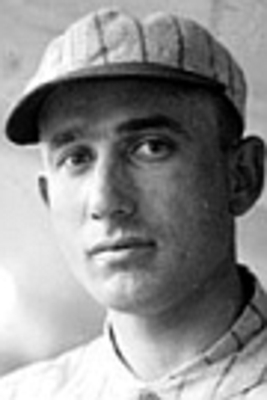
Whenever the month of September comes around, thoughts turn to BUCKY DENT'S HOME RUN October 2, 1978 and THE BOSTON MASSACRE, September 7, 1978. But there have been other marker moments that linger in memory. A brief list follows: .
SAM JONES, NO HITTER, SEPTEMBER 4, 1923
His major league career began with the Cleveland Indians in 1914, continued with the Red Sox from 1916-21, with the Yankees (1922-26), the Browns (1927), the Senators (1928-31), and the White Sox (1932-35). Twice a 20-game winner, Samuel Pond Jones won 229 games and lost 217 in 22 seasons pitching in the American League.
A stylish right-hander, one of the first major leaguers to wear eyeglasses on the field, Jones had his ups and downs. Like most pitchers of his time, he relieved and started. His eight saves in 1922 were tops in the league.. In 1923, he won 21 games, but lost a league-high 21 in 1925 as the Yanks dropped to seventh place
Jones won 67 games as a Yankee in five seasons. No game was more dramatic for him than his September 4, 1923 no-hitter, a 2-0 gem against the Athletics. It capped his career year, a time he was the Yankee ace, hurling New York to its first World Championship.
JIM ABBOTT NO HITTER, September 4, 1993
The Yankees traded for him on December 6, 1992. He was born without a right hand, but he persevered, more than persevered. A graduate of the University of Michigan, Jim Abbott carried the United States flag during the opening ceremonies at the 1987 Pan American Games in Indianapolis and pitched for the 1988 U.S. Olympic team.
In 1989, he went directly from the University of Michigan to the Angels' starting rotation. A solidly built southpaw, the intense Abbott won a dozen games and posted a 3.92 ERA in his rookie season. On the mound, he wore a right-hander's fielder's glove over the stump at the end of his right arm. After delivering a pitch and when completing his follow-through, he adroitly switched the glove to his left hand to be in a position to handle any balls batted back to him.
In 1991 he looked like one of the best young left-handers in the game after winning 18 games for the Angels while posting a 2.89 ERA. The Yankees traded their best prospect first baseman J.T. Snow and pitchers Russ Springer and Jerry Nielsen to California for Abbott. The media spotlight in New York City seemed to be on him daily. Abbott said he wanted to be like Nolan Ryan and not like Pete Gray, the one handed pitcher.
With the Yankees, Abbott had his ups and downs in two seasons in the Bronx. His record was 20-22. But he did have one especially shining moment. It came just six days after he had been touched for ten hits and seven runs in only three and a third innings against Cleveland. Facing Cleveland again, in the in the heat of the pennant race, Abbott tossed a 4-0 no-hitter against the Indians. "I remember it was a cloudy day. A day game, the kind of game I like to throw."
CAL RIPKEN: LAST YANKEE STADIUM GAME, SEPTEMBER 30, 2001
The day was drizzly and cold. The Yankees played against the Orioles for 15 innings, and the game was called finally because of rain. There were 55,351 fans around at the start and much less at the finish.
Many in the crowd had come out to see Cal Ripken, Jr. in his 126th game at Yankee Stadium, the most by an opposing player. His first game there was June 18, 1982.
There was an orange No. 8 painted on third base, as well as the Orioles' on-deck circle. Ripken was given the honor of throwing out the first pitch to Derek Jeter. Gifts presented to Ripken included a sterling silver press pin from Don Mattingly, a watch, an enlarged and framed copy of the commemorative ticket each fan was given reading "Farewell Cal Ripken.'' Black-and-white pictures of Ripken and Gehrig were on the tickets.
Ripken's pregame speech near home plate was staged near where Lou Gehrig, dying, said goodbye. "I know there will be many things that I'll miss about baseball, but coming to New York and playing in Yankee Stadium will always be at the top....
"I remember Graig Nettles making diving catches. I remember Louisiana Lightning I didn't like facing him that much. . . Willie Randolph and Dave Winfield. One of my all-time favorites at first base, Don Mattingly. It's really been a great run," Ripken said. "Let's get to the game."
The game was in Ripken's words: "Eerie. The weather, the gray sky, the wind, the rain. I was punched out four times and went 0-for-7, but I still had a lot of fun competing."
SAM JONES, NO HITTER, SEPTEMBER 4, 1923
His major league career began with the Cleveland Indians in 1914, continued with the Red Sox from 1916-21, with the Yankees (1922-26), the Browns (1927), the Senators (1928-31), and the White Sox (1932-35). Twice a 20-game winner, Samuel Pond Jones won 229 games and lost 217 in 22 seasons pitching in the American League.
A stylish right-hander, one of the first major leaguers to wear eyeglasses on the field, Jones had his ups and downs. Like most pitchers of his time, he relieved and started. His eight saves in 1922 were tops in the league.. In 1923, he won 21 games, but lost a league-high 21 in 1925 as the Yanks dropped to seventh place
Jones won 67 games as a Yankee in five seasons. No game was more dramatic for him than his September 4, 1923 no-hitter, a 2-0 gem against the Athletics. It capped his career year, a time he was the Yankee ace, hurling New York to its first World Championship.
JIM ABBOTT NO HITTER, September 4, 1993

The Yankees traded for him on December 6, 1992. He was born without a right hand, but he persevered, more than persevered. A graduate of the University of Michigan, Jim Abbott carried the United States flag during the opening ceremonies at the 1987 Pan American Games in Indianapolis and pitched for the 1988 U.S. Olympic team.
In 1989, he went directly from the University of Michigan to the Angels' starting rotation. A solidly built southpaw, the intense Abbott won a dozen games and posted a 3.92 ERA in his rookie season. On the mound, he wore a right-hander's fielder's glove over the stump at the end of his right arm. After delivering a pitch and when completing his follow-through, he adroitly switched the glove to his left hand to be in a position to handle any balls batted back to him.
In 1991 he looked like one of the best young left-handers in the game after winning 18 games for the Angels while posting a 2.89 ERA. The Yankees traded their best prospect first baseman J.T. Snow and pitchers Russ Springer and Jerry Nielsen to California for Abbott. The media spotlight in New York City seemed to be on him daily. Abbott said he wanted to be like Nolan Ryan and not like Pete Gray, the one handed pitcher.
With the Yankees, Abbott had his ups and downs in two seasons in the Bronx. His record was 20-22. But he did have one especially shining moment. It came just six days after he had been touched for ten hits and seven runs in only three and a third innings against Cleveland. Facing Cleveland again, in the in the heat of the pennant race, Abbott tossed a 4-0 no-hitter against the Indians. "I remember it was a cloudy day. A day game, the kind of game I like to throw."
CAL RIPKEN: LAST YANKEE STADIUM GAME, SEPTEMBER 30, 2001
The day was drizzly and cold. The Yankees played against the Orioles for 15 innings, and the game was called finally because of rain. There were 55,351 fans around at the start and much less at the finish.
Many in the crowd had come out to see Cal Ripken, Jr. in his 126th game at Yankee Stadium, the most by an opposing player. His first game there was June 18, 1982.
There was an orange No. 8 painted on third base, as well as the Orioles' on-deck circle. Ripken was given the honor of throwing out the first pitch to Derek Jeter. Gifts presented to Ripken included a sterling silver press pin from Don Mattingly, a watch, an enlarged and framed copy of the commemorative ticket each fan was given reading "Farewell Cal Ripken.'' Black-and-white pictures of Ripken and Gehrig were on the tickets.
Ripken's pregame speech near home plate was staged near where Lou Gehrig, dying, said goodbye. "I know there will be many things that I'll miss about baseball, but coming to New York and playing in Yankee Stadium will always be at the top....
"I remember Graig Nettles making diving catches. I remember Louisiana Lightning I didn't like facing him that much. . . Willie Randolph and Dave Winfield. One of my all-time favorites at first base, Don Mattingly. It's really been a great run," Ripken said. "Let's get to the game."
The game was in Ripken's words: "Eerie. The weather, the gray sky, the wind, the rain. I was punched out four times and went 0-for-7, but I still had a lot of fun competing."
Saturday, August 27, 2011
" A Talk in the Park" "Clubhouse Confidential," Greatest Game Ever Pitched"
It never fails to amaze one to see the volume and variety of sports books - -terrible economy or not - -that keep being published. It is a testament to the scope and hold our games have on us and the "acts of faith" by publishers and writers to serve up these tomes - - some of top quality and others middling in many ways. None of the volumes reviewed below fit into the latter category - -all belong on your sports bookshelf.
"A Talk in the Park" by Curt Smith (Potomac Books, $27.50, 308 pages) is a worthy work focused as it is as its sub-title proclaims on "nine decades of baseball tales from the broadcast booth." Active and retired "voices" participate, 116 in all, in compelling oral history story-telling.
There is Pat Hughes recalling Harry Caray broadcasting with a tea bag dangling from his ear, Bob Wolff and the longest ever wild pitch, Lou Piniella exposed in all his varied poses - -lovable and excitable and clothes and unclothed. Ranging, riveting, really great stuff, "A Talk in the Park" is baseball history as well as very up close and personal memories of changing times in broadcast booth by those who lived it. NOTABLE
"The Greatest Game Ever Pitched" by Jim Kaplan (Triumph, $24.95, 241 pages) is billed the pitching duel of century - -Juan Marichal, Warren Spahn. Its focus is a summer night in 1963 before almost 16,000 plus, a game that went 16 innings and way past midnight. Kaplan meticulously, marvelously brings back the time. TERRIFIC READ
"Clubhouse Confidential" by Luis "Squeegee" Castillo with William Kane (St. Martin's, $25,99, 293 pages) is a behind the scenes and no holds barred looked at the New York Yankees for whom he worked for as a bat boy and clubhouse attendant from 1998 to 2005. A star in his own rights, a guy who had the Bleacher Creatures calling his name, Castillo lays it all out - -wild nights and days, gambling, an inside look at the privacy of the Yankee clubhouse, what it was like to know and work with Bernie Williams, David Cone, Joe Torre, Don Zimmer, Derek Jeter, Roger Clemens, etc. "Clubhouse Confidential" is a bit self-serving, but I guess that's the nature of the genre. Tighter editing would have improved the read but for Yankee fans this is the real deal.
"A Glove of Their Own" by Debbie Moldovan, Keri Conkling and Lisa Funari-Willever (Franklin Mason Press, $15.95, illustrated by Lauren Lambiase) is a beautifully executed and carefull conceived tome. Reading it one is taken back to early days of playing the game - mine were on the "mean streets" of Brooklyn, stickball, and I did not have a glove of my own or a bat either. The book begins "In our town there's a park, with an oak tree so tall. We meet there each day, so we can play ball. The spot is home plate for our everyday game. Sticks are the bases; they work just the same." And from that beginning, the reader is swept away . . .HIGHLY RECOMMENDED
EXCELLENT E-BOOKS: For the casual fan or the totally involved, "Ballpark E-Guides" overseed by Kurt Smith http://www.ballparkeguides.com/index.html is well worth your attention. The price is right, too, just five dollars each to download with PayPal or major credit card.
Just a couple of examples that stand out for their content and execution are Yankee Stadium E-Guide http://www.ballparkeguides.com/fenway-park.html and Fenway Park E-Guide http://www.ballparkeguides.com/yankee-stadium.html. The e-guides are attractive and accesible and offer such features as All About Baseball Tickets, Parking, Food, best way to get to the Park, what to eat when you get to the game. "Tightwad Tips" is worth the price of admisison.
HIGHLY RECOMMENDED
2011 marks Harvey Frommer's 36th consecutive year of writing sports books. A noted oral historian and sports journalist, the author of 41 sports books including the classics: "New York City Baseball,1947-1957" and "Shoeless Joe and Ragtime Baseball." His acclaimed REMEMBERING YANKEE STADIUM, an oral/narrative history was published in 2008. Frommer's newest work is REMEMBERING FENWAY PARK: AN ORAL AND NARRATIVE HISTORY OF THE HOME OF RED SOX NATION (Abrams).
He is available for speaking engagements and interview. FROMMER SPORTSNET (syndicated) reaches a readership in the millions and is housed on Internet search engines for extended periods of time.
FOLLOW Harvey on Twitter: http://twitter.com/south2nd.
FOLLOW Harvey on Linked In: http://www.linkedin.com/profile/edit?locale=en_US.
"A Talk in the Park" by Curt Smith (Potomac Books, $27.50, 308 pages) is a worthy work focused as it is as its sub-title proclaims on "nine decades of baseball tales from the broadcast booth." Active and retired "voices" participate, 116 in all, in compelling oral history story-telling.
There is Pat Hughes recalling Harry Caray broadcasting with a tea bag dangling from his ear, Bob Wolff and the longest ever wild pitch, Lou Piniella exposed in all his varied poses - -lovable and excitable and clothes and unclothed. Ranging, riveting, really great stuff, "A Talk in the Park" is baseball history as well as very up close and personal memories of changing times in broadcast booth by those who lived it. NOTABLE
"The Greatest Game Ever Pitched" by Jim Kaplan (Triumph, $24.95, 241 pages) is billed the pitching duel of century - -Juan Marichal, Warren Spahn. Its focus is a summer night in 1963 before almost 16,000 plus, a game that went 16 innings and way past midnight. Kaplan meticulously, marvelously brings back the time. TERRIFIC READ
"Clubhouse Confidential" by Luis "Squeegee" Castillo with William Kane (St. Martin's, $25,99, 293 pages) is a behind the scenes and no holds barred looked at the New York Yankees for whom he worked for as a bat boy and clubhouse attendant from 1998 to 2005. A star in his own rights, a guy who had the Bleacher Creatures calling his name, Castillo lays it all out - -wild nights and days, gambling, an inside look at the privacy of the Yankee clubhouse, what it was like to know and work with Bernie Williams, David Cone, Joe Torre, Don Zimmer, Derek Jeter, Roger Clemens, etc. "Clubhouse Confidential" is a bit self-serving, but I guess that's the nature of the genre. Tighter editing would have improved the read but for Yankee fans this is the real deal.
"A Glove of Their Own" by Debbie Moldovan, Keri Conkling and Lisa Funari-Willever (Franklin Mason Press, $15.95, illustrated by Lauren Lambiase) is a beautifully executed and carefull conceived tome. Reading it one is taken back to early days of playing the game - mine were on the "mean streets" of Brooklyn, stickball, and I did not have a glove of my own or a bat either. The book begins "In our town there's a park, with an oak tree so tall. We meet there each day, so we can play ball. The spot is home plate for our everyday game. Sticks are the bases; they work just the same." And from that beginning, the reader is swept away . . .HIGHLY RECOMMENDED
EXCELLENT E-BOOKS: For the casual fan or the totally involved, "Ballpark E-Guides" overseed by Kurt Smith http://www.ballparkeguides.com/index.html is well worth your attention. The price is right, too, just five dollars each to download with PayPal or major credit card.
Just a couple of examples that stand out for their content and execution are Yankee Stadium E-Guide http://www.ballparkeguides.com/fenway-park.html and Fenway Park E-Guide http://www.ballparkeguides.com/yankee-stadium.html. The e-guides are attractive and accesible and offer such features as All About Baseball Tickets, Parking, Food, best way to get to the Park, what to eat when you get to the game. "Tightwad Tips" is worth the price of admisison.
HIGHLY RECOMMENDED
2011 marks Harvey Frommer's 36th consecutive year of writing sports books. A noted oral historian and sports journalist, the author of 41 sports books including the classics: "New York City Baseball,1947-1957" and "Shoeless Joe and Ragtime Baseball." His acclaimed REMEMBERING YANKEE STADIUM, an oral/narrative history was published in 2008. Frommer's newest work is REMEMBERING FENWAY PARK: AN ORAL AND NARRATIVE HISTORY OF THE HOME OF RED SOX NATION (Abrams).
He is available for speaking engagements and interview. FROMMER SPORTSNET (syndicated) reaches a readership in the millions and is housed on Internet search engines for extended periods of time.
FOLLOW Harvey on Twitter: http://twitter.com/south2nd.
FOLLOW Harvey on Linked In: http://www.linkedin.com/profile/edit?locale=en_US.
Thursday, August 25, 2011
DR. HARVEY FROMMER ON SPORTS
" A Talk in the Park" "Clubhouse Confidential," Greatest Game Ever Pitched"
It never fails to amaze one to see the volume and variety of sports books - -terrible economy or not - -that keep being published. It is a testament to the scope and hold our games have on us and the "acts of faith" by publishers and writers to serve up these tomes - - some of top quality and others middling in many ways. None of the volumes reviewed below fit into the latter category - -all belong on your sports bookshelf.
"A Talk in the Park" by Curt Smith (Potomac Books, $27.50, 308 pages) is a worthy work focused as it is as its sub-title proclaims on "nine decades of baseball tales from the broadcast booth." Active and retired "voices" participate, 116 in all, in compelling oral history story-telling.
There is Pat Hughes recalling Harry Caray broadcasting with a tea bag dangling from his ear, Bob Wolff and the longest ever wild pitch, Lou Piniella exposed in all his varied poses - -lovable and excitable and clothes and unclothed. Ranging, riveting, really great stuff, "A Talk in the Park" is baseball history as well as very up close and personal memories of changing times in broadcast booth by those who lived it. NOTABLE
"The Greatest Game Ever Pitched" by Jim Kaplan (Triumph, $24.95, 241 pages) is billed the pitching duel of century - -Juan Marichal, Warren Spahn. Its focus is a summer night in 1963 before almost 16,000 plus, a game that went 16 innings and way past midnight. Kaplan meticulously, marvelously brings back the time. TERRIFIC READ
"Clubhouse Confidential" by Luis "Squeegee" Castillo with William Kane (St. Martin's, $25,99, 293 pages) is a behind the scenes and no holds barred looked at the New York Yankees for whom he worked for as a bat boy and clubhouse attendant from 1998 to 2005. A star in his own rights, a guy who had the Bleacher Creatures calling his name, Castillo lays it all out - -wild nights and days, gambling, an inside look at the privacy of the Yankee clubhouse, what it was like to know and work with Bernie Williams, David Cone, Joe Torre, Don Zimmer, Derek Jeter, Roger Clemens, etc. "Clubhouse Confidential" is a bit self-serving, but I guess that's the nature of the genre. Tighter editing would have improved the read but for Yankee fans this is the real deal.
2011 marks Harvey Frommer's 36th consecutive year of writing sports books. A noted oral historian and sports journalist, the author of 41 sports books including the classics: "New York City Baseball,1947-1957" and "Shoeless Joe and Ragtime Baseball." His acclaimed REMEMBERING YANKEE STADIUM, an oral/narrative history was published in 2008. Frommer's newest work is REMEMBERING FENWAY PARK: AN ORAL AND NARRATIVE HISTORY OF THE HOME OF RED SOX NATION (Abrams).
He is available for speaking engagements and interview. FROMMER SPORTSNET (syndicated) reaches a readership in the millions and is housed on Internet search engines for extended periods of time.
FOLLOW Harvey on Twitter: http://twitter.com/south2nd.
FOLLOW Harvey on Linked In: http://www.linkedin.com/profile/edit?locale=en_US.
Friday, August 19, 2011
Pine Tar Game July 24, August 18, 1983 (From Vault)

The 1983 season was an up and down one for the Yankees. But on July 24, things were on the upside. They were positioned to take over first place as they prepared to play the Royals of Kansas City at Yankee Stadium.
The game that was played that day was fairly ordinary. As it moved to the top of the ninth inning, the Yankees had a 4-3 lead. The Royals came to bat in the top of the ninth. No one could have forecast what would come next.
There were two outs. Goose Gossage was one out away from the wrap up of the Yankee victory. George Brett had other ideas. Home run, into the stands in right field!
The Royal superstar ran out the homer that had apparently given his team a 5-4 lead. But just seconds after crossing the plate and going into his dugout, Brett saw Yankee manager Billy Martin approach home plate rookie umpire Tim McClelland.
"I was feeling pretty good about myself after hitting the homer," Brett said. "I was sitting in the dugout. Somebody said they were checking the pine tar, and I said, 'If they call me out for using too much pine tar, I'm going to kill one of those SOBs.'"
McClelland called to the Royal dugout and asked to see Brett's bat. Then he conferred with his umpiring crew. Martin watched from a few feet away. Brett looked out from the bench. Then McClelland thrust his arm in the air. It was the signal that indicated George Brett was out - - excessive use of pine tar on his bat.
McClelland had brought forth rule 1.10(b): "a bat may not be covered by such a substance more than 18 inches from the tip of the handle." The umpire ruled that Brett's bat had "heavy pine tar" 19 to 20 inches from the tip of the handle and lighter pine tar for another three or four inches.
The home run was disallowed. The game was over. The Yankees were declared 4-3 winners. Brett, enraged, raced out of the dugout. Then mayhem and fury took center stage. Brett, not your calmest player, lost it.
At one point, umpire Joe Brinkman had Brett in a choke hold. That was the easy part for the Royal superstar. The next thing that happened to him was that he was ejected from the game and went berserk. Others did, too.
Royals pitcher Gaylord Perry grabbed the bat from McClelland who tossed it to Hal McRae who passed it on to pitcher Steve Renko who was halfway up the tunnel to the team clubhouse. Then Yankee Stadium security guards grabbed him and grabbed the bat which was then impounded.
The Royals lodged a protest of the Yankee victory. The Yankees went off to Texas where they won three games and took over first place for the first time that season.
The almost comical mess was debated by baseball fans all over the nation. The media couldn't get enough of it. "Why a .356 hitter like George Brett," Time Magazine commented would lumber along with a Marv Throneberry Model (lifetime .237) is the sort of paradox that, scientists say, has trees talking to themselves."
Eventually American League president Lee McPhail over-turned McClelland's decision. Acknowledging that Brett had pine tar too high on the bat, McPhail explained that it was the league's belief that "game's should be won and lost on the playing field-not through technicalities of the rules."
Yankee owner George Steinbrenner was miffed. "I wouldn't want to be Lee MacPhail living in New York!" he snapped.
The Brett home run was re-instated. The Royals' protest was upheld. The contest was declared "suspended." Both teams were told to find a mutually agreeable time, continue playing the game and conclude it.
The date was August 18th. Play was resumed for the last four outs of a game that had begun on July 24th. The Yankees, strangely anxious to make a few more bucks, announced they would charge regular admission for the game's continuation. There were fan mumblings of protest. The Yankees quietly changed the charging admission idea. It was too late and to no avail. Only 1,200 fans showed up.
The atmosphere was bizarre. To show their rage and annoyance at the whole turn of events, the Yankees for the final out of the top of the ninth played pitcher Ron Guidry in centerfield and outfielder Don Mattingly (a lefthander) at second base. Guidry played center field because the Yankees had traded away Jerry Mumphrey, who had come into the game for defensive purposes. New York's George Frazier struck out McRae for the third out. In the bottom of the ninth Royals' reliever Dan Quisenberry was able to retire the Yankees in order.
The "Pine tar Game(s)" belonged to history.
2011 marks Harvey Frommer's 36th consecutive year of writing sports books. A noted oral historian and sports journalist, the author of 41 sports books including the classics: "New York City Baseball,1947-1957" and "Shoeless Joe and Ragtime Baseball," his acclaimed REMEMBERING YANKEE STADIUM, an oral/narrative history was published in 2008. Frommer's newest work is REMEMBERING FENWAY PARK - (http://harveyfrommersports.com/remembering_fenway/)
FOLLOW Harveyon Twitter: http://twitter.com/south2nd. on Linked In: http://www.linkedin.com/profile/edit?locale=en_US on the Web: http://www.dartmouth.edu/~frommer
Get autographed, discounted copies of books directly from the author @ harveyfrommersports.com. He is available for speaking engagements. FROMMER SPORTSNET (syndicated) reaches a readership in the millions and is housed on Internet search engines for extended periods of time.
Tuesday, August 09, 2011
The ESPN book and other Summer Reads
DR. HARVEY FROMMER ON SPORTS
"Those Guys Have All the Fun" by James Andrew Miller and Tom Shales (Little Brown, 763 pages, $27.99) is a mother lode of data about the world of ESPN. This oral history has more than 500 voices including Chris Berman, Erin Andrews, Jimmy Kimmel, Tony Kornheiser, Rush Limbaugh, Tony Hawk, Dick Vitale.
The result is a masterwork a behind-the-scenes look at the media monolith that was and now is more than ever - -ESPN told by many of the people who observed and experienced it. As an oral historian, I can truly appreciate the hard work and the creativity that went into this exceptional book. HIGHLY RECOMMENDED
From Excelsior Editions (SUNY Press) comes a quartette of sports titles of varying subject matters but all interesting. The star of the four is "The Stadium" with photographs by Jon Plasse ($19.95, coffee table size). This slim volume is sub-titled "Images and Voices of the Original Yankee Stadium." One could quibble with that wording since the "original Yankee Stadium got a face lift in the 1970s. No Matter this is a worthy work showcasing artful black and white images to my knowledge never before seen in a book. BELONGS ON YOUR SPORTS BOOKSHELF.
Others from Excelsior include: "When Boxing Was a Jewish Sport" by Allen Bodner, $24.95,207 pages, paper), "Blows to the Head" by Binnie Klein ($19.95, 197 pages). The book's slant is how boxing changed the author's mind. And finally there is "Six Weeks in Saratoga" by Brendan O'Meara ($24.95, 267 pages) all about the wondrous tale of Rachel Alexandra, the three-year-old filly who ran to triumph in the Preakness 2009.
Full disclosure: As the author of what people are calling the definitive book on Fenway: "Remembering Fenway Park" and as one of the newest members of Red Sox Nation, I am pleased to review the children's book "Frankie Goes to Fenway" by Seneca Clark and Sandy Giardi with illustrations by Julie Decedve and "Fenway Park" by Saul Wisnia.
"Frankie Goes to Fenway" (Three Bean Press, $18.95, coffee table size) is sure to please fans of all ages. It is cleverly written, artfully illustrated and a product that much loving care went into. It features Frankie who exited his Vermont domicile and happily took up residence at Fenway. It was a blissful existence until a New York cat came on the scene. HIGHLY RECOMMENDED .
The Wisnia book is a slight job with a hefty price tag 173 pages and $29.99. Many long sentences mar coherence; a good editor was needed.
2011 marks Harvey Frommer's 36th consecutive year of writing sports books. A noted oral historian and sports journalist, the author of 41 sports books including the classics: "New York City Baseball,1947-1957" and "Shoeless Joe and Ragtime Baseball," his acclaimed REMEMBERING YANKEE STADIUM, an oral/narrative history was published in 2008 as well as a reprint version of his classic "Shoeless Joe and Ragtime Baseball." Frommer's newest work is REMEMBERING FENWAY PARK: AN ORAL AND NARRATIVE HISTORY OF THE HOME OF RED SOX NATION (Abrams).
He is available for speaking engagements. FROMMER SPORTSNET (syndicated) reaches a readership in the millions and is housed on Internet search engines for extended periods of time.
FOLLOW Harvey on Twitter: http://twitter.com/south2nd.
FOLLOW Harvey on Linked In: http://www.linkedin.com/profile/edit?locale=en_US.
"Those Guys Have All the Fun" by James Andrew Miller and Tom Shales (Little Brown, 763 pages, $27.99) is a mother lode of data about the world of ESPN. This oral history has more than 500 voices including Chris Berman, Erin Andrews, Jimmy Kimmel, Tony Kornheiser, Rush Limbaugh, Tony Hawk, Dick Vitale.
The result is a masterwork a behind-the-scenes look at the media monolith that was and now is more than ever - -ESPN told by many of the people who observed and experienced it. As an oral historian, I can truly appreciate the hard work and the creativity that went into this exceptional book. HIGHLY RECOMMENDED
From Excelsior Editions (SUNY Press) comes a quartette of sports titles of varying subject matters but all interesting. The star of the four is "The Stadium" with photographs by Jon Plasse ($19.95, coffee table size). This slim volume is sub-titled "Images and Voices of the Original Yankee Stadium." One could quibble with that wording since the "original Yankee Stadium got a face lift in the 1970s. No Matter this is a worthy work showcasing artful black and white images to my knowledge never before seen in a book. BELONGS ON YOUR SPORTS BOOKSHELF.
Others from Excelsior include: "When Boxing Was a Jewish Sport" by Allen Bodner, $24.95,207 pages, paper), "Blows to the Head" by Binnie Klein ($19.95, 197 pages). The book's slant is how boxing changed the author's mind. And finally there is "Six Weeks in Saratoga" by Brendan O'Meara ($24.95, 267 pages) all about the wondrous tale of Rachel Alexandra, the three-year-old filly who ran to triumph in the Preakness 2009.
Full disclosure: As the author of what people are calling the definitive book on Fenway: "Remembering Fenway Park" and as one of the newest members of Red Sox Nation, I am pleased to review the children's book "Frankie Goes to Fenway" by Seneca Clark and Sandy Giardi with illustrations by Julie Decedve and "Fenway Park" by Saul Wisnia.
"Frankie Goes to Fenway" (Three Bean Press, $18.95, coffee table size) is sure to please fans of all ages. It is cleverly written, artfully illustrated and a product that much loving care went into. It features Frankie who exited his Vermont domicile and happily took up residence at Fenway. It was a blissful existence until a New York cat came on the scene. HIGHLY RECOMMENDED .
The Wisnia book is a slight job with a hefty price tag 173 pages and $29.99. Many long sentences mar coherence; a good editor was needed.
2011 marks Harvey Frommer's 36th consecutive year of writing sports books. A noted oral historian and sports journalist, the author of 41 sports books including the classics: "New York City Baseball,1947-1957" and "Shoeless Joe and Ragtime Baseball," his acclaimed REMEMBERING YANKEE STADIUM, an oral/narrative history was published in 2008 as well as a reprint version of his classic "Shoeless Joe and Ragtime Baseball." Frommer's newest work is REMEMBERING FENWAY PARK: AN ORAL AND NARRATIVE HISTORY OF THE HOME OF RED SOX NATION (Abrams).
He is available for speaking engagements. FROMMER SPORTSNET (syndicated) reaches a readership in the millions and is housed on Internet search engines for extended periods of time.
FOLLOW Harvey on Twitter: http://twitter.com/south2nd.
FOLLOW Harvey on Linked In: http://www.linkedin.com/profile/edit?locale=en_US.
Sunday, August 07, 2011
NUN'S DAY
By Harvey Frommer
(Excerpt from Remembering Fenway Park: An Oral and Narrative History of the Home of the Boston Red Sox/Abrams 2011 - - now available in stores and on-line and direct from the author)
JOHN SHANNAHAN: The summer of 1962 my uncles Patrick and Teddy took me to my first game, a weekday afternoon against the Minnesota Twins. We sat on the third base side, upper box seats. I asked my uncles which team is which. Red Sox are in the white uniforms and the Twins in the grey, they said. But in the bright summer sunny afternoon they all looked white to me.
It was Nun's Day, and it looked like there were thousands of nuns in front of us dressed in their old black habits with the white coifs around their faces. In the early 60s, Richard Cardinal Cushing would hold a Nun's Day at Fenway every year. Later on when I went to my second game at Fenway, I wondered: “How come the nuns aren’t here?”
BISHOP JOHN D’ARCY: Nun’s Day was a big day at Fenway. The nuns wore the old long habits and Cardinal Cushing -- a great, bigger-than-life Boston figure and a big baseball fan -- would come along. He'd wear a straw hat, which was common in those days, and a black suit. Back then the priests always wore black to the games, and there were a lot of priests at the games.
SISTER ANNE D’ARCY: There were probably hundreds of nuns at the game, from all different communities, and it was such a treat to meet the other sisters and take in the game from seats in the grandstand. It was kind of a like an outing where everyone could enjoy this treasure of this Red Sox team even if they were not that good.
ALAN CAMASSAR: On a beautiful June day, my wife and I were with our son at his first major league game. Two nuns in full black garb were behind us. It was a good game, but the Sox lost and my son was visibly disappointed. One of the nuns just reached over, put her hand on his shoulder and said, “Don’t cry. It’s just God’s will.”
About the author :
2011 marks Harvey Frommer's 36th consecutive year of writing sports books. A noted oral historian and sports journalist, the author of 41 sports books including the classics: "New York City Baseball,1947-1957" and "Shoeless Joe and Ragtime Baseball," his acclaimed REMEMBERING YANKEE STADIUM, an oral/narrative history was published in 2008, and the Boston Globe best seller REMEMBERING FENWAY PARK: AN ORAL AND NARRATIVE HISTORY OF THE HOME OF RED SOX NATION was published in 2011.
FOLLOW Harvey
on Twitter: http://twitter.com/south2nd.
on Linked In: http://www.linkedin.com/profile/edit?locale=en_US
Get autographed, discounted copies of books directly from the author @ harveyfrommersports.com. He is available for speaking engagements. FROMMER SPORTSNET (syndicated) reaches a readership in the millions and is housed on Internet search engines for extended periods of time.
Subscribe to:
Posts (Atom)