Sunday, June 21, 2009
FROM THE TRUNK: Tales from NBA Draft history
The NBA draft is all the rage. Prospects are dissected, analyzed, and compared to heroes of yesteryear. There is the pre-draft camp, the endless talk show hustle as well as fantasy drafts. Preceded by hype, hope and hoopla, the NBA Draft finally arrives with a cast of hundreds of personalities, nationally televised hour after hour. And then there is the endless post-draft commentary.
Once upon a time things were quite different in a simpler world and a smaller NBA. The first draft in 1947 saw first-round selections made by Pittsburgh, Boston, Providence, New York, Philadelphia, St. Louis, Chicago, Washington and Baltimore. No name from that first-round faraway time (aside from Knicks draftee Walt Dropo, who went on to a distinguished Major League baseball career) had any kind of real basketball impact.
The records from that primitive time are so shrouded in a time warp that a couple of the players drafted in '47 like Bob Alemeida and George Petrovick have a question mark next to their name signifying a lack of information as to the college they played for.
A few non-first-round players went on to make a name for themselves in pro ball like Andy Phillip out of Illinois, Jim Pollard from Stanford, Bob Kurland of Oklahoma A&M, and Red Rocha who had played at Oregon State.
A footnote to NBA history is Tony Lavelli of Yale, taken by Boston in the 1949 Draft. He went on to play the accordion for the Celtics at half time, sometimes. But contrary to rumors, his musical skill was not one of the reasons for Boston drafting him.
The 1950 Draft went 10 rounds for some teams and 12 for others, as a few teams lost interest. Territorial picks were sometimes much fought over and debated. The exclusive right to draft a player who came from a team's geographical region gave Philadelphia the legendary Paul Arizin in 1950.
A couple of others who went on to fame and glory were picked in that draft: Bud Grant (NFL) by Minneapolis and Bob Cousy by Tri-Cities.
The 1951 NBA Draft lasted 12 rounds, but most teams stopped picking by then.
The First Round went this way:
(Team) Player, College
1 (Baltimore) Gene Melchiorre, Bradley
2 (TriCities) Mel Hutchins, Brigham Young
3 (Indianapolis) Marcus Freiberger, Oklahoma
4 (Ft Wayne) Zeke Sinicola, Niagara
5 (Syracuse) John McConathy, NW Louisiana
6 (NY Knicks) Ed Smith, Harvard
7 (Boston) Ernie Barrett, Kansas State
8 (Rochester) Sam Ranzino, North Carolina State
9 (Philadelphia) Don Sunderlage, Illinois
10 (Minneapolis) Whitey Skoog, Minnesota*
*The pick of Skoog was a Territorial one.


Thursday, June 18, 2009
The Book Review: “Torre,” “A-Rod,” “Yogi” and “Munson”
Yankee legends past and present are well represented by publishers this spring. For somewhat more than a hundred dollars a quartette of works focused on Joe Torre, Alex Rodriguez ,Yogi Berra and Thurman Munson are there for the buying and taking away. If you are a die-hard fan of the Bronx Bombers – these books will have a fatal attraction.
“The Yankee Years” by Torre and Tom Verducci (Doubleday, $26.95, 502 pages) is a mother lode of info - a lot of it previously in newspapers, magazines, other books and on the internet. The book’s major focus is on the time Joe Torre took over as manager until he was given an offer he could refuse and moved on to pilot the LA Dodgers. Gossip, glory, grievance all intermingle.
“A – Rod” by Selena Roberts (Harper,$26.99, 272 pages) has a bit more finesse and full disclosure to it than Torre’s tome and all credit goes to the author for that whether or not Alex Rodriguez was amused or bemused by what she has written. But we walk away after reading about the multi--talented athlete and tortured human being, after reading about his over the top hedonism, his on and off again drug use, his foibles and fakery - - asking do we really care? Just another greedy and disjointed talent afflicted by too much, too soon!
Allen Barra’s “Yogi Berra Eternal Yankee” (Norton, $27.95, 98 photographs, 451 pages) is a page turner. Filled with anecdotes and insights, filled with the long run of Lawrence Peter Berra from the hill in St. Louis to the top of the world as Yankee icon and baseball fable, “Yogi Berra Eternal Yankee” written by no relation Allen Barra -- is the guy to turn around a Mickey Mantle phrase - -who makes Berra more than human. We see him warts and all in this carefully crafted treatment. HIGHLY RECOMMENDED
“Munson:The Life and Death of a Yankee Captain” by Marty Appel (Doubleday, $26.00, 375 pages) is a labor of love and a love of labor, creating as it does an intimate portrait of one of the most under-rated and complex of Yankees. It was thirty years ago that the multi-talented Appel teamed with the Yankee catcher on his autobiography. Now “Munson:The Life and Death of a Yankee Captain” offers closure and climax to that tome and loads of insights and tales.
Harvey Frommer is his 33rd consecutive year of writing sports books. The author of 40 of them including the classics: "New York City Baseball,1947-1957" and "Shoeless Joe and Ragtime Baseball," his acclaimed REMEMBERING YANKEE STADIUM, an oral/narrative history (Abrams, Stewart, Tabori and Chang) was published in 2008 as well as a reprint version of his classic "Shoeless Joe and Ragtime Baseball." The prolific Frommer is at work on REMEMBERING FENWAY PARK (2010).
Frommer sports books are available direct from the author - discounted and autographed.
FROMMER SPORTSNET (syndicated) reaches a readership in the millions and is housed on Internet search engines for extended periods of time.
Friday, June 12, 2009
"Lucky Lindy" and the '27 Yankees
The 13th of June , 1927, was one of the great testimonial days in the history of New York City. Millions cheered as a ticker-tape parade welcomed Charles A. Lindbergh who had defied death and gained immortality flying "The Spirit of St. Louis" solo across the Atlantic Ocean to Paris and back.
Once an unknown, the 25-year-old "Lucky Lindy" was now too well known for some tastes. It was claimed in some quarters that the young aviator was a bigger star than Babe Ruth, if one could believe that.
Mark Koenig did not. The Babe, the Yankee second baseman argued, was larger than Charles Lindbergh, larger than life. "My God, the way people would come from all over to see him. You had to be there to believe it."
You had to be in New York City that day to believe the fuss made about the peerless pilot. "Col Lindbergh, New York City is yours," Mayor Jimmy Walker, told him at the City Hall lovefest. "I don't give it to you. You won it."
Lindbergh rode bare-headed in an open automobile in what in later times was to be called the "Canyon of Heroes." There were estimates that 4 million people were there to see him and that tons and tons of confetti were showered down upon him.
At the Stadium that day the Yankees were pitted against Cleveland. Lou Gehrig with a .394 batting average, 14 homers and an incredible 60 RBIs torqued the Yankee dynamo. The 20,000 die-hard fans who definitely cared more about their team than Lindbergh had a good time seeing New York pulverize the Indians, 14-6. Native Alabaman Ben Paschal had one of his greatest days in baseball, probably his greatest, ripping two homers (he had but 24 in his career), a triple and double and scored five times. Lazzeri and Dugan also homered while Collins contributed a grand slam. The victory triggered the longest Yankee winning streak of the season - nine games, June 13th through July 23rd.
June 14 was a rainy day and the Yankees did not play. Their lead over the second place White Sox was five games. At this mid point in their sensational season the Yankee lineup caused extreme stress to any pitcher who had the misfortune to face it. It was truly Murderers Row, a killing squad with thunder aplenty. As the admiring members of the New York press kept pointing out day after day if one of the Yankees sluggers didn't hurt the opposing team, another one would. You could count on it.
Harvey Frommer is his 33rd consecutive year of writing sports books. The author of 40 of them including the classics: "New York City Baseball,1947-1957" and "Shoeless Joe and Ragtime Baseball," his acclaimed REMEMBERING YANKEE STADIUM, an oral/narrative history (Abrams, Stewart, Tabori and Chang) was published in 2008 as well as a reprint version of his classic "Shoeless Joe and Ragtime Baseball." The prolific Frommer is at work on REMEMBERING FENWAY PARK (2010).
Frommer sports books are available direct from the author - discounted and autographed.
FROMMER SPORTSNET (syndicated) reaches a readership in the millions and is housed on Internet search engines for extended periods of time.
Monday, June 08, 2009
Baseball Names - and How They Got That Way! Part X
The words and phrases are spoken and written day after day, year after year - generally without any wonderment as to how they became part of the language. All have a history, a story. For those of you who liked Part I, Part II, Part III and all the others and wanted more, here is more. As always, reactions and suggestions always welcome.
MAN, THE (STAN THE MAN) Stanley Frank Musial, St. Louis Cardinal baseball immortal, batted .315 as a rookie in 1942, when he was 21 years old. In 1962, at the age of 41, he hit .330-one point under his lifetime batting average. Musial is the all-time Cardinal leader in games played, runs, hits, doubles, triples, homers, and total bases. His twisted, crouched, coiled stance at the plate enabled him to slash the ball with power or stroke it with finesse to any part of the playing field. Musial was an especially successful hitter in the small confines of Ebbets Field. His specialty was slamming frozen rope doubles off the outfield walls. Dodger fans had difficulty pronouncing his name, sometimes calling him "Musical." Many of the black Dodger fans simply referred to Musial as "the Man" in tribute to the power and style he displayed. Eventually fans all over the league used this nickname-a reference not only to Musial but to the respect due his power and authority.
MAN IN THE IRON HAT Yankee owner Captain Tillinghast L'Hommedieu Hutson wore the same squished derby hat over and over again.
MAN NOBODY KNOWS Catcher Bill Dickey, Yankee immortal, because of his blandness.
MAN OF A THOUSAND CURVES His nickname was a bit hyperbolic, but the major league batters who swung at his stuff and came up empty might not disagree with it. For Johnny Sain, talented star of the Boston Braves and other teams, curveball pitches were a trademark and the reason for his nickname. He allegedly had such pitching skill that his curves dropped, darted, hesitated, broke wide, broke fast, broke slow, broke twice. There may not have been a thousand curves, but there were enough variations on these curves Sain possessed that the effect on batters was the same (see "SPAHN AND SAIN AND PRAY FOR RAIN").
MAN O' WAR Sam Rice was a fleet-footed outfielder and was called Man O' War" after the famous racehorse of his era.
MANDRAKE THE MAGICIAN During the late 1 940's and into the 1950's, Don Mueller of the New York Giants appeared to have a special gift with a bat in his hands. His lifetime batting average was a respectable .296, yet he never led the league in any hitting category. His nickname came from his expert bat-manipulation and his ability to hit the ball where he wanted it to go.
MAJOR Ralph Houk, for rank held in the Armed Forces and demeanor MARSE JOE Hall of Fame Manager Joe McCarthy, , for his commanding style.
MARVELOUS MARV Marvin Eugene Throneberry was perhaps born to be a New York Met. His initials spelled out the name and his personality and limited skills underscored the characteristics of the 1962 New York expansion team. Throneberry, who looked like Mickey Mantle batting but did not get the same results, labored through a seven-year, four-different-team major league career- the Mets were his last team. He is a gentle, fine humored man, and sportswriters hung the nickname on him in good-natured jest. Throneberry loved it and went along with their efforts to depict him as a clown. Once a teammate dropped an easy fly ball. Marvelous Marv smiled and shouted, "What are you trying to do anyway, steal my fans?" "MASTER Builder IN BASEBALL Jacob Ruppert, and that he was.
MASTER MELVIN Mel Ott was a power-armed right fielder for 22 years with the New York Giants. He smashed 511 home runs in a fabled career that saw him average better than a hit a game while compiling a lifetime batting average of .304. Ott became a Giant at the age of 16-and that's how his nickname came about. Ott's Hollywood-type beginning was recalled by Eddie Logan, Giants equipment manager, who was about the same age as Ott at the time and was sent to pick up the youth: "We had the 9th Avenue El at the time. Mr. McGraw had told him to ride the El to the last stop, which was the Polo Grounds. He took the El the wrong way and wound up at the Battery. I looked for the straw suitcase. I found him. I said, 'C'mon boy, let's go.' He got the biggest thrill riding back on the train." Labeled "McGraw's baby," Ott was in only 35 games in 1926, then 82 in 1927. "He's too young to play big-league ball," McGraw said, "but I am afraid to send him to the minors and have a manager there tinker with his unorthodox batting style. The style is natural with him. He'll get results as soon as he learns about big-league pitching." And he did.
Harvey Frommer is his 33rd consecutive year of writing sports books. The author of 40 of them including the classics: "New York City Baseball,1947-1957" and "Shoeless Joe and Ragtime Baseball," his acclaimed REMEMBERING YANKEE STADIUM, an oral/narrative history (Abrams, Stewart, Tabori and Chang) was published in 2008 as well as a reprint version of his classic "Shoeless Joe and Ragtime Baseball."
The prolific Frommer is at work on REMEMBERING FENWAY PARK (2010).Frommer sports books are available direct from the author - discounted and autographed.FROMMER SPORTSNET (syndicated) reaches a readership in the millions and is housed on Internet search engines for extended periods of time.
Friday, May 29, 2009
The Book Review: “Straw” and “’78”

Oh, how many times did I watch Darryl Strawberry do his thing especially as a member of the New York Mets. In so many ways he was the most talented of players I had ever seen. And in so many ways he was the biggest disappointment.
Now in “Straw” with John Strausbaugh (Ecco/HarperCollins, $26.99, 240 pages) Strawberry explains how the wheels came off his wagon, how and why he got violent, into drugs and alcohol, how being a celebrity got to be too much, how he overcame colon cancer. If you are into inspirational memoir – this is for you.
“’78: The Boston Red Sox, a Historic game, and a Divided City” by Bill Reynolds (New American Library, $24.95, 305 pages) is recommended reading for Red Sox fans delving as it does into that tale told many times about that special season and the sociological pressures that afflicted the city of Boston. Tighter editing might have made it a better read and an index would have been useful as a road map for what at times becomes a maze of material not totally sorted out.
For the younger sporting fans - - and there are so many of them – two books especially belong on the bookshelf - “Baseball Great” & “The Prince of Fenway Park”
“Baseball Great" by Tim Green (HarperCollins Children’s Books, $16.99, 250 pages) is geared to ages 8 and up. It is compelling, a thriller, a book that places its 12-year-old central character Ty Lewis is a precarious position in this football and pro gambling subject matter centered to me.
“The Prince of Fenway Park” by Julianna Baggott HarperCollins Children’s Books, $16.99, 322 pages) is aimed at ages 8-12. The book is especially appealing to me in the midst of writing REMEMBERING FENWAY PARK. Part fantasy, part legend, part reversing the curse, part baseball novel - - “The Prince of Fenway Park” is all about Oscar Egg, aged twelve. Potter-ish reading!
Harvey Frommer is his 33rd consecutive year of writing sports books. The author of 40 of them including the classics: "New York City Baseball,1947-1957" and "Shoeless Joe and Ragtime Baseball," his acclaimed REMEMBERING YANKEE STADIUM, an oral/narrative history (Abrams, Stewart, Tabori and Chang) was published in 2008 as well as a reprint version of his classic "Shoeless Joe and Ragtime Baseball." The prolific Frommer is at work on REMEMBERING FENWAY PARK (2010).
Frommer sports books are available direct from the author - discounted and autographed.
FROMMER SPORTSNET (syndicated) reaches a readership in the millions and is housed on Internet search engines for extended periods of time.
Monday, May 18, 2009
The Book Review: “Bases Loaded,” “The Baseball Hall of Fame” and more . . .
Kirk Radomski was employed in the clubhouse of the New York Mets for a decade. Now in his first book “Bases Loaded” (co-authored by David Fisher (Hudson Street Press, $25.95, 246 pages) the chief figure inn the Mitchell Reports takes the reader behind the scenes for some little tolds stories of the steroid scandal in baseball. It is an eye raising book, a story whose end is not yet in sight, a book as timely as today’s headlines. Controversy and conflict dogged Radmoski who became the main clubhouse supplier of performance enhancing drugs to nearly 300 major leaguers.
“The Baseball Hall of Fame” by Bert Randolph Sugar” (Running Press, $35.00, 272 pages, more than 500 photos) is the mother of all books on the shrine in Cooperstown, New York. Page after page of items from the Hall’s collection intermingle with the text of Sugar, an old hand at the sports book game – he has written more than 50 books. Recommended
From Clerisy press in Cincinnati comes a quartette of baseball books aimed at all kinds of readers and for all types of tastes. “365 Oddball Days in Boston Red Sox History” by John Snyder ($12.95, 372 pages, paper) is an almanac style tome that picks up a lot of eccentric nuances of Sox history through the years. “Rollie’s Follies” by Rollie Fingers ($14.95, 228 pages, paper) is a collection of stats, lists and lore – all very illuminating and entertaining. “Cincinnati’s Crosley Field” by Greg Rhodes and John Eradi ($25.00, 216 pages, paper) is a perfect book for fans of the Reds and others into baseball history showcasing as it does the old ballpark in words and picture. And finally “Dodgers Journal” by John Snyder ($29.95, 800 pages, paper) is a fountainhead of all kinds of information about the franchise since its inception in 1884.
For the golfers for getting or giving there is Homer Kelley’s “Golfing Machine” by Scott Gummer (Gotham Books/Penguin, $26.00, 267 pages) an illuminating look at nuances of the game and the genius whose theories revolutionized it.
Harvey Frommer is his 33rd consecutive year of writing sports books. The author of 40 of them including the classics: "New York City Baseball,1947-1957" and "Shoeless Joe and Ragtime Baseball," his acclaimed REMEMBERING YANKEE STADIUM, an oral/narrative history (Abrams, Stewart, Tabori and Chang) was published in 2008 as well as a reprint version of his classic "Shoeless Joe and Ragtime Baseball." The prolific Frommer is at work on REMEMBERING FENWAY PARK (2010).
Frommer sports books are available direct from the author - discounted and autographed.
FROMMER SPORTSNET (syndicated) reaches a readership in the millions and is housed on Internet search engines for extended periods of time.
HarveyFrommerSports.com http://frommerluxurytravel-arts.com/
......................................................................
http://www.sunypress.edu/details.asp?id=61871 (IT HAPPENED IN THE CATSKILLS, new edition)
http://www.sunypress.edu/details.asp?id=61872 (IT HAPPENED IN BROOKLYN, new edition)
Saturday, May 09, 2009
Remembering Dom DiMaggio

Sicilian immigrants Giuseppe -- the fisherman -- and Rosalie lived in the North Beach section of San Francisco and raised nine children. Three of the five boys became big league ball players. The last one, Dominic Paul DiMaggio, passed away a couple of days ago at the age of 92.
I was probably the last one to interview him. He is my 130th voice for the opus I am working on - - REMEMBERING FENWAY PARK: AN ORAL AND NARRATIVE HISTORY, slated for 2010 publication.
The man they dubbed the "Little Professor" because of his spectacles and 5-foot-9, 168-pound frame was a hell of a ballplayer even though he played in the gigantic shadows of Ted Williams and brother Joseph. He hit in 34 straight games in 1949, a streak snapped when big brother Joe snared a sinking line drive in a 6-3 Red Sox win over the Yankees.
I reached Dominic Paul DiMaggio on the phone not too long after he passed his 92nd birthday.
“How much time do you need?” he asked. “Thirty minutes.”
“Too much. How about five minutes”
We settled on 20 minutes, and I was told to talk louder throughout. What follows are some of the more moving and interesting aspects of the oral history that should make their way into the book. The words reveal a confident and intelligent man, who had a little tartness to him.
DOM DIMAGGIO: The first time I walked into Fenway Park was April 1940 before the season started, and there was ice on the field. It was a bit of a shock for me having been in California all my life. I was wondering how we were going to start on time. I do believe we did.
The weather wasn’t that bad. But there were cold days. I loved Fenway Park because it was cozy. Playing baseball there was a pleasure and a joy. It was close to the public and the whole thing was a perfect picture in my mind.
The atmosphere was increased when the Red Sox and Yankees played and you could feel that and so I enjoyed playing against New York.
In 1941, when my brother Joe had the hitting streak going, Ted would be talking to the guy in the scoreboard and the guy would keep him posted when Joe got a hit. You couldn’t do that at any other park.
There were times at Fenway when Joe would be coming in from centerfield and I would be coming out. I said very little to him on those occasions. What the hell was I going to do, stop in centerfield and have a conversation?
Sam Mele wasn’t a bad outfielder. Ted Williams wasn’t a bad outfielder either especially at Fenway Park - he played that wall nicely.
I enjoyed a challenge and Fenway Park did offer a challenge because of its structure and that was something but other than that it was a pleasure to play in. Having played there so often for so many years and so many games I felt I mastered the ballpark and got along beautifully with the fences. They didn’t hurt me and I didn’t hurt them.
I did not shoot for the Green Monster. No. I was an all-around hitter, a line-drive hitter, a damn good one too. I loved to hit in Fenway.
Harvey Frommer is his 33rd consecutive year of writing sports books. The author of 40 of them including the classics: "New York City Baseball,1947-1957" and "Shoeless Joe and Ragtime Baseball," his acclaimed REMEMBERING YANKEE STADIUM, an oral/narrative history (Abrams, Stewart, Tabori and Chang) was published in 2008 as well as a reprint version of his classic "Shoeless Joe and Ragtime Baseball." The prolific Frommer is at work on REMEMBERING FENWAY PARK (2010).
Frommer sports books are available direct from the author - discounted and autographed.
FROMMER SPORTSNET (syndicated) reaches a readership in the millions and is housed on Internet search engines for extended periods of time.
Saturday, May 02, 2009
The Book Review: "Yankee Colors” by Al Silverman and Other Notable Reads
The avalanche of quality sports books keeps on coming. They arrive in all sizes and shapes, from major publishers and pretenders to the throne, from first time authors and veterans of the trade. There is room for all in the frenzied, fabulous and fulfilling world of sports books.
“Yankee Colors” with text by Al Silverman and photographs by Marvin E. Newman with a foreword by Yogi Berra who not only seems to be everywhere but is (Abrams, $35.00, 200 full-color and 35 black and white photographs) is a paean to times past, specifically as the sub-title proclaims the glory years of the Mantle era. If you are a fan of lush, lovely, likable photo books with pleasing prose or a Yankee fan of a certain age the book is a must. For others it is highly recommended reading and browsing in a remarkable trip down Yankee memory lane from 1949 to 1963 with the legendary figures in Bronx Bomber history. Newman was a long time contributor to Sports Illustrated and Silverman was at the top of the game as a sportswriter in that time period. `
“Jerry Remy’s Red Sox Heroes” by the one and only Jerry Remy, former Sox star and current winning broadcaster, plus Corey Sandler (Globe Pequot, $24.95, 227 pages) is an up close and personal look at 44 players ranked as the best of all time in BoSox history. You may argue with some of the choices but you will probably lose. The RemDawg knows his stuff and you will too after reading this book.
Continuing in an olde towne team frame of mind there is “The Boston Red Sox From Cy to the Kid” by Mark Rucker and Bernard M. Corbett (Arcadia Publishers, $19.99, 128 pages, paper). A bit pricey especially in these down economic times, the slim product is nevertheless Boston Red Sox illustrated history at a glance.
“Baseball and the Baby Boomer” by Talmage Boston (Bright Sky Press, $24.95, 288 pages) is part history, part commentary, part memoir – all worthwhile. Talmage Boston, a trial lawyer and baseball historian, is at the top of his game in this terrific tome that has detailed essays and strong opinions on such as Jackie Robinson, Mickey Mantle, Jimmy Piersall, Roger Maris, Bart Giamatti, Nolan Ryan. A lot of the book in Boston’s words “defends the feats of Maris and Ryan from the ravages of the steroid era.” And that alone (although there are many other reasons) is a strong argument for one to buy this thoughtful book.
For those trivia buffs among you comes a series of books just up your alley - -THE GREAT BOOK OF SPORTS LISTS series. Cities included are Philadelphia, Denver, Washington, DC, Cleveland, Detroit, Seattle, Los Angeles and San Francisco. Prices at $14.94, published by Running Press, all paperbacks, the books are geared to fans of specific teams and written by different authors. `
BOOKENDS: “Breaking the Slump” by Jimmy Roberts (HarperCollins, $24.99 249 pages) is all about lessons learned by great players who went on from their worst moments in golf. There are all kinds of highly interesting personal stories from some of the greats.
Harvey Frommer is his 33rd consecutive year of writing sports books. The author of 40 of them including the classics: "New York City Baseball,1947-1957" and "Shoeless Joe and Ragtime Baseball," his acclaimed REMEMBERING YANKEE STADIUM, an oral/narrative history (Abrams, Stewart, Tabori and Chang) was published in 2008 as well as a reprint version of his classic "Shoeless Joe and Ragtime Baseball." The prolific Frommer is at work on REMEMBERING FENWAY PARK (2010).
Frommer sports books are available direct from the author - discounted and autographed.
FROMMER SPORTSNET (syndicated) reaches a readership in the millions and is housed on Internet search engines for extended periods of time.
Tuesday, April 21, 2009
The Book Review: “Bottom of the Ninth” by Michael Shapiro and other Reads
If you like an untold story, and who of us does not, and if you are even a little bit of a sports junky than “Bottom of the Ninth” by Michael Shapiro ( Times Books, $26.00, 303 pages) belongs on your reading list. It is as its sub-title proclaims about Branch Rickey, Casey Stengel and the Daring Scheme to Save Baseball From Itself.
Shapiro, author of “The Last Good Season,” is in top form breaking new ground and providing new awarenesses of a little reported on chapter in American sports history – the aborted attempt by Branch Rickey to create the Continental League and Casey Stengel’s yen to remake the ways in which the national pastime was played. A good read.
“Crystal Clear” by Eric Le Marque with Davin Seay (Delacorte, $24.00, 256 pages) is the remarkable story of the author’s attempt to snowboard California’s Mammoth Mountain. Trapped by an approaching storm, he survived in sub freezing temperatures for 8 days but at a cost – he would lose both legs below the knees through frostbite. This is the story of a true “Miracle Man.”
“The Unwritten Rules of Baseball” by Paul Dickson (Harper, 256 pages, $14.95, paper) is an interesting reference read on the sub-text of the national pastime.
“The Baltimore Elite Giants” by Bob Luke (Johns Hopkins University Press, 192 pages) is a raising of consciousness about one of the legendary teams from the old Negro Leagues.
From “MR. RED SOX BOOKS” - Bill Nowlin - comes another couple of winners edited by him - - “The Ultimate Red Sox Home Run Guide” (Rounder Books, $18.95, 192 pages, paper) and “Lefty, Double-X and The Kid,” (Rounder Books, $18.95, 165 pages, paper). The former book is chock full of relevant, irreverent and very informative data on circuit clouts and their place in BoSox legend, lore and fact. The latter book is all one would want to know (and some things one might not want to know) about the Boston Red Sox of 1939. Both books HIGHLY RECOMMENDED for Red Sox fans.
Harvey Frommer is his 33rd consecutive year of writing sports books. The author of 40 of them including the classics: "New York City Baseball,1947-1957" and "Shoeless Joe and Ragtime Baseball," his acclaimed REMEMBERING YANKEE STADIUM, an oral/narrative history (Abrams, Stewart, Tabori and Chang) was published in 2008 as well as a reprint version of his classic "Shoeless Joe and Ragtime Baseball." The prolific Frommer is at work on REMEMBERING FENWAY PARK (2010).
Frommer sports books are available direct from the author - discounted and autographed.
FROMMER SPORTSNET (syndicated) reaches a readership in the millions and is housed on Internet search engines for extended periods of time.
Monday, April 13, 2009
Jackie Robinson Remembered (FROM THE VAULT)
He was born in Cairo, Georgia on the last day of January in 1919, and died on October 24, 1972 in Stamford, Connecticut. A chilly April 15, 1947 was the day he broke baseball's color barrier at Ebbets Field, the lone black man wearing the ice cream white uniform of the Brooklyn Dodgers.
The man they called "Robby" attended UCLA, where he won letters in three sports. He was in the Army during World War II and then played briefly in the Negro Leagues when the war ended. He was signed to a minor league contract with the Montreal Royals in 1946 by Branch Rickey, and the following year came up to the Brooklyn Dodgers and broke baseball's age-old color line.
He played in the major leagues for a decade. He won the inaugural Rookie of the Year Award in 1947, the National League Most Valuable Player Award in 1949, and he helped the Dodgers win six pennants and one world championship.
Despite all the pressure he played under, he was still able to record a lifetime batting average of .311. His base-stealing ability and hustle won many games for the Dodgers. He set several records for fielding for second basemen.
His influence on sports is immeasurable. His breaking of baseball's color line against the greatest of odds is still one of the most dramatic stories in all of sports history. And there are those who still have special memories of the man and the legend. Here is how one from that time still remembers the great player Brooklyn Dodger fans called "Robby".
When school was out, I sometimes went with my father in his taxi. One summer morning, we were driving in East Flatbush in Brooklyn down Snyder Avenue. My father pointed to a dark red brick house with a high porch.
"I think Jackie Robinson lives there," my father said. He parked across the street and we got out of the cab, stood on the sidewalk and looked at the house. Suddenly, the front door opened. A black man in a short-sleeved shirt stepped out. I didn't believe it. Here we were on a quiet street on a summer morning with no one else around.
The man was not wearing the baggy, ice-cream-white-uniform of the Brooklyn Dodgers that accentuated his blackness. He was dressed in regular clothes, coming out of a regular house in a regular Brooklyn neighborhood, a guy like anyone else going out for a bottle of milk and a newspaper.
Then, incredibly, he crossed the street and came right toward me. Seeing that unmistakable pigeon-toed walk, the rock of the shoulders and hips that I had seen so many times before on the baseball field, I had no doubt who it was.
"Hi Jackie, I'm one of your biggest fans," I said self-consciously. "Do you think the Dodgers are going to win the pennant this year?"
"His handsome face looked sternly down at me. "We'll try our best," he said.
"Good luck," I said."
"Thanks," he replied."
He put his big hand out, and I took it. We shook hands and I felt the strength and firmness of his grip. I was a nervy kid, but I didn't ask for an autograph or try to prolong the conversation. I just he walked away down the street.
Harvey Frommer is his 33rd consecutive year of writing sports books. The author of 40 of them including the classics: "New York City Baseball,1947-1957" and "Shoeless Joe and Ragtime Baseball," his acclaimed REMEMBERING YANKEE STADIUM, an oral/narrative history (Abrams, Stewart, Tabori and Chang) was published in 2008 as well as a reprint version of his classic "Shoeless Joe and Ragtime Baseball." The prolific Frommer is at work on REMEMBERING FENWAY PARK (2010).
Frommer sports books are available direct from the author - discounted and autographed.
FROMMER SPORTSNET (syndicated) reaches a readership in the millions and is housed on Internet search engines for extended periods of time.
Sunday, April 12, 2009
THE BOOK REVIEW
“George” by Peter Golenbock
I had two chance encounters with George Steinbrenner and both were memorable.
I was sitting in his office at Yankee Stadium with the late Robert Merrill, the great opera singer, who for many Yankee fans was better known as the man who sang the "Star Spangled Banner." I was interviewing Merrill for a profile. This was late 1980s. Steinbrenner charged in, military stance, bristly and in charge.
"What the hell are you doing here?" he snapped at me.
"I was invited in here by Mr. Merrill."
"What for?"
When I explained, the Yankee principal owner relaxed and told me to get myself a drink. I declined saying I wanted to fully concentrate on my interviewing job at hand. Hearing that and no longer of interest to him apparently, Steinbrenner exited.
The second meeting was around the same era at Madison Square Garden at half time in the VIP quarters where drinks flowed freely and most tried to show off their hoop IQs. Steinbrenner came by and exchanged pleasantries with the late Red Holzman, then the former and legendary coach of the New York Knicks who I was with.
“The Boss” then turned to me.
“And you are writing Red’s autobiography.”
“Yes,” I said.
Those two encounters with G. Steinbrenner revealed a lot about the man. But those two encounters only were surface insights.
To read "George” by Peter Golenbock (Wiley, $26.95, 366 pages) is to get the total package of a complex, driven, nasty man who has his “good side,” too.
"George” is a page turner carefully crafted by one of America’s most skilled sports authors. It is a book that is part Golenbock autobiography but all Steinbrenner. Sub-titled “The Poor Little Rich Boy Who Built The Yankee Empire,” is a tome created over a couple of decades from more than 100 interviews and prodigious research.
Golenbock, a best selling author several times over, has out-done himself in this sweeping narrative of George Steinbrenner’s life and times. Golenbock has out-done himself in this terrific tome that gives an up close and sometimes too personal portrait of the man many have called "the Boss."
To read "George" is to read the definitive book on the principal owner of the Yankees.
BOOKENDS: “The Baseball Economist” by J. C. Bradbury (Plume, $15.00, 337 pages, paper) is a treatise and an argument about many of baseball’s cherished myths - like steroids are not the reason for behind the breaking of home run records, etc.
“The 1969 Miracle Mets” by Steven Travers (The Lyons Press, $24.95, 185 pages) was created to pay homage to one of the more popular NYC baseball teams. Unfortunately, it falls short in many ways – priced too high for too little, rehashing rehashed data and recycling stock photos – Met fans deserve better.
Harvey Frommer is his 33rd consecutive year of writing sports books. The author of 40 of them including “New York City Baseball,1947-1957″ and “Shoeless Joe and Ragtime Baseball”. His “Remembering Yankee Stadium: An Oral and Narrative History of the House that Ruth Built” (Abrams, Stewart, Tabori and Chang) was published in 2008 as well as a reprint version of his “Shoeless Joe and Ragtime. His REMEMBERING FENWAY PARK will be published in 2010.
Frommer sports books are available direct from the author - discounted and autographed. FROMMER SPORTSNET (syndicated) reaches a readership in excess of one million and appears on Internet search engines for extended periods of time.
**Last call for Fenway Memories - now working on "Remembering
*****Fenway Park" - will feature stories– first game attended, marker moments, odd events, tales of a special player at the Fens, architectural features... Please contact me by e-mail if you have something to contribute.
Saturday, April 04, 2009
Opening Day at Yankee Stadium: 1927
 1927 (last season before the grandstand was extended around past the foul poles)
The old Yankee Stadium still stands but the new one (as if we needed it) is in place poised for its first opening day.
One of the most memorable of openings days at the “House That Ruth Built” took place in 1927 when the old Yankee Stadium was just four years old.
Owner Colonel Jacob Ruppert was very upbeat about prospects for baseball in 1927 but was muted in his predictions for his team. He did not seem to have a clue as to what tremendous accomplishments lay ahead for his Yankees.
“Everything indicates that 1927 will be one of the most remarkable in baseball history,” Ruppert told reporters. Although born in New York, he had never lost the German accent inherited from his paternal grandfather. It was an accent that became thicker when he became emotional, usually when talking about the Yankees.
On April 10th , a New York Times headline proclaimed:
“BIG LEAGUE SEASON TO OPEN ON TUESDAY: Yanks Will Greet Athletics, Picked by Many to Win Flag, at the Stadium”
“Well, it won't be long now,” James R. Harrison wrote in The Times. “Only a few days more and the greatest show on earth will be on. Tired business men will lock their desks and go uptown for an important "conference" at 3:30 P.M. The mortality rate among the grandparents of office boys will take an alarming jump . . .”
Everything was in readiness for the Yankees of New York beginning their fifth season at their majestic Yankee Stadium home field in the Bronx.
"The big parade toward Yankee Stadium started before noon yesterday,” Peter Vischer described Opening Day 1927 in the New York World. “Subways brought ever-increasing crowds into the Bronx. Taxicabs arrived by the hundreds. Buses came jammed to the doors. The parade never stopped.”
"Yankee Stadium was a mistake, not mine but the Giants’," Ruppert had said. The site was chosen for among other reasons to irritate the Yankees former landlords the Giants and because the IRT Jerome Avenue subway line snaked its way virtually atop the Stadium's right-field wall.
Built at a cost of $2.5 million, "The Yankee Stadium", as it was originally named, and nick-named "the House that Ruth Built,"when the park first opened in 1923 by Fred Lieb always one especially handy coming up with a catch phrase, had a brick-lined vault storing electronic equipment under second base, making it feasible to have a boxing ring and press area on the infield.
Yankee Stadium was the first ballpark to be called a stadium. A mammoth horseshoe shaped by triple-decked grandstands, the edifice’s huge wooden bleachers circled the park. The 10,712 upper-grandstand seats and 14,543 lower grandstand seats had been fixed in place by 135,000 individual steel castings upon which 400,000 pieces of maple lumber were fastened by more than a million screws. Sod from Long Island, 16,000 square feet of it, was trucked in.
The Stadium had eight toilet rooms for men and as many for women scattered throughout the stands and bleachers, a nice touch for the time. A 15-foot deep copper facade adorned the front of the roof, covering much of the Stadium's third deck, giving it an elegant almost dignified air. This decorative and distinctive element was the ball park’s logo.
Seating capacity in 1927 was now 62,000, increased from 58,000. The admission price for the 22,000 bleacher seats (the most in baseball) was reduced in 1927 from 75 cents to 50 cents. Grandstand admission was $1.10. All wooden seats were painted blue. In right center field there was a permanent "Ruthville" sign. Sometimes , the area was also called "Gehrigville".
The left-field pole was but a short 281-foot poke from home plate. It was 415 feet to left, 490 feet to left center, 487 feet to dead center, 429 feet to right center, 344 feet to right, and 295 feet down the right field line. The 82 feet behind home plate made for plenty of room for a catcher to run and chase wild pitches, passed balls, foul balls.
Above the bleachers in right centerfield was the manual scoreboard. The Yankee bullpen looked out on left centerfield. The dark green Yankee dugout was on the third base side of the field and remained there until 1946.
"By game time the vast structure was packed solid," Peter Vicher’s article continued. "April 12, 1927, Opening Day at Yankee Stadium. Rows of men were standing in back of the seats and along the runways. Such a crowd had never seen a baseball game or any other kind of game in New York."
The crowd was the largest in all the history of baseball, 73,206, breaking the previous attendance record of 63,600 that had been set in Game 2 of the 1926 World Series. Another 25,000 were turned away.There were 9,000 guests of the New York Yankees plus one thousand who were able to get in with passes.
On the balmy, almost summery day, the Seventh Regiment Band dressed in gray outfits began playing with vim and gusto. Red coated ushers, really into their effort of trying to keep the level of behavior orderly, worked the crowd, seating people.
At 3:25 the string bean manager Cornelius McGillicuddy (Connie Mack) of the Philadelphia Athletics, in dark civilian clothes and high stiff collar who was featured on that week’s Time Magazine cover, and the wisp of a Yankee pilot Miller Huggins posed for photographs.
Mayor Jimmy Walker, 45, typified New York City and the 1920s. A svelte, more dressed up model of the gregarious Babe Ruth, Walker in 1927 was happily involved with Betty Compton, 23, an actress. The two of them, it was said, had a gay time of it in their Ritz Hotel suite. Largely ignoring public mention of the relationship, the press instead gave lots of attention to the way Walker dressed, the parties he attended, the stories he told.
Urbane, dashing, positioned in Ruppert's private box, the Mayor threw out the first ball – twice, taking no chance to miss a photo op, to Eddie Bennett, referred to in newspapers of the time as “the hunchback bat boy.”
Bennett gave players their bats, presented baseballs to umpires. He let his cap and hump be rubbed by Yankees before games. He sat on the bench next to Miller Huggins, observing and pointing out things out on the field, a kind of precursor to today’s bench coaches. He would bring bicarbonate of soda to Babe Ruth before every game generally during batting practice after the big man had downed his massive quota of hot dogs and soda pop.
Ruth and Bennett would create laughs for early arrivals at the Stadium by engaging in a highly animated game of catch. Starting about ten feet apart, they would toss the ball back and forth. Ruth would throw the ball after a while about a foot above Bennett’s reach, and he would scamper after it. They would repeat the routine and the Yankee mascot would bitch a bit to the Babe who would feign total innocence. The game continued until Bennett found himself backed up against the screen behind home plate. To some, the whole ritual was viewed as cruel behavior on Ruth’s part, a taunting, shaming of a cripple. It wasn’t – just two guys playing around.
On this day of days, the Yankees had two loud voiced announcers using megaphones to inform the crowd of the on-the- field goings on. Previously one megaphoner had sufficed, colorful Jack Lentz, longtime announcer, who wore a derby hat and sometimes mangled the King's English. He was joined by George Levy, who had made a reputation working the Polo Grounds. He wore a soft hat and made use of a smallish megaphone. The work of the announcers was simple: speak the name of each player as he came to bat; keep silent after that except when a new player entered the game.
Knowledgeable fans noticed a significant change in New York’s white wool flannel home uniforms for 1927. "Yankees" was now on the front of the jersey rather than the name of the city. Navy blue vertical pinstripes and stirrups accentuated the uniform. Players wore navy blue caps with a white interlocking "NY" in script on the front. The v-necked shirts had a brief tapered extension around the neck. Sleeves extended over the elbows, and the knicker pants reached just below the knees. Belts and cleats were black. On the road, the team from the Bronx would wear a gray uniform with "YANKEES" in navy blue block letters across the chest, and two colored stirrups, navy blue on top and rust on bottom.
By noon, a carnival-like atmosphere pervaded the area around Yankee Stadium. Swarms of hawkers, vendors, gawkers and fans intermingled in a circus of sounds and colors.
By three o'clock most unreserved seats had been snatched up. Lines of police were at River Avenue in the back of the park and also along the approaches in front of the Stadium. New York’s Finest checked carefully allowing only those with tickets to pass.
It was exactly half past three when the game got underway.
This was the Yankee Opening Day lineup:
Earle Combs cf
Mark Koenig ss
Babe Ruth rf
Lou Gehrig 1b
Bob Meusel lf
Tony Lazzeri 2b
Joe Dugan 3b
Johnny Grabowski c
Waite Hoyt p
The Yankees, scoring four runs in the fifth and sixth innings, triumped , 8-3, They were in first place where they would remain day in and day out throughout the season.
Harvey Frommer is his 33rd consecutive year of writing sports books. The author of 40 of them including the classics: "New York City Baseball,1947-1957" and "Shoeless Joe and Ragtime Baseball," his acclaimed REMEMBERING YANKEE STADIUM, an oral/narrative history (Abrams, Stewart, Tabori and Chang) was published in 2008 as well as a reprint version of his classic "Shoeless Joe and Ragtime Baseball." The prolific Frommer is at work on REMEMBERING FENWAY PARK (2010).
Frommer sports books are available direct from the author - discounted and autographed.
FROMMER SPORTSNET (syndicated) reaches a readership in the millions and is housed on Internet search engines for extended periods of time.
Wednesday, April 01, 2009
CHILDREN'S SPORTS BOOK REVIEWS
A Trio of "Sluggers" By The Team of Loren Long & Phil Bildner From Simon and Schuster Books For Young Readers/Aladdin Will Appeal To Youngsters and Others, Too.
"Water, Water Everywhere" ($14.95, 259 pages, hardcover) is the remarkable story of the Travelin' Nine making their way in a barnstorming tour across the USA. Spread over 21 concise and highly readable chapters and adorned with "inky" black -and white images, this is a book to treasure.
"Magic in the Outfield" ($5.99, 136 pages, paper) melds old-time baseball again with those inky and quite marvelous Loren Long images.
"Horsin' Around" ($5.99, 195 pages, paper) is set in the year 1899 and is about family, faith and baseball. And once again features those inky and quite marvelous Loren Long images.
"Before They Were Famous Babe Ruth" by Vito Delsante with remarkable illustrations by Andres Vera Martinez (Aladdin, $8.99, 120 pages, paper) is all about the young "Sultan of Swat" in comic strip form because he became what he would become. HIGHLY RECOMMENDED
Harvey Frommer is his 33rd consecutive year of writing sports books. The author of 40 of them including the classics: "New York City Baseball,1947-1957" and "Shoeless Joe and Ragtime Baseball," his acclaimed REMEMBERING YANKEE STADIUM, an oral/narrative history (Abrams, Stewart, Tabori and Chang) was published in 2008 as well as a reprint version of his classic "Shoeless Joe and Ragtime Baseball." The prolific Frommer is at work on REMEMBERING FENWAY PARK (2010).
Frommer sports books are available direct from the author - discounted and autographed.
FROMMER SPORTSNET (syndicated) reaches a readership in the millions and is housed on Internet search engines for extended periods of time.
Thursday, March 26, 2009
Remembering Brothers Richman, Arthur & Milt
Back in the day in the late fifties when I was a journalism major at New York University I worked the five P.M. to past midnight shift at United Press International then located in the New York Daily News Building not far from the United Nations.
It was there that I met Milton Richman, the outgoing and at the same time introspective top gun in the sports department. I was a lowly sports assistant but he mentored me, cared about me and truly kick-started my career in sports journalism. Lessons learned from him are still part of my craft.
The typing back then was on old IBM clunky typewriters and yellow paper. I would do a story and there was Milt standing behind me telling to write "faster, faster," to leave stuff out, to reverse sentence structure, to get a more exciting lead. Truly, it was like a post graduate course in the intricacies and nuances of how to be a fast and efficient writer of all things sports.
We would go out for dinner very late and sometimes Milt's younger brother Arthur would come along. He was then a sports writer for the New York Daily Mirror, of not such blessed memory. It was in these Richmanesque supper times that I learned more about the brothers, how much affection they had for each other, what New York characters they were, how their knowledge and contacts in the world of sports reached Niagaraesque heights.
I also learned about their passion for the St. Louis Browns. As kids, the brothers Richman used to hang out by the visiting players' gate at Yankee Stadium and when the St. Louis Browns visited they adopted the brothers taking them on trains to Philadelphia and Boston.
Arthur Richman died in his sleep at age 83 in his Manhattan apartment on March 25th ending a life of 40 years in baseball where his greatest claim to fame was recommending Joe Torre as manager. He was laid to rest in his 1944 Browns' cap.
Milton Richman passed in 1986. He was inducted into the writers' wing of the Hall of Fame in 1981.
Now the brothers Richman belong to history; they will not be forgotten.
Harvey Frommer is his 33rd consecutive year of writing sports books. The author of 40 of them including the classics: "New York City Baseball,1947-1957" and "Shoeless Joe and Ragtime Baseball," his acclaimed REMEMBERING YANKEE STADIUM, an oral/narrative history (Abrams, Stewart, Tabori and Chang) was published in 2008 as well as a reprint version of his classic "Shoeless Joe and Ragtime Baseball." The prolific Frommer is at work on REMEMBERING FENWAY PARK (2010).
Frommer sports books are available direct from the author - discounted and autographed.
FROMMER SPORTSNET (syndicated) reaches a readership in the millions and is housed on Internet search engines for extended periods of time.
SPRING BASEBALL BOOKS PART 3: THE BOOK REVIEW
“Bill James Gold Mine,” “Sweet Lou and the Cubs,” “The Fielding Bible,” “Graphical Player” “Tim McCarver’s Diamond Gems”
This spring has once again seen the pub of many different kinds of sports books – and especially baseball books with a statistical slant. For those into that kind of thing, this is especially good news.
“Bill James Gold Mine,” (Acta Sports, $23.95, 271 pages. paper) is the latest publication from the man who made his mark in the 1970s and 1980s and is still going strong asking the right questions, asking ways to measure players and aspects of the game. Stats, charts, tables, essays – if you are a Bill James fan – this is the book to grab hold of.
“Sweet Lou and the Cubs” by George Castle (The Lyons Press, $16.95, 283 pages, paper) is all about one of the nicest men in baseball – public image for some notwithstanding. Castle has been a coverer of the Cubs since 1980 and for the past two seasons has seen Piniella up close. This is a book filled with gossip, inside scoops, new awarenesses. Must read for fans of the Cubbies.
“The Fielding Bible, Volume II” by John Dewan ($23.95, 400 pages, paper) is a mother lode of all kinds of info on the area of fielding, an area that has been largely overlooked in most analytical treatments on the national pastime. There are defensive scouting reports, defensive runs saved, a couple of interesting essays by the one and only bill James. “The Fielding Bible, Volume II” is a keeper.
“Graphical Player” with a host of contributors featuring writers from “Heater” magazine (ActaSports, $21.95, paper) is highly recommended fir veteran fantasy players and all interested in new insights and ways to look at major and minor leaguers. This sixth edition of “Graphical Player” boasts dashboards revealing at a glance much info.
“Tim McCarver’s Diamond Gems” (McGraw-Hill, $24.95, 270 pages) edited by is an interesting kind of book showcasing as it does favorite baseball stories from the multitude of celebrities who have appeared on his show through the years. From managers thru catchers to the rest of the lineup, the book is a treasure chest of baseball legend, love, and lore.
Backlist item: “Shooting the Pistol” ( Louisiana State University Press, $23.00, 120 pages) is a picture book with images created by Danny Brown. It showcases one of basketball’s flashiest performers in his glory days at LSU.
Harvey Frommer is his 33rd consecutive year of writing sports books. The author of 40 of them including “New York City Baseball,1947-1957″ and “Shoeless Joe and Ragtime Baseball”. His “Remembering Yankee Stadium: An Oral and Narrative History of the House that Ruth Built” (Abrams, Stewart, Tabori and Chang) was published in 2008 as well as a reprint version of his “Shoeless Joe and Ragtime
Frommer sports books are available direct from the author - discounted and autographed. FROMMER SPORTSNET (syndicated) reaches a readership in excess of one million and appears on Internet search engines for extended periods of time.
**Call for Fenway Memories - now working on "Remembering
*****Fenway Park" - will feature stories– first game attended, marker moments, odd events, tales of a special player at the Fens, architectural features... Please contact me by e-mail if you have something to contribute.
Tuesday, March 24, 2009
REMEMBERING GEORGE KELL
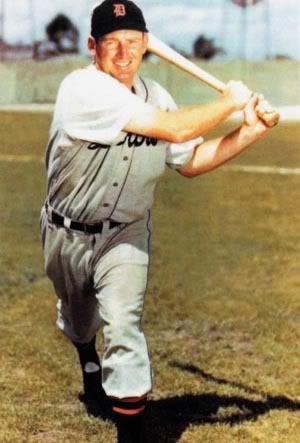
The sad news of passing of Hall of Famer George Kell at his home in Swifton, Arkansas in his sleep on March 24, 2009 has just come out.
The former star third baseman Kell grew up in Swifton and lived in the same house from his birth to the time it burned down in 2001. It was rebuilt on the same land.
I had the good fortune to interview this true southern gentlemen and twice over the past few years – for my REMEMBERING YANKEE STADIUM (2009) and for my REMEMBERING FENWAY PARK to be published in 2011. Both times he was forthcoming, anecdotal, interesting.
For the Yankee Stadium book he offered unique insights about what it was like to come in and perform there as an opposing player.
The multi-time All Star played for the Red Sox from 1952 to 1954 and really enjoyed the fans and the environment at Fenway Park.
Here, in draft form, is just some of the oral history subject matter he gave me: (FOR MORE - - BUY REMEMBERING FENWAY PARK in 2010)
GEORGE KELL: Fenway Park was sort of made for me. I didn’t have a lot of power. I’m a right-handed hitter and I could reach that left-field fence occasionally. And I just loved that ballpark. The people were great. The stands were full every day. It was just baseball, baseball. I couldn’t wait to get out there.
I was traded from Detroit to Boston on June 3, 1952: Hoot Evers, Johnny Lipon, and Dizzy Trout for Bill Wight, Walt Dropo, Fred Hatfield, Johnny Pesky, and Don Lenhardt. and the first day there I hit a home run over the left-field fence and I hit a double off of the left-field fence and I thought “my goodness, what could I do here? I’m liable to hit a lot of home runs and a lot of doubles.” But it wasn’t that way, it wasn’t that easy. They pitch you a little different. They’re not going to keep bringing the ball inside to where you can pull it all the time.
I began my career in 1943 with Philadelphia had played in Fenway as an opposing player for quite a few seasons coming in with the Athletic uniform and then the Tiger uniform.
There was something about Boston and it still is today. I was traded for an idol: Pesky. But I did get a wonderful reception. I broadcasted for the Tigers for 37 years. I came into Fenway all through the summers at various times. There is something about Fenway Park that is a little bit different.
I felt like I would never go into a slump at Fenway Park. I felt like I could always reach that wall out there one time everyday, but I didn’t. But it felt that way. And I felt like I could hit .300 there and I did the years I was there.
Everybody was trying to pull the ball. And I don’t think I ever had so many hot shots hit right at me by people just like myself who were trying to reach the left-field wall. Day after day after day that I was very busy at third base. That didn’t bother me. But I had to be more alert. There was not a lot of bunting, everybody was trying to reach the left-field fence and could. It was not an easy place to play third base.
Ted Williams came back from the Korean War and played at the end of my career there. Yes, I got to be close friends with Ted Williams. Maybe for one specific reason. When I won the batting title on the last day of the season in 1949, I won it because Ted went hitless that last day and I had a couple of hits. And I won it by two thousandths of point and boy I tell you to me it was tremendous for me but a tremendous loss for him because he was he was the all-time great hitter. And the next year at Fenway a man asked me if I would pose for a picture with Ted Williams. I left the dugout and I started over there.
Ted said, “No, no, no, we are going to make it in front of your dugout because you won the batting title from me fair and square.”
And I thought, “what a wonderful man he is.” We remained good friends from then on. . . .
Harvey Frommer is his 33rd consecutive year of writing sports books.
The author of 40 of them including the classics: "New York City Baseball,1947-1957" and "Shoeless Joe and Ragtime Baseball," his acclaimed REMEMBERING YANKEE STADIUM, an oral/narrative history (Abrams, Stewart, Tabori and Chang) was published in 2008 as well as a reprint version of his classic "Shoeless Joe and Ragtime Baseball." The prolific Frommer is at work on REMEMBERING FENWAY PARK (2010).
Frommer sports books are available direct from the author - discounted and autographed.
FROMMER SPORTSNET (syndicated) reaches a readership in the millions and is housed on Internet search engines for extended periods of time.
Saturday, March 21, 2009
What's in a Yankee Nickname? (I)
Yankee nick-names have run the gamut from complimentary to embarrassing, from hero worshipping to amusing from over-reaching to on target. Herewith, a sampler.
"The Babe" George Herman Ruth leads off the list and paces the list in most nick-names acquired. First called "Babe" by teammates on the Baltimore Orioles, his first professional team because of his youth, G.H.Ruth was also called "Jidge" by Yankee teammates, short for George. He called most players "Kid," because he couldn't remember names, even of his closest friends. Opponents called him "The Big Monk" and "Monkey."
Many of Babe Ruth's nick-names came from over-reaching sports writers who attempted to pay tribute to his slugging prowess:
"The Bambino", "the Wali of Wallop", "the Rajah of Rap", "the Caliph of Clout", "the Wazir of Wham", and "the Sultan of Swat", The Colossus of Clout, Maharajah of Mash, The Behemoth of Bust, "The King of Clout."
Other Yankee nick-names, expressions, bon mots of note for "Babe" and "Ruth" In spring training 1927, Babe Ruth bet pitcher Wilcy Moore $l00 that he would not get more than three hits all season. A notoriously weak hitter, Moore somehow managed to get six hits in 75 at bats. Ruth paid off his debt and Moore purchased two mules for his farm. He named them "Babe" and "Ruth."
"Babe Ruth's Legs" - Sammy Byrd, used as a pinch runner for Ruth "Bam-Bam" - Hensley Meulens could speak about five languages and had a difficult name to pronounce.
"Banty rooster" - Casey Stengel nickname for Whitey Ford because of his style and attitude.
"Battle of the Biltmore" 1947 Series celebration in Manhattan's Biltmore Hotel was a time and place where Larry MacPhail drunkenly fought with everyone and ended his Yankee ownership time.
"Biscuit Pants" - A reference to the well filled out trousers of Lou Gehrig.
"Billyball" - the aggressive style of play utilized by Billy Martin
"Blind Ryne" - Ryne Duren because of his very poor vision, uncorrected -20/70 and 20/200.
"Bob the Gob" - Bob Shawkey spent most of 1918 in the Navy as a yeoman petty officer aboard the battleship Arkansas.
"The Boss" - A a formerly apt description of Yankee owner, George Steinbrenner
"Boomer" - David Wells, for his in your face personality.
"The Boston Massacre" - described the way the Red Sox collapsed in 1978 and the seep of a four game series by the Yankees that September.
"Broadway" - Shortstop Lyn Lary was married to Broadway star Mary Lawler.
"Bronx Bombers" For the borough and home run power.
"Bronx Zoo" a derogatory reference to off color behavior on and off the playing field through the years and especially in the 1970s.
"Brooklyn Schoolboy" was what they called Waite Hoyt for his time as a star pitcher at Erasmus High School.
"Bulldog" - Jim Bouton, for his tenacity.
"Bullet Bob" - Bob Turley, for the pop on his fastball.
"Bye-Bye"- Steve Balboni, the primary DH of the 1990 Yankees had 17 homers but hit just .192.
''Carnesville Plowboy'' - Spud Chandler for his hometown of Carnesville
"Deacon" - Everett Scott, for his not too friendly look.
"Georgia Catfish" - Jim Hunter, name given to him by Oakland owner Charles Finley
""the CAT-a-lyst," name given to Mickey Rivers by Howard Cosell for his ability to trigger Yankee team offense.
"Chairman of the Board" - Elston Howard came up with the phrase in tribute to Whitey Ford and his commanding and take charge manner on the mound.
"Clutch versus Clutch" - qualitative commentary about Yankee-Red Sox competition.
"Columbia Lou" - Lou Gehrig because of his collegiate roots.
"Commerce Comet" - Mickey Mantle
"The Count" - Sparky Lyle, handlebar mustache and lordy ways
"The Crow" - Frank Crosetti loud voice and chirpy ways
"Danish Viking" - George Pipgras, for his size and roots.
"Daddy Longlegs. - Dave Winfield, for his size and long legs.
"Death Valley" - the old deep centerfield in Yankee Stadium - a
home run here was a mighty poke.
"Dial-a-Deal - Gabe Paul earned this one for his telephone trading habits.
"Donnie Baseball" - Don Mattingly was the only player in any sport to have a nickname with the actual name of his or her sport in it. Some say it was coined by Yankee broadcaster Michael Kay; others say it came from Kirby Pucket. Kay takes the credit; Mattingly gives the credit to Puckett.
"El Duque" - Orlando Hernandez
"El Duquecito" -ADRIAN HERNANDEZ because of a pitching style similar to Orlando "El Duque" Hernandez, the younger Cuban is of no relation to his elder countryman.
"Ellie" - affectionate abbreviation of Elston Howard's first name
"Father of the Emory Ball" Rookie right-hander Russ Ford posted a 26-6 record with 8 shutouts, 1910
Fireman" - The first to have this nick-name was Johnny Murphy, the first great relief pitcher who put out fires. Joe Page picked up this nick-name for his top relief work later on.
"Five O'clock Lightning" - At five o'clock the blowing of a whistle at a factory near Yankee Stadium signaled the end of the work day in the 1930s and also what the Yankees were doing to the opposition on the field.
Flash" - Joe Gordon earned this nick-name because of his fast, slick fielding and hot line drives.
Four hour manager" - Bucky Harris, who put his time in at the game and was finished.
"Fordham Johnny" - for the college Johnny Murphy attended.
"Friday Night Massacre" - April 26, 1974, Yankees Fritz Patterson, Steve Kline, Fred Beene, Tom Buskey, and half the pitching staff were traded to Cleveland for Chris Chambliss, Dick Tidrow, and Ceil Upshaw.
"Gator" - Ron Guidry, who came from Louisiana alligator country.
"Gay Caballero" - Lefty Gomez for his Mexican roots and fun loving ways.
"Gay Reliever" - Joe Page for his night owl activity.
" Gehrigville." Bleachers in right-center at Yankee Stadium.
"The Godfather" - Joe Torre, for his Italian roots and his leadership skills on the baseball field.
"Gooneybird" - Don Larsen's teammates called him that for his late-night behavior.
"Goofy" or "El Goofo" - earned by Lefty Gomez for his wild antics
"Goose" Gossage
"The Great Agitator" -for Billy Martin, self explanatory.
"Grandma" - it was not a nick-name Johnny Murphy liked, but he was called that for his pitching motion, rocking chair style. Another story is that fellow Yankee Pat Malone gave him the name because of his complaining nature especially as regards food and lodgings.
"Happy Jack" Jack Chesbro's time as an attendant at the state mental hospital in Middletown, New York where he pitched for the hospital team and showed off a very pleasant disposition won him the nickname.
"Holy Cow" - one of Phil Rizzuto's ways of expressing awe
"Horse Nose" - a nick-name given catcher Pat Collins by Babe Ruth, a reference to a facial feature.
"Horsewhips Sam" - Sam Jones earned this because of his sharp-breaking curve ball.
"House That Ruth Built" - Ruth's immense popularity that propelled the Yankees into their new home, Yankee Stadium
"Home Run" - Frank Baker, for the two game winning homers he hit in the 1911 World Series.
"Home run twins" Mickey Mantle and Roger Maris, phrase coined in 1961.
"Iron Horse" - Lou Gehrig
"Joltin' Joe" - Joe DiMaggio, for the jolting shots he hit.
"Jumping Joe" Joe Dugan earned his nickname for being AWOL from his first big league club as a youngster
"Junk Man" - Eddie Lopat frustrated hitters off stride with an assortment of slow breaking pitches thrown with cunning and accuracy.
"Kentucky Colonel" - Earl Combs came from Kentucky
"The King and the Crown Prince" - Babe Ruth and Lou Gehrig
King Kong" Charlie Keller earned this nick-name because of his muscular body type and black, bushy brows.
"Knight of Kennett Square" - Herb Pennock because he raised thoroughbreds and hosted fox hunts in his home town of Kennett Square, Pennsylvania.
Knucksie" - Phil Niekro because of his knuckleball
Harvey Frommer is his 33rd consecutive year of writing sports books. The author of 40 of them including the classics: "New York City Baseball,1947-1957" and "Shoeless Joe and Ragtime Baseball," his acclaimed REMEMBERING YANKEE STADIUM, an oral/narrative history (Abrams, Stewart, Tabori and Chang) was published in 2008 as well as a reprint version of his classic "Shoeless Joe and Ragtime Baseball." The prolific Frommer is at work on REMEMBERING FENWAY PARK (2010).
Frommer sports books are available direct from the author - discounted and autographed.
FROMMER SPORTSNET (syndicated) reaches a readership in the millions and is housed on Internet search engines for extended periods of time.
Thursday, March 12, 2009
BASEBALL NAMES AND HOW THEY GOT THAT WAY (Part 9)
Another spring. Another baseball season. Another time for baseball lingo to be spoken, The words and phrases are used and written day after day, year after year - generally without any wonderment as to how they became part of the language. All have a history, a story.
For those of you who liked Parts I – VIlI. and wanted more, here is more.
As always, reactions and suggestions always welcome "Wabash George" ("Big George")moniker for George Mullin because he played semi-pro ball in Wabash, Indiana. He hurled for the Detroit Tigers from 1902-1913 among other teams.
"Walk-off home run" game ending home team home run in the bottom of the ninth inning or in an extra inning game.
"Wall-scraper" home run when ball hits the outfield fence above the home-run line.
"Wahoo Sam" Sam Crawford, Detroit Tiger star and Hall of Famer, hailed from Wahoo, Nebraska.
"Whale" Former Brooklyn Dodger hurler Don Newcombe was called this for his size and some would say slow manner. ("Newk") was used too, a shortening of his surname.
"White Rat" Former manager Whitey Herzog earned the name for his blonde hair and scheming ways.
"The Whiz Kids" Back in the 1950's the Phillies had a really young team that was surprisingly good.
"The Wheeze Kids" The Philadelphia Phillies had some good teams in the 1980s that featured old timers like Steve Carlton Pete Rose, etc.
"The Wild Hoss of the Osage" Oklahoma bred Johnny Leonard Roosevelt Martin of the St. Louis Cardinals in the 1930s ("pepper") Martin, an aggressive player, was said to play baseball like a "wild mustang" and was given his nickname in the minor leagues.
"The Wild Thing" Mitch Williams, pitcher, would hit and walk a lot of batters, as well as throw a lot of wild pitches. He also had wild hair and a wild pitching motion. This nickname was also used in the movie "Major League."
"Willie the Wonder" Hyperbolic name pinned on Willie Horton who played for several American League teams in 1960s and 1970s and impressed people with his talent.
"Walking Man” Eddie Yost played nearly two decades in the major leagues. His lifetime batting average was only .254, but that didn't keep him off the bases. Yost coaxed pitchers into yielding I,614 walks to him--almost a walk a game through his long career--which places him fifth on the all-time bases- on-balls list.
"The Weatherman" Mickey Rivers had a knack for predicting weather.
"The Warrior" Paul O'Neill had this name pinned on him by George Steinbrenner as a nod to the Yankee outfielder's fiery ways.
“Wee Willie” He was born March 3, 1872, in Brooklyn, New York. He died on January 1, 1923, in Brooklyn, New York. William Henry Keeler made his debut at the Polo Grounds as a member of the New York Giants on September 30, 1892. He singled off the Phillies' Tim Keefe for the first of his 2,926 career hits. The son of a Brooklyn trolley switchman, Keeler Two years later became a member of the famed Baltimore Orioles. A lefty all the way, he weighed only 140 pounds and was a shade over 5'4". His tiny physical stature earned him his nickname, but pound for pound he was one of the greatest hitters baseball ever produced. Keeler played for 19 years and recorded a lifetime batting average of .345, fifth on the all-time list. He collected 2,962 hits in 2,124 games, spraying the ball to all fields. Wee Willie's greatest year was 1897, a season in which he batted .432, recorded 243 hits and 64 stolen bases, and scored 145 runs. He swung a bat that weighed only 30 ounces, but as he said, he "hit 'em where they ain't" --and that was more than good enough to gain Keeler entry into baseball's Hall of Fame in 1939.
Keeler opened the 1897 season with two hits in five at bats against Boston. Then for two months the slight southpaw swinger slapped hit after hit, game after game - from April 22 to June 18 - for 44 straight games. His record stood for 44 years until Joe DiMaggio came along and snapped it in 1941.
The Sporting News offered this mangled prose about Keeler as a fielder. "He swears by the teeth of his mask-carved horse chestnut, that he always carries with him as a talisman that he inevitably dreams of it in the night before when he is going to boot one - muff an easy fly ball, that is to say, in the meadow on the morrow. 'All of us fellows in the outworks have got just so many of them in a season to drop and there's no use trying to buck against fate'."
In 1898, a year after Keeler batted that astonishing .432, he set a mark for hitting that will probably never be topped, notching 202 singles in just 128 games. He truly was hitting them where the fielders weren't. It was a season in which the left-handed bat magician recorded 214 hits. His batting average was .379, but the incredible amount of singles amassed saw him register a puny .410 slugging percentage. That 1898 season Keeler came to bat 564 times in 128 games and walked only 28 times and did not strike out.
A slugger he was not. But, oh what a hitter!
William Henry Keeler played 19 years in the major leagues and finished his career with a .345 lifetime batting average. Quite justifiably the little man was one of the first to be enshrined in the National Baseball Hal of Fame in 1939.
“The Whip” A 6'6" right-hander, Ewell Blackwell had a sidearm motion and a crackling fastball that terrorized National League batters in the 1940's and 1950's. The former Cincinnati star's right arm seemed to "whip" the ball in at the batter, and that's how his nickname came to be. Winner of sixteen straight games in 1947, he struck out almost a batter an inning during his ten year career.
“Wild Horse of the Osage” Johnny Leonard Roosevelt Martin, better known as Pepper Martin, starred for 13 seasons with the National League's St. Louis Cardinals. He could hit, he could run, he could field, he could throw, he could win--and he did all of these things with wild abandon, with an élan and a verve that earned him his nickname. If he couldn't stop a hard smash down to his third-base position with his glove, he would stop the ball with his chest. If he could not get into a base feet-first, he would leap into the air and belly-flop his way there. Martin took the extra base, risked the daring chance, played with fire and fury. Three times in the mid-1930's he led the league in stolen bases, and throughout that decade he functioned as the horse that led the Cardinal "Gashouse Gang" (see GASHOUSE GANG).
"Wizard of Oz" An abbreviation of his first name and tip of the cap to Ozzie Smith for his peerless fielding skills. No other shortstop could get to the ball as fast as, and utilize the fielders around him like Ozzie.
"Yo-Yo" - for small size and hyper activity, Luis Arroyo
"You Could Look It Up" Casey Stengel began his major league playing career in 1912, his managing career in 1934. He played for 14 years, managed for 25 years. His baseball career ended in 1965 after stints with the Brooklyn Dodgers, Boston Braves, Pittsburgh Pirates, Philadelphia Phillies, New York Giants, New York Yankees, New York Mets. Casey could talk for hours about baseball and life. And sometimes in the midst of animated conversation about a utility outfielder on the old Boston Braves, or a balk by a forgotten pitcher on the Pittsburgh Pirates--to emphasize that he was not relating fiction he would exclaim: "You could look it up!"
Harvey Frommer is his 33rd consecutive year of writing sports books. The author of 40 of them including the classics: "New York City Baseball,1947-1957" and "Shoeless Joe and Ragtime Baseball," his acclaimed REMEMBERING YANKEE STADIUM, an oral/narrative history (Abrams, Stewart, Tabori and Chang) was published in 2008 as well as a reprint version of his classic "Shoeless Joe and Ragtime Baseball." The prolific Frommer is at work on REMEMBERING FENWAY PARK (2010).
Frommer sports books are available direct from the author - discounted and autographed.
FROMMER SPORTSNET (syndicated) reaches a readership in the millions and is housed on Internet search engines for extended periods of time.
Monday, March 02, 2009
Spring Baseball Books Part II: “Under The March Sun,” “Becoming Manny,” “As They See ‘Em,” “Hardball Times Season Preview 2009”
All sizes, all shapes and for all tastes and budgets the spring 2009 parade of books about different aspects of the national pastime keep coming. Some are from famous authors and major publishers with some advertising and marketing muscle behind them. Others are by first time of little known authors from mid-level or small houses. All have something to offer – especially if you are a baseball fan.
“Definitive, fascinating, a groundbreaking cultural and sports history of spring training from humble origins to mega-million status today. A winner.” Those are the words I used to blurb “Under The March Sun” by Charles Fountain (Oxford University Press ($24.95, 336 pages) when I first came into contact with the work before it was an actual book. I feel the same way about it now. Fountain has created a fountainhead of work from the phenomenon’s origins in the 19th century to the present – this is a home run of a book filled with anecdotes, facts, facets bound to illuminate and entertain.
“Becoming Manny” is the effort of Dr. Jean Rhodes, the world’s leading expert on youth mentoring and a professor at the University of Massachusetts in Boston and Shawn Boburg, a reporter at the Record in New Jersey. Published by Scribner, priced at $25.00, 304 pages – this carefully crafted work - - the result of unlimited access to Manny Ramirez and his family, friends, teammates and handlers is fascinating stuff about the man many view as the Greta Garbo of baseball. What you see is often not what you get. In the crass and common world of gee whiz biographies, this combo bio and autobiography reveals much about a gifted and sensitive athlete and the world he lives in. Its sub-title proclaims: “Inside the Life of Baseball’s Most Enigmatic Slugger” and that it is. NOTABLE!
“As They See ‘Em,” Scribner, $26.00, 352 pages) is an inside book compiled by author Bruce Weber after talking with about one third of the umpires who plied their tough trade 2006-2008 - - and that is only part of this effort.
Weber, who has been with The New York Times in various roles since the mid 1980s, reveals a journalist’s curiosity and a fan’s zeal as he ranges far and wide over issues, icons, irritations and insights. If the wide world of umpires is your dish – this is the book for you.
“Hardball Times Season Preview 2009” (Acta Sports, $19.95, 296 pages) is a bargain for all it has to offer. A think tank of analyses, graphs, stats, essays, projection and commentaries for over a thousand players and all 30 MLB teams – this is a mother and father lode of all stuff baseball for the new season.
Harvey Frommer is his 33rd consecutive year of writing sports books. The author of 40 of them including the classics: "New York City Baseball,1947-1957" and "Shoeless Joe and Ragtime Baseball," his acclaimed REMEMBERING YANKEE STADIUM, an oral/narrative history (Abrams, Stewart, Tabori and Chang) was published in 2008 as well as a reprint version of his classic "Shoeless Joe and Ragtime Baseball." The prolific Frommer is at work on REMEMBERING FENWAY PARK (2010) Frommer sports books are available direct from the author - discounted and autographed.
FROMMER SPORTSNET (syndicated) reaches a readership in excess of one million and appears on Internet search engines for extended periods of time.
Sunday, February 22, 2009
THE BOOK REVIEW: Spring Baseball Books Part I: Baseball Prospectus 2009, Diamond Gems, Baseball Dictionary, The Big Field
With spring training underway another sure sign that the 2009 baseball season will soon be with us is the deluge of new books focused on all manner of different facets of the national pastime. There is something out there for every taste, every budget.
"Baseball Prospectus 2009" is a mother and father lode of information for even the most crazed of stat guys. Now in its 14th season, this oversized paperback (Plume Original, $21.95, 628 pages) presents a Hall of Fame group of analysts analyzing all kinds of things connected to the summer game. Sagacious, smart, this book belongs on the top of your baseball buy list.
"Diamond Gems" edited by Tim McCarver with Jim Moskovitz and Danny Peary (McGraw Hill, $24.95, 270 pages is essentially a book that was more than decade in the making and includes a vault of material from "The Tim McCarver Show." There is Willie Mays on "the Catch," Yogi Berra on war and baseball, Sandy Koufax on his quest to add a third pitch. It is neatly organized by position - the "lefties" for example - contains Warren Spahn, Whitey Ford, Sandy Koufax, Jim Kaat, Tom Glavine and Al Leiter - thinkers all. "Diamond Gems" is a gem of a baseball book.
"Baseball Dictionary" in a new life - revised and expanded by Paul Dickson weighs in at 974 pages and a hefty fifty dollar price tag from WW Norton. One quibble I do have is that two of my books "Sports Lingo" and "Sports Roots" are in the annotated bibliography. But Dickson sadly missed out on my terrific tome - THE SPORTS JUNKIES BOOK OF TRIVIA, TERMS, AND LINGO" --What They Are, Where They Came From, and How They Are Used. Otherwise, this is deep, definitive, daunting - a thesaurus of all things baseball.
Now in paperback reprint is Mike Lupica's "The Big Field" (Plume, 272 pages, $7.99) recommended for ages 10 and up - the story of Keith "Hutch" Hutchinson and his relationship with father, a former boy phenomenon.
HIGHLY NOTABLE: "High and Inside: My Life in the Front offices of Baseball" by Lou Gorman (McFarland, 226 pages) is to be up close and personal with a man who has spent almost a half century in pro baseball and who is now an executive consultant for the Boston Red Sox. This is a man who drafted Roger Clemens, signed George Brett , developed Jim Palmer. This is a man who knows his way around a story and can tell it in detail, with humor and insight. "High and Inside" is a work that belongs on the bookshelf of every baseball fan - there's a lot to learn from an expert on the national pastime.
Harvey Frommer is his 33rd consecutive year of writing sports books. The author of 40 of them including the classics: "New York City Baseball,1947-1957" and "Shoeless Joe and Ragtime Baseball," his highly acclaimed REMEMBERING YANKEE STADIUM, an oral/narrative history (Abrams, Stewart, Tabori and Chang) was published in 2008 as well as a reprint version of his classic "Shoeless Joe and Ragtime Baseball."
Frommer sports books are available direct from the author - discounted and autographed.
FROMMER SPORTSNET (syndicated) reaches a readership in excess of one million and appears on Internet search engines for extended periods of time.
Subscribe to:
Posts (Atom)